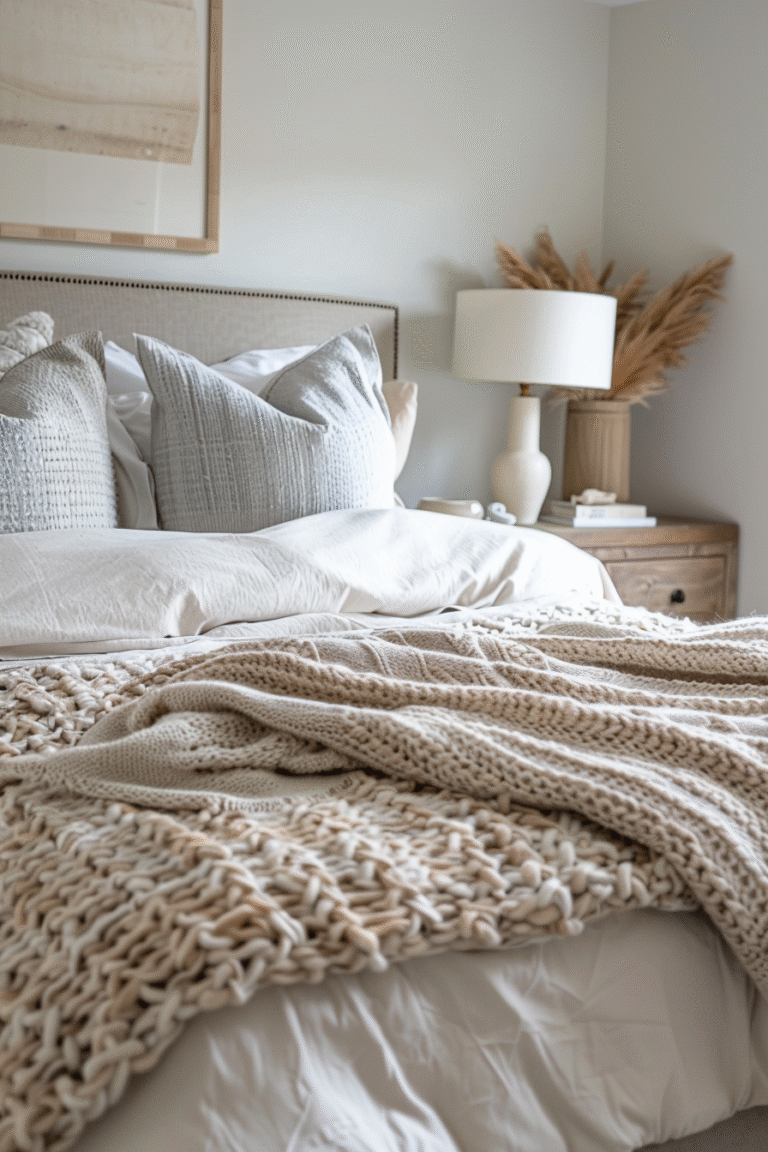
I’ll be honest: for years, I had no idea how to properly measure for curtains. I’d eyeball it, guess the length, and hope for the best. The result? Windows that looked awkward, rooms that felt smaller, and curtains that were either too short or covered half the glass when open.
It wasn’t until I started working with professional stagers during my 20+ years in real estate that I learned the actual rules for choosing the best curtains, and realized how much of a difference they make.
If you’re searching for living room curtain ideas but feel stuck on where to start, this guide breaks down exactly how to measure, where to hang your rod, and what mistakes to avoid so your windows look intentional instead of improvised.

Table of Contents

How to Measure for the Best Curtains in Your Living Room
Measuring for curtains isn’t complicated, but skipping steps or guessing measurements is where most people go wrong. You need three key measurements: where your rod will go (height and width), and how long your curtains should be. Get these right, and your living room curtain ideas will go from “maybe” to “absolutely.”
Here’s the order to follow:
Step 1: Measure rod height
- Measure from the top of your window frame to the ceiling
- Plan to hang your rod 4-10 inches above the window frame (or about 2/3 of the way up to the ceiling)
- Higher placement makes your room feel taller
Step 2: Measure rod width
- Measure the width of your window frame
- Add 8-12 inches on each side so curtains can stack back on the wall (not cover the glass when open)
- This makes your window look wider and lets in maximum light
Step 3: Measure curtain length
- Measure from where your rod will hang down to the floor
- Subtract ½ inch for the “kiss the floor” look (most common for living rooms)
- This is the curtain length you’ll order
Pro tip: Use a metal measuring tape, not fabric. Fabric stretches and gives inaccurate measurements. And measure twice, the best curtains are the ones that fit right the first time.

Living Room Curtain Length Guide
Choosing the right curtain length affects how polished your living room curtain ideas look. Here’s a breakdown of the most common styles and when to use each.
| Length Style | Description | How to Measure | Best For |
|---|---|---|---|
| Kiss the Floor | Curtains just touch the floor with a subtle break | Measure rod to floor, subtract ½ inch | Living rooms, most versatile and polished look |
| Hover (Floating) | Curtains hang ½ inch above the floor | Measure rod to floor, subtract ½ inch | Modern spaces, homes with pets, easy cleaning |
| Trouser Break | Fabric has a slight bend where it meets the floor | Measure rod to floor, add 1 inch | Traditional living rooms, tailored look |
| Puddle | Fabric pools 1-4 inches onto the floor | Measure rod to floor, add 1-4 inches | Formal dining rooms only (not practical for living rooms) |

Designer Rules for Living Room Curtain Placement
There’s a reason professionally staged homes always look more polished: the curtain rods are hung strategically, not randomly. I watched stagers transform rooms just by moving the rod a few inches higher or wider, and the difference was immediate. Here’s what they taught me.
Hang your rod high:
- Position the rod 4-10 inches above the window frame, or about 2/3 of the way between the window and ceiling
- High ceilings? Go 8-12 inches above the window or just below crown molding
- This creates the illusion of taller ceilings and makes the whole room feel more spacious
Extend your rod wide:
- The rod should extend 8-12 inches beyond the window frame on each side
- When curtains are open, they stack back on the wall instead of covering the glass
- This makes your window look larger and lets in maximum natural light
These two simple adjustments -high and wide- are what separate living room curtain ideas that look DIY from ones that look professionally designed. The measurements matter more than the fabric.

Curtain Width: The Fullness Rule
Here’s where most people get it wrong: they buy curtains that match the exact width of their window. The result? Flat, stretched-out fabric that looks more like a bedsheet than the best curtains money can buy.
Curtains need fullness to drape properly. The rule is simple: your curtain width should be 1.5 to 3 times the width of your window.
How to calculate:
- Measure your window width (or the length of your curtain rod)
- Multiply by 2 for standard fullness (most common)
- Multiply by 2.5-3 for a luxurious, hotel-style look
Example: If your window is 60 inches wide, you need curtains that are 120 inches total width (two 60-inch panels, or three 40-inch panels).
When curtains have proper fullness, they create elegant folds when closed and look generous when open. Too little fabric, and they’ll pull flat and look cheap, even if they cost a fortune.
That same rule applies in bold bedrooms too, Maximalist Bedroom Ideas proves how fabric fullness changes the whole feel of a space.

Blackout vs Room-Darkening Curtains- What’s the Difference?)
People use these terms interchangeably, but they’re not the same thing. Understanding the difference between blackout vs room-darkening curtains helps you choose the right option for your living room without blocking more light than you need.
Blackout curtains:
- Block 99-100% of light
- Usually have a thick foam or rubber backing
- Best for bedrooms, nurseries, or home theaters
- Can feel heavy and formal in living rooms
Room-darkening curtains:
- Block 70-95% of light
- Made with tightly woven fabric (no backing needed)
- Better for living rooms where you want light control without total darkness
- More versatile for everyday use
For most living rooms, room-darkening curtains are the smarter choice. They reduce glare on TV screens, keep the room cooler in summer, and still let in enough natural light to keep the space from feeling like a cave. Save true blackout curtains for spaces where you need complete darkness.
But if you’re outfitting a bedroom or TV nook, Cozy Bedroom Decor walks through how blackout options can create calm, sleep-friendly zones.

Common Curtain Mistakes (And How to Fix Them)
Even expensive curtains can look wrong if they’re hung incorrectly. Here are the most common mistakes I’ve seen (and made myself) and how to avoid them.
| Mistake | Why It’s Wrong | How to Fix It |
|---|---|---|
| Hanging rod too low | Makes ceilings feel shorter and room feel cramped | Hang rod 4-10 inches above window frame or 2/3 up to ceiling |
| Rod too narrow | Curtains cover the window when open, blocking light | Extend rod 8-12 inches beyond window frame on each side |
| Curtains too short | Looks unfinished and cheap | Measure to floor and subtract ½ inch for “kiss” finish |
| Not enough fullness | Curtains look flat and stretched, like bedsheets | Use curtains that are 2x the width of your window |
| Forgetting stackback | Open curtains cover part of the glass | Plan for curtains to stack on the wall, not the window |
| Wrong fabric for gray walls | Colors clash or feel dull | Use warm tones (cream, gold) for cool gray; cool tones (navy, sage) for warm gray |
It’s the kind of no-demo refresh you’ll find in our Affordable Home Improvements guide-small tweaks, big visual payoff.

Choosing Curtains for Gray Walls (Living Room Edition)
Gray is one of the most popular wall colors for living rooms, but picking curtains for gray walls can feel tricky. The key is figuring out whether your gray is warm or cool, then choosing curtains that either complement or contrast.
For cool gray walls (blue or purple undertones):
- Navy, charcoal, or slate curtains add depth
- Crisp white or cream keeps it light and airy
- Avoid warm yellows or beige (they’ll look dingy)
For warm gray walls (beige or greige undertones):
- Cream, taupe, or soft gold adds warmth
- Sage green, teal, or dusty blue brings in color without clashing
- Avoid stark white (it’ll look too cold)
Not sure if your gray is warm or cool? Hold up a piece of white paper next to your wall. If the gray looks blue or purple next to pure white, it’s cool. If it looks beige or tan, it’s warm.
The safest bet for any gray? Linen or cotton curtains in a neutral tone one shade lighter or darker than your walls. They’ll blend seamlessly and let your furniture be the focal point. But if you’re like me? And want a color pop? I’d go with these Teal Blue Velvet Curtains for personality!
If you’re unsure about how color affects mood, Colors in Home dives into the psychology behind shades like navy, sage, and cream.

FAQ: Living Room Curtains Answered
How do I measure curtains for my living room?
Measure three things: rod height (4-10 inches above the window), rod width (window width plus 8-12 inches on each side), and curtain length (from rod to floor, minus ½ inch). Use a metal tape measure and measure twice to avoid mistakes. Getting these measurements right is the foundation of great living room curtain ideas.
Should living room curtains touch the floor?
Yes, for the most polished look, curtains should “kiss” the floor—meaning they just barely touch it with a subtle break. Hovering ½ inch above the floor also works for modern spaces or homes with pets. Avoid curtains that hang several inches above the floor, as they look unfinished.
How wide should the best curtains be?
Curtains should be 1.5 to 3 times the width of your window for proper fullness. The most common ratio is 2x the window width. For example, a 60-inch window needs 120 inches of total curtain width (two 60-inch panels). This creates elegant folds instead of a flat, stretched look.
Should I choose sheer or lined curtains for my living room?
It depends on how you use the room. Sheer curtains let in natural light and work well for living rooms where privacy isn’t a concern, like upper-floor apartments or homes with front yards. Lined curtains offer better light control, insulation, and privacy, ideal for street-facing windows or rooms where you watch TV during the day.
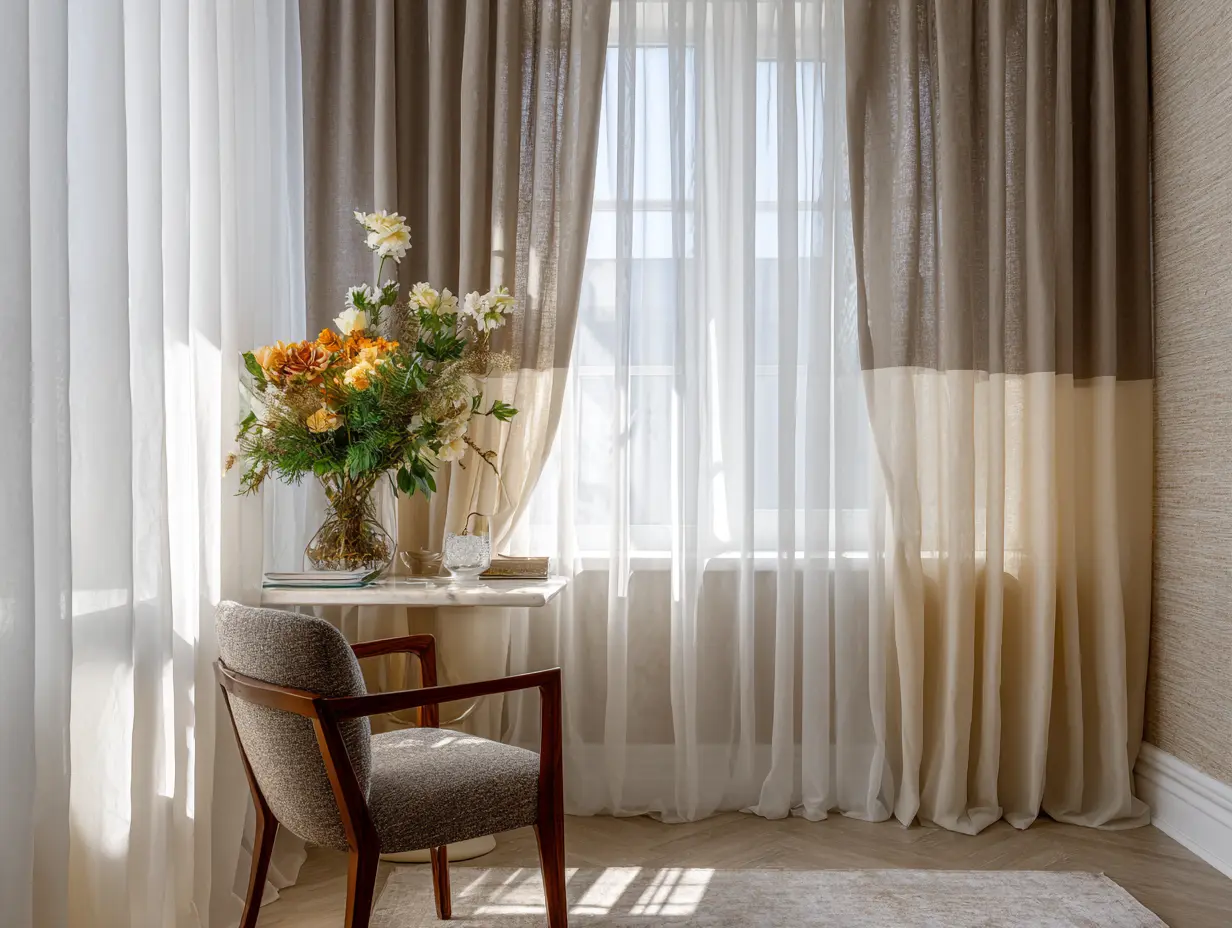
The Final Frame: Curtains That Make the Room
Planning living room curtain ideas can feel overwhelming when you’re staring at measurements, rod options, and fabric choices. Here’s the Home Hero Jen Mindset Shift: you don’t need to get everything perfect on the first try. Start with accurate measurements. Hang your rod high and wide. Choose curtains with proper fullness. Small, intentional steps beat stalling because it feels too complicated.
The best curtains aren’t the most expensive ones, they’re the ones that fit your windows correctly and make your room feel finished. Measure twice, hang once, and remember: even professional stagers learned these rules through trial and error.
You’ve got this!
Ready for more upgrades that feel way fancier than they cost? Don’t miss 7 Easy Home Refresh Tips That Don’t Require a Contractor it’s packed with high-impact ideas that don’t require power tools or panic.
Psst… want even more curtain inspo that proves budget-friendly can still look designer?
Check out Erin Zubot Design’s Best Budget Curtains for a High-End Look for serious style without the splurge. Like, “Wait… these aren’t custom?” energy. Erin breaks down sources, styling tips, and shows how to get the luxe look without draining your wallet. Total gold if you’re looking to level up your curtain game on a real-life budget.