
Sculptural lighting sizing starts with a formula: add room length and width in feet and convert to inches for the fixture diameter. Hang dining chandeliers 30 to 34 inches above the table, pendants 30 to 36 inches above a kitchen island, and sconces 60 to 66 inches from the floor. Stick with matte black, natural brass, or alabaster finishes and keep bulbs between 2700 and 3000K for warmth.
I used to treat lighting like icing on a cake. Pretty but optional. Touring thousands of homes as a former real estate broker changed that fast. The right fixture doesn’t just light a room, it changes how the whole space feels. Buyers notice it. Guests remember it. And homeowners suddenly feel like their space has a personality.
This is not a fluff roundup of lamps. This is a guide on how to size, hang, and choose bold fixtures that act like art.

Table of Contents
What Is Sculptural Lighting and Why It Matters
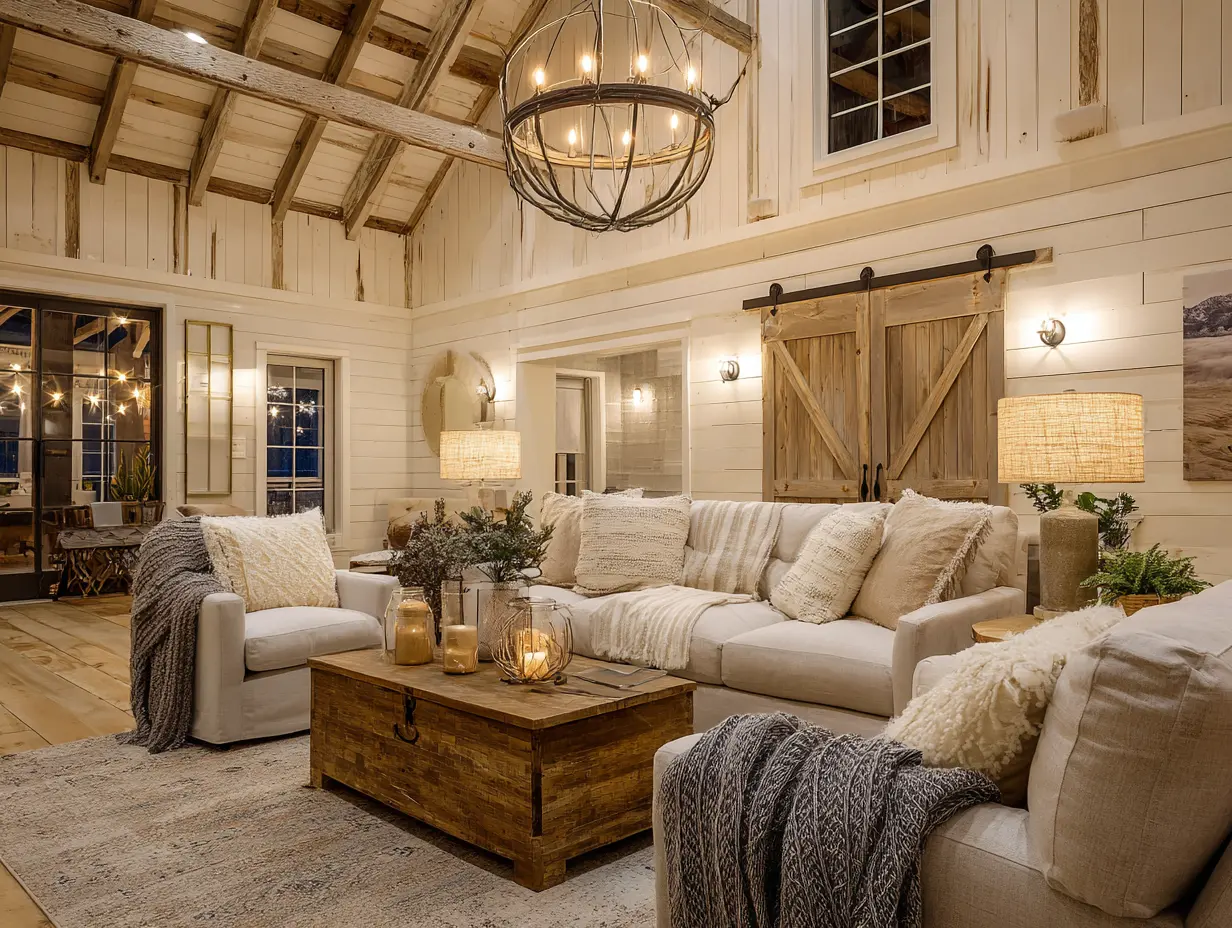
Not every chandelier earns the title. True sculptural lighting is form, negative space, and presence. These pieces act like modern art you can switch on. Think bold curves, asymmetry, or silhouettes that look good from every angle.
Unlike builder basic fixtures, artistic lighting makes people pause. It anchors a room without saying a word and adds dimension that wall paint or pillows cannot. If your fixture makes guests ask where you got it, that is sculptural.
- Silhouette: curves, loops, or geometric profiles that feel like sculpture
- Negative space: bold but airy, no heavy clumps of metal
- Multi-angle impact: looks stunning from across the room and underneath
- Materials with presence: plaster, alabaster, matte black, smoked glass
- Scale with confidence: oversized often looks thought out, while undersized always reads timid
- Light as mood: dimmable, layered quality that shifts the atmosphere, not just the brightness
Want more inspo that blends style with zero stress? Check out 7 Easy Home Refresh Tips That Don’t Require a Contractor because you don’t need blueprints to make big moves at home.
How to Size Sculptural Lighting for Every Room
If there’s one mistake I saw over and over in home tours, it’s a chandelier that looks like a keychain dangling over a dining table. Lighting needs presence; it has to command the space like art. There’s a cheat sheet for that.
These measurements aren’t arbitrary. They’re based on how we naturally move through and experience a room. Get the height right and suddenly your fixture looks planned and perfectly balanced. Mess it up and even a $2,000 piece reads as an afterthought.
- Dining tables: fixture width ≈ table width × 0.6. A 60″ table = 36″ chandelier.
- Living rooms: add room length + width (in feet), then convert to inches. A 12′ × 15′ room = 27″ chandelier.
- Sconces: center 60–66″ from the floor, spaced 6–8′ apart in halls.
- Foyers: scale fixture diameter to about half the width of the entry. A 10′-wide foyer = 20″ chandelier.
- Bedrooms: pendants or small domes work best when shade width is 10–14″, hung low enough to glow but high enough for head clearance.
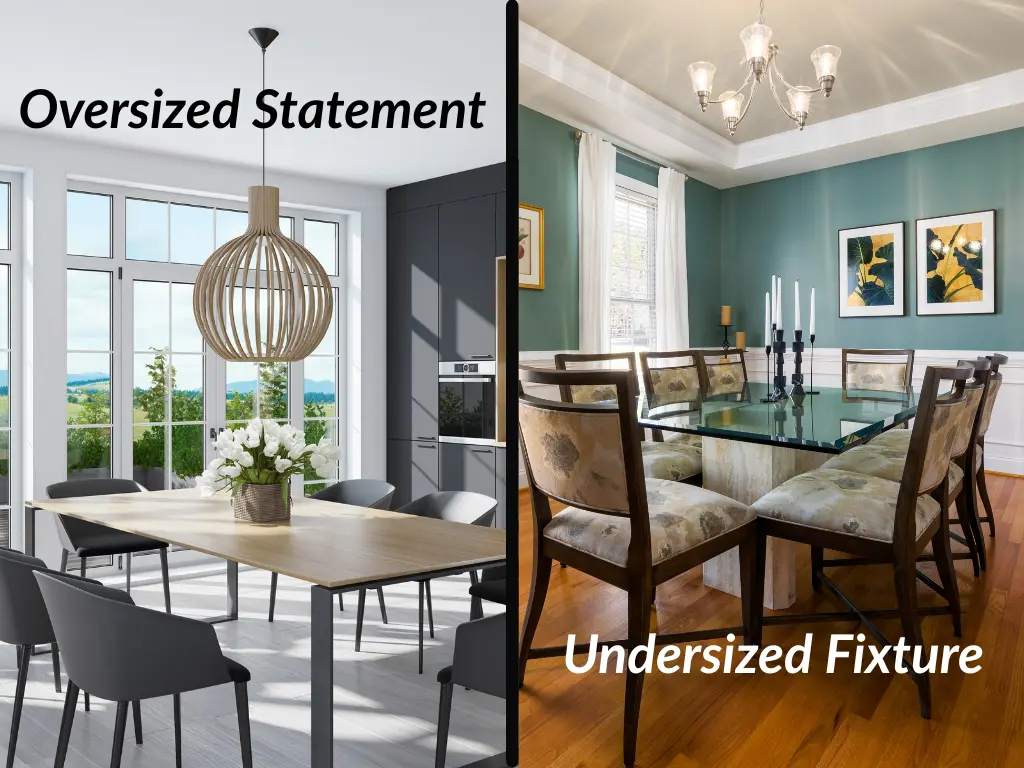
👉 If you’re torn between two sizes, always size up. A bold modern chandelier reads deliberate, while a too-small light always feels like an afterthought.
Ideal Hanging Heights for Statement Lighting Fixtures
Even the perfect sculptural lighting piece falls flat if you hang it wrong. Height sets the entire mood: too high feels like a spotlight, too low becomes a hazard. Get it right and your fixture becomes the focal point it deserves to be. Here’s the cheat sheet I gave my clients to nail the placement every single time.
These measurements work for standard 8-9 foot ceilings in most homes. Your space might need tweaking, but this gives you a solid starting point. Trust your eye once you see it in place.
- Dining: 30–34″ above the table for 8–9′ ceilings; add 3″ for each extra ceiling foot.
- Kitchen island: 30–36″ above the counter, with 24–30″ between pendants.
- Foyer: keep at least 7′ clearance; in two-story entries, align the bottom with the second-floor railing.
- Bedside pendants: 50–55″ from the floor to the bottom of the shade, low enough for glow, high enough for no head bumps.
- Hallways: sconces at 60–66″ from the floor keep light eye-level without glare.
- Living room chandeliers: hang with at least 7′ clearance, or slightly higher if foot traffic passes beneath.
👉 Takeaway: correct height makes even a budget fixture feel designer.

Want your fixtures to blend modern lines with lived-in charm? These modern farmhouse kitchen ideas are full of inspiration that makes lighting, layout, and styling look totally effortless.
How Sculptural Lighting Affects Mood and Atmosphere
Even the most gorgeous lighting fixture can look bargain-bin if the bulb is wrong. Light quality sets the emotional tone of a space, and it’s the detail most people overlook. Here’s how to make sure your rooms glow like they were styled for a magazine:
- Living & dining rooms: 2700–3000K for warmth, with 1,500–6,000 lumens depending on room size.
- Kitchens: 3000–3500K for clarity that won’t feel sterile.
- Art walls & displays: CRI 90+ so colors and finishes show true.
- Always dimmable: A good dimmer is the cheapest luxury upgrade you’ll ever make.
- Layer it: Mix ambient, task, and accent lighting so the room feels sculpted, not flat.
- Stay consistent: Keep color temperatures unified across a room, mismatched bulbs kill mood faster than cheap furniture.
👉 Takeaway: get the color temperature right, and every fixture instantly feels high-end.
Timeless Finishes for Artistic Lighting Fixtures
Lighting isn’t just about form, it’s about finish. Pick the wrong metal or glass, and your stunning lighting turns into yesterday’s trend. The safest bet? Stick with finishes that have staying power:
- Moody modern: matte black, smoked glass, oxidized bronze.
- Elevated coastal: bleached wood, natural brass, milky glass.
- Luxe minimal: alabaster, satin nickel, opal glass.
- Warm vintage: aged brass, oil-rubbed bronze, seeded glass.
- Clean contemporary: polished chrome, frosted glass, crisp white enamel.
👉 Takeaway: think of finishes like jewelry, if it clashes with your existing hardware, it’s not timeless.

Want to carry that same energy outside? These outdoor lighting ideas instantly upgrade your space without requiring a whole backyard makeover.
Sculptural Lighting Essentials: What Works Where
Quick Comparison Table: Room, Size, and Style
| Space | Best Form | Ideal Size Formula | Hanging Height Rule | Why It Works |
|---|---|---|---|---|
| Dining Table | Orb / Dome / Ring | Fixture width ≈ table width × 0.6 | 30–34″ above the tabletop; add 3″ per extra ceiling foot | Keeps proportion balanced and fills the visual plane. |
| Kitchen Island | Linear / Twin Domes | ⅔ the island length | 30–36″ above counter; 24–30″ between pendants | Even task lighting with sculptural impact. |
| Living Room | Sputnik / Branching | Room length + width (ft) = diameter in inches | Centered overhead with 7′ minimum clearance | Spreads light across the space while acting as art. |
| Entry & Foyer | Branching / Multi-Arm | Scaled to width of entry × 0.5 | At least 7′ clearance; align with second-floor railing for tall foyers | Creates a dramatic first impression without blocking flow. |
| Bedroom | Pendant / Small Dome | Shade width 10–14″ for bedside | 50–55″ from floor to shade bottom | Boutique-hotel vibe, frees up nightstand space. |

Sculptural Lighting FAQs: Size, Placement, and Style Tips
What size chandelier do I need for my dining table?
The rule of thumb: use about 60% of the table width and hang it 30–34″ above the tabletop. This keeps proportions balanced and makes sure your designer pendant lights don’t look like they are awkwardly hanging over your pasta dinner.
How high should pendants hang over an island?
Pendants should hang 30–36″ above the counter, with 24–30″ between two fixtures. The spacing creates even task lighting while keeping the island stylish instead of crowded. A flat black dome pendant works great here, it gives structure without stealing focus.
What finishes won’t date quickly?
Matte black, natural brass, plaster, and alabaster are timeless finishes. These materials work with changing décor trends and keep your statement lighting looking current year after year.
Can one statement light carry a room?
Yes, let one bold fixture be the star, then support it with simple recessed cans or floor lamps. A sculptural globe chandelier makes a jaw-dropping statement when everything else plays backup.
What color temperature of light is best for sculptural lighting?
Use 2700-3000K in inviting spaces like living rooms and bedrooms for warmth, and 3000-3500K in kitchens for clarity. The right temperature ensures your artistic lighting feels inviting, not clinical.

This Is How You Light With Flare
You don’t need a designer budget or a contractor’s ladder to change how a room feels. Sculptural lighting gives you leverage, the power to anchor a space, add personality, and make a statement without extra clutter. Go bold with a sputnik chandelier or subtle with a sculptural globe; either way, you’re setting a mood that lasts longer than any paint color.
Because lighting isn’t just about visibility, it’s about voice. The right fixture doesn’t just glow, it speaks. And when your lighting as art speaks for the room, everything else falls in line. One fixture with presence can change not just the space, but the way you feel in it.
Psst… want even more lighting inspo from the pros? Check out Trend Report: Sculptural Lighting Fixtures by Havenly for serious inspiration that pairs perfectly with everything you’re doing here. Like if your light fixtures got a degree in architecture and a modeling contract at the same time.