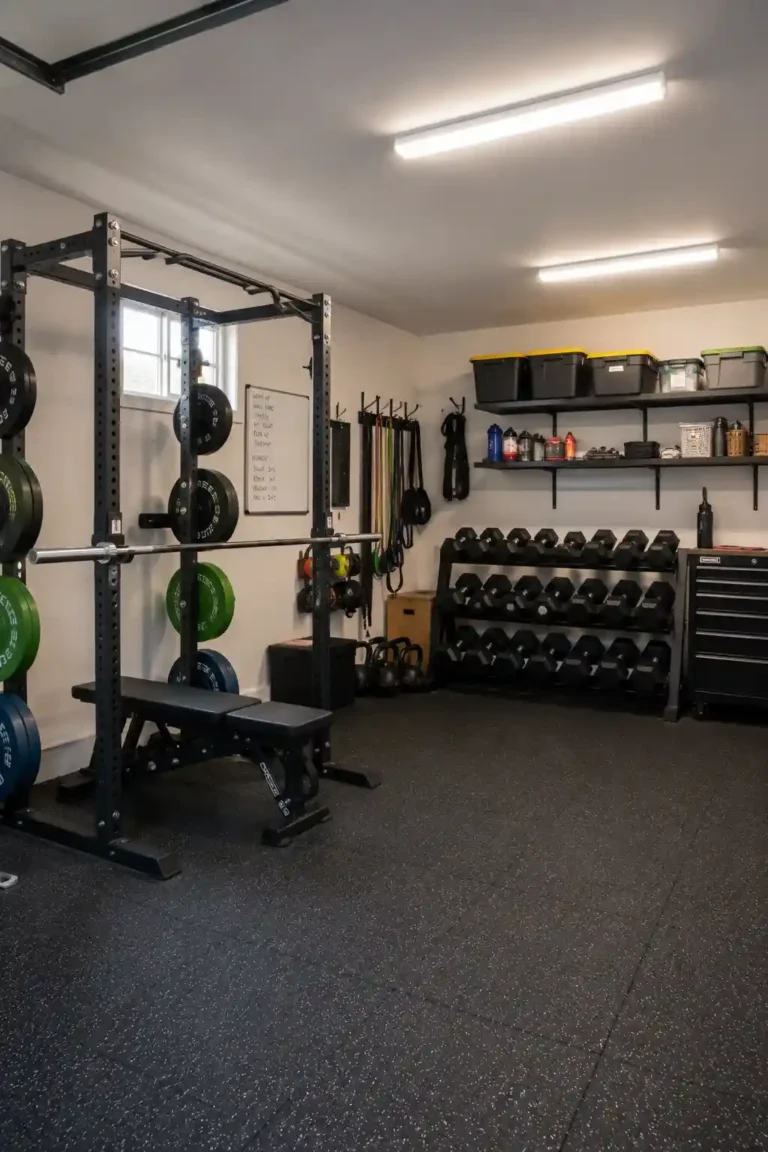

Garage gym storage ideas start with getting weight off the floor. Rack-mounted plate storage keeps plates within arm’s reach of the bar, and slatwall panels rated for 100 to 150 pounds handle the heavier gear without sagging.
I once showed a home where the garage gym was so cluttered we had to walk over plates and dumbbells just to get to the backyard. The buyers wanted a gym. They saw a project. That’s why their offer came in lower than asking, not because the house wasn’t good, but because they saw something they’d have to deal with instead of something they could move into and enjoy.
You can fix that before it ever costs you a dime.
The thing most homeowners don’t realize is that garage gym storage isn’t really about buying more storage. It’s about creating a system that keeps your equipment organized, protects your investment, and makes the space easier to use every day.
This guide covers exactly how to build that.
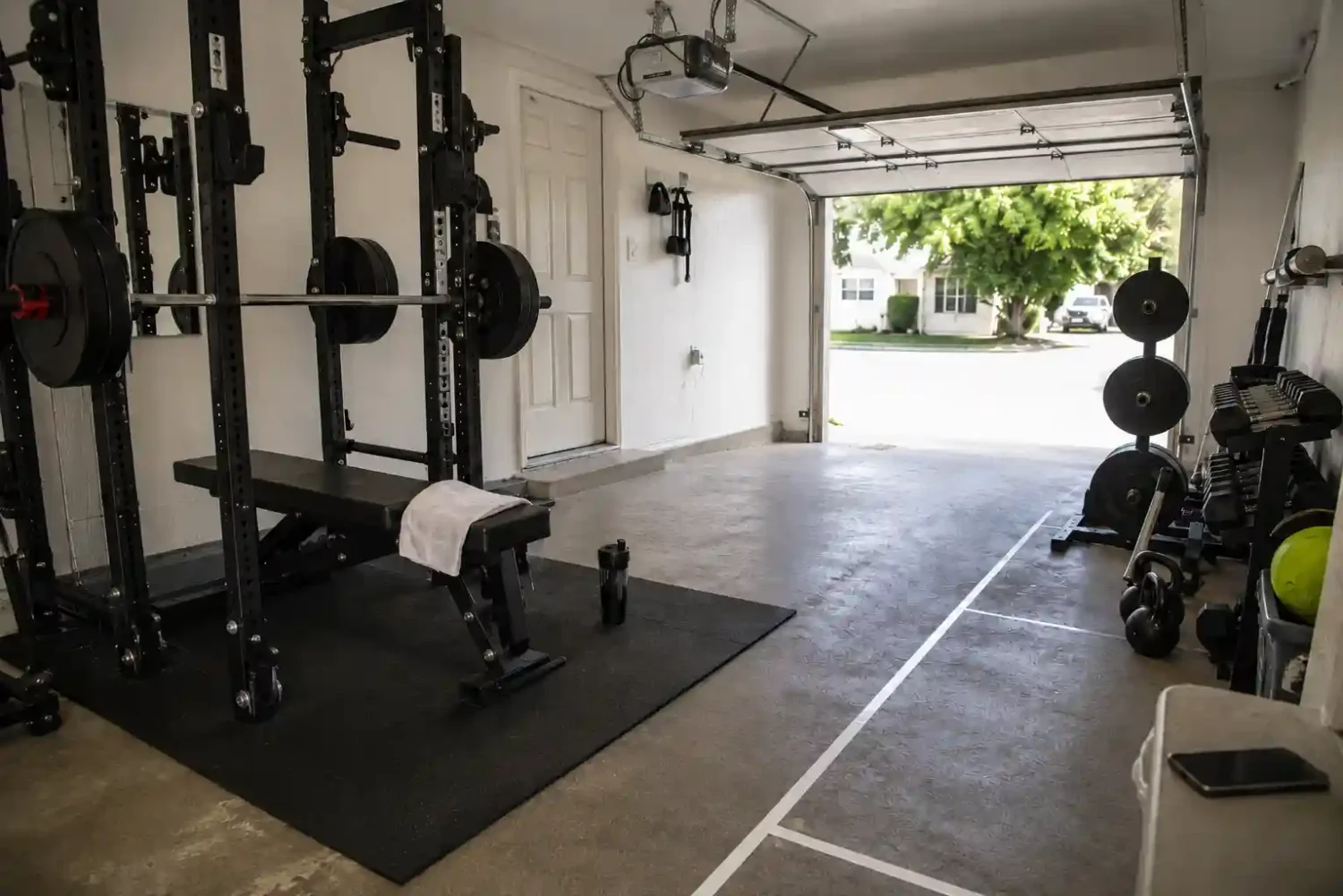
Table of Contents
Garage Gym Storage Ideas Start With Your Layout
Most people think they have a storage problem when they really have a layout problem. If equipment doesn’t have a dedicated place to live, the garage slowly turns into a dumping ground for weight plates, bands, dumbbells, and whatever else gets dragged in from the house.
Here’s where to start:
- Create a training zone. This is where your rack, bench, and primary equipment live. Leave at least 24 inches of clearance on all sides, the standard minimum most rack manufacturers recommend for a full range of motion without clipping a shelf or a wall.
- Create a weight storage zone. A pair of 45-pound plates weighs 90 pounds every trip from storage to the bar and back. Keep plates within a few feet of the rack, not across the garage, or you’ll start skipping sets just to avoid the walk.
- Create an accessory zone. Bands, collars, straps, and chalk need a dedicated home. If they don’t have one, they end up on the floor, the bench, or lost under something else.
- Protect your walkways. Aim for at least 36 inches of clear path, the same width contractors use for a comfortable walkway, wide enough for you and a loaded barbell to pass without stepping over anything.
- Plan for future growth. Most garage gyms grow fast once the training habit sticks. Leave one open wall or corner for whatever you add next, so year two doesn’t mean tearing the whole layout apart.
And while you’re planning the layout, don’t skip lighting. Our Garage Gym Lighting guide covers the placement mistakes that make a well-organized space still feel dark and uninviting.
One of the biggest improvements you can make to garage gym organization is grouping equipment by function instead of wherever it happens to fit. A rack surrounded by garden tools and a rack surrounded by your weights and accessories aren’t the same gym, even if the equipment is identical.
Weight Plate Storage Ideas for a Safer Setup
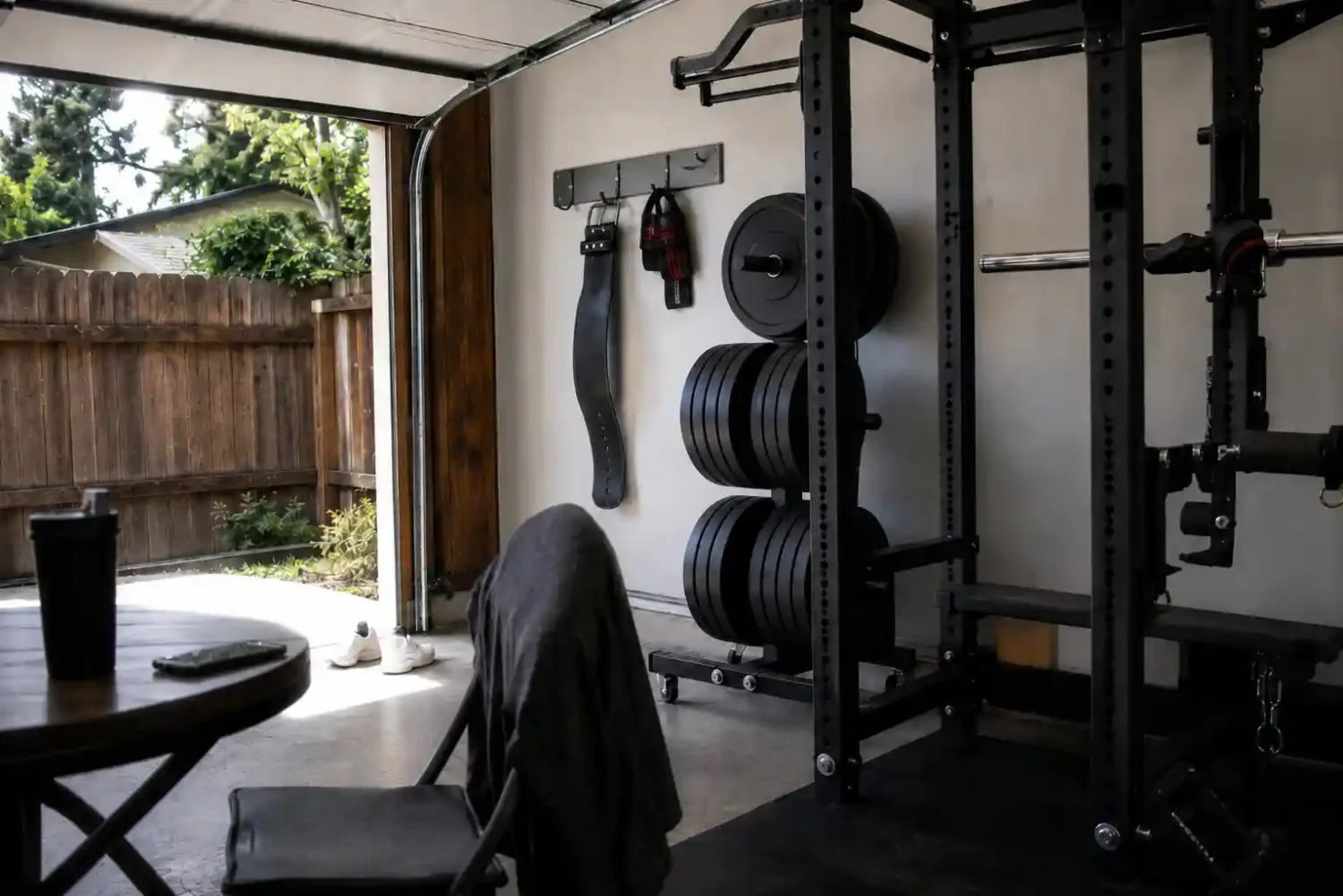
Weight plates are usually the first thing that turns a garage gym into a mess. They start stacked against a wall, then migrate toward the rack, and before long you’re stepping around them every workout.
What actually holds up:
- Rack-mounted plate storage. Keeps plates within arm’s reach and makes loading the bar faster. Most racks with rear or side posts hold plates without a separate tree, so check yours before buying anything extra. If you need a standalone option, the CAP 2-Inch Olympic Plate Tree Rack is a solid, budget-friendly starting point for a 5-post setup.
- Weight trees. A simple, freestanding solution when wall mounting isn’t an option. Good for cast iron plates, which stack cleanly.
- Wall-mounted plate storage. Frees up floor space, but needs solid mounting since a full set of plates adds up fast.
- Horizontal plate racks. Useful for bumper plates, which are bulkier and don’t stack on a vertical peg as neatly as cast iron.
Not all garage gym storage ideas work for every plate. Bumper plates and cast iron don’t store the same way, bumpers are thicker and take up more space per pound, so a horizontal rack or wider tree works better than a standard peg built for thin cast iron.
If you’re storing heavy plates directly on concrete, make sure your flooring can handle it. Our Garage Gym Flooring guide covers the best options.
Gym Wall Storage Ideas That Free Up Floor Space
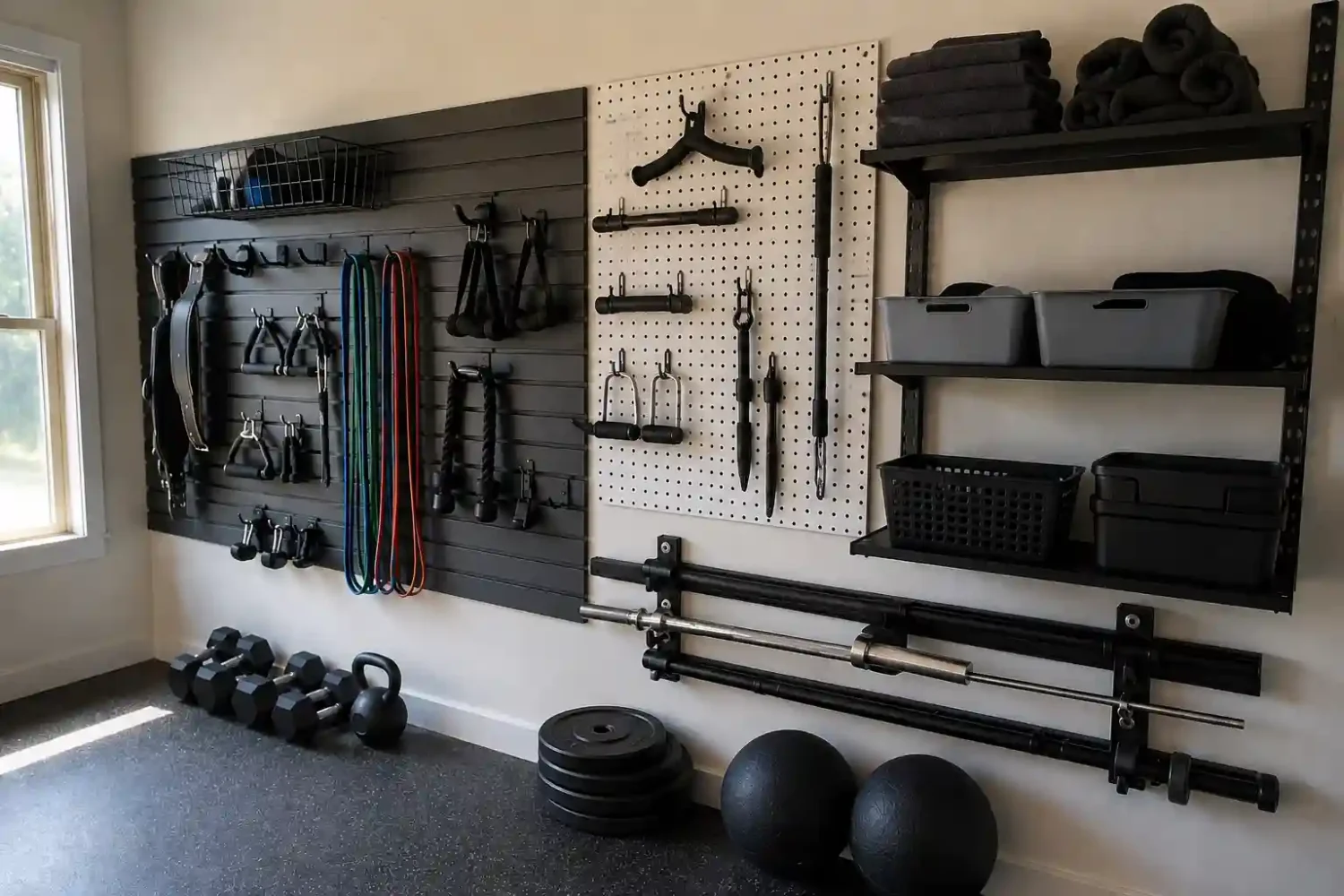
Most garage gyms run out of floor space long before they run out of wall space. Weight plates, resistance bands, belts, and smaller accessories all compete for the same few square feet, making the room feel crowded faster than one would expect.
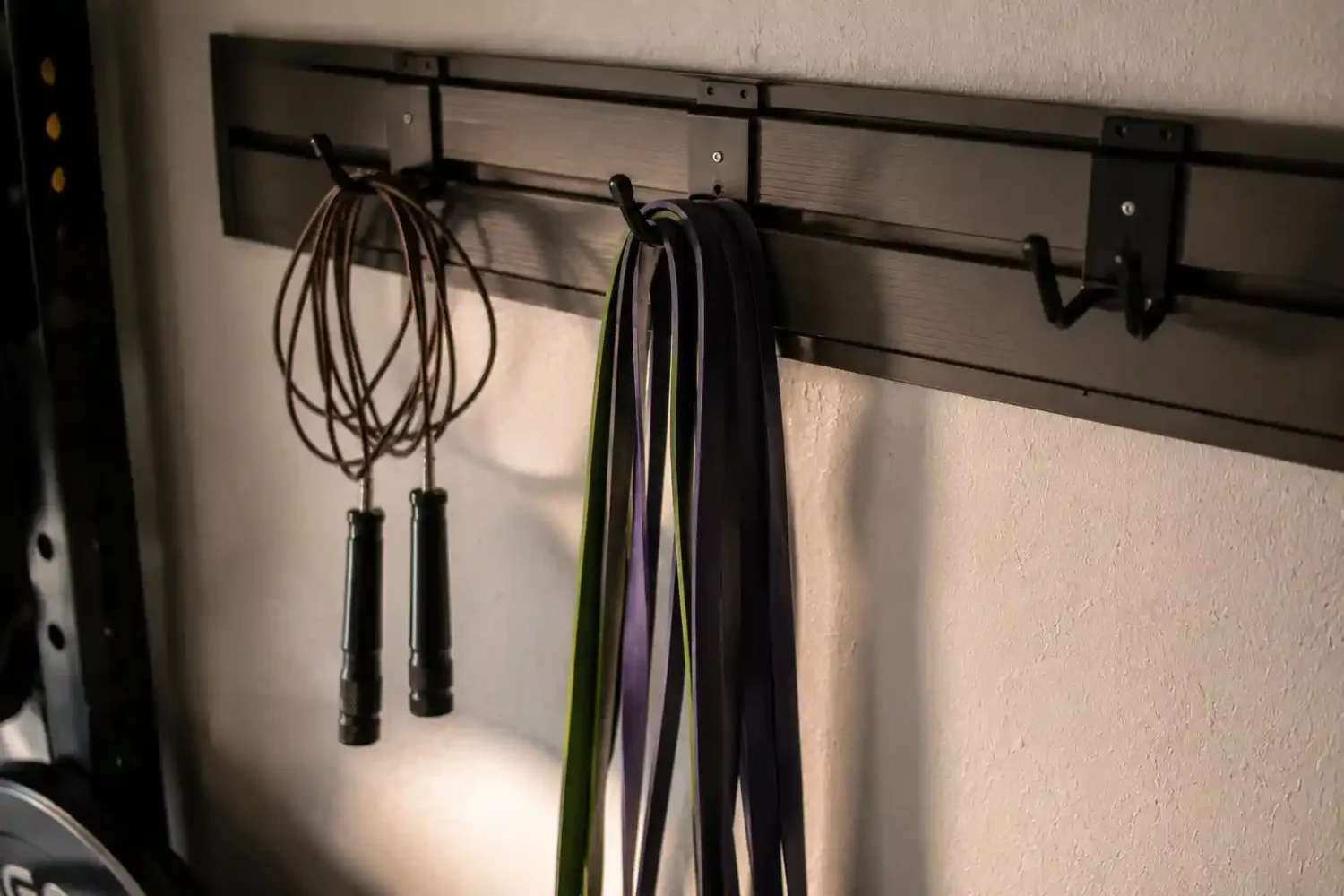
A basic slatwall hook rated in that 100 to 150 pound range, like the storeWALL Heavy Duty Universal Hook, works well for bands, jump ropes, and lighter accessories without overloading a standard panel.
- Pegboard storage. Great for lighter items like bands, collars, jump ropes, and lifting straps. Not built for anything heavy.
- Wall hooks. A simple solution for belts, resistance bands, and other frequently used accessories.
- Wall-mounted shelving. Reserve shelves for lighter items like chalk, speakers, and cleaning supplies. Heavy equipment overhead is harder and less safe to access, so keep the heavy stuff low.
- Accessory organizers. Keep everyday equipment visible and easy to grab mid-workout.
The reason slatwall beats pegboard for a garage gym isn’t just looks. Slatwall spreads weight across multiple mounting points instead of relying on one spot in the panel, which is exactly why it holds heavier gear without sagging.
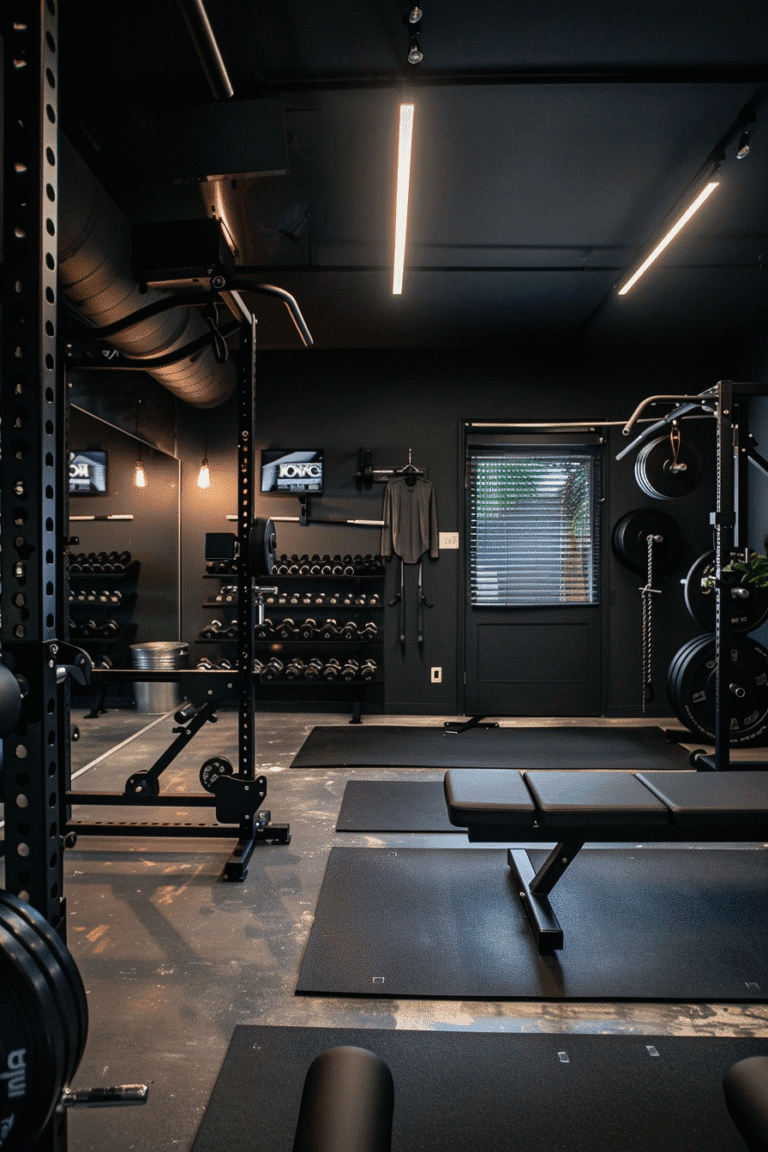
If you’re planning a black garage gym, wall storage can also become part of the overall design. Our Black Garage Gym Ideas guide shows how storage, lighting, and equipment can work together to create a space that looks as good as it performs.
Home Gym Storage Ideas for Small Garages
Most people aren’t working with a dedicated gym. They’re sharing the garage with vehicles, holiday decorations, lawn equipment, storage bins, and whatever else life has accumulated over the years.
That’s where the best home gym storage ideas separate themselves from the rest. Small garages don’t have room for wasted space, which means every square foot has to work a little harder.
What holds up:
- Use the corners. Corner space is often wasted and works well for weight trees, shelving, or smaller equipment.
- Store around the rack. Your rack already takes up space, so use it. Many racks support plate storage, band pegs, and accessory attachments.
- Go vertical. Gym wall storage frees up valuable floor space and keeps equipment within reach.
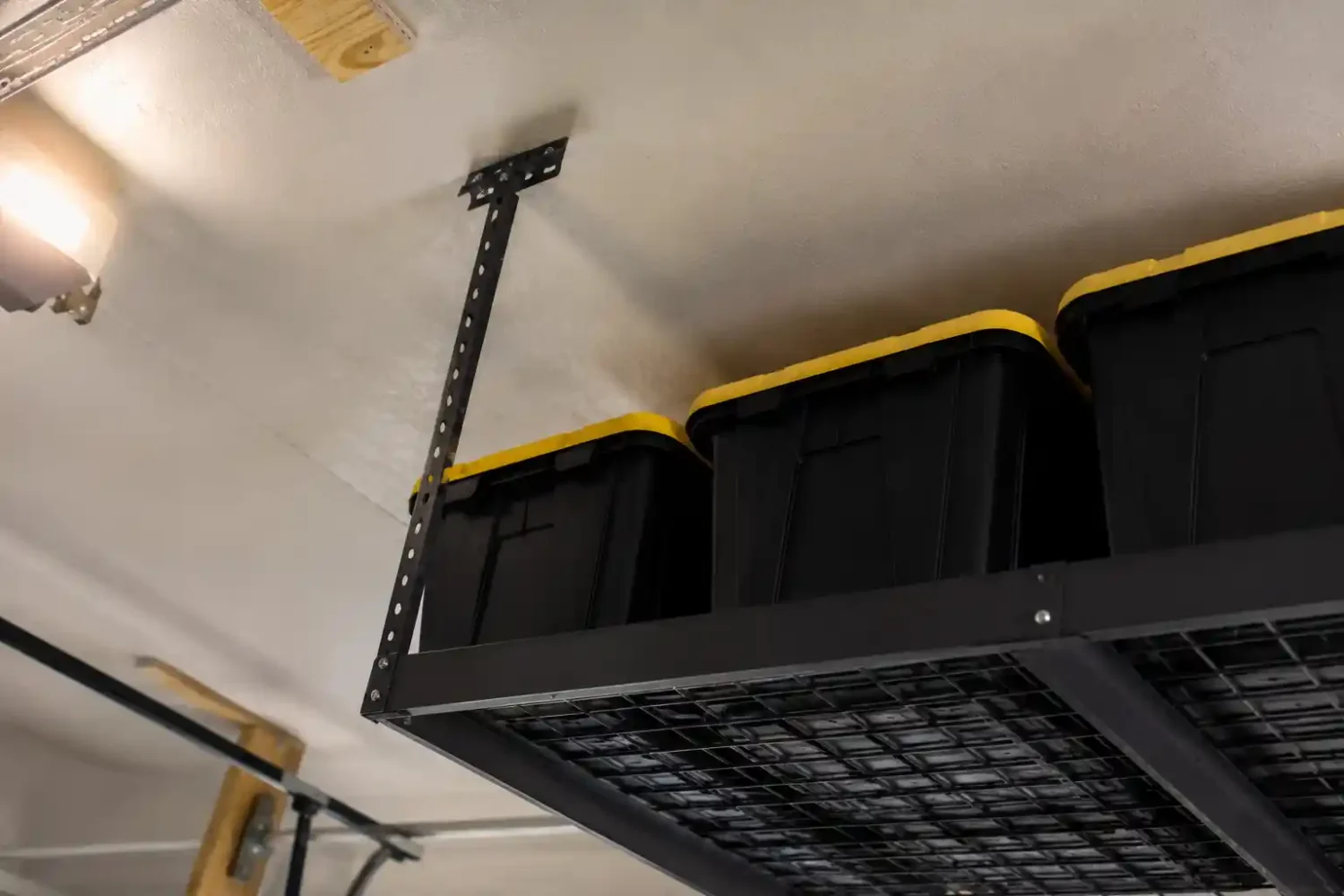
- Use overhead storage carefully. Holiday bins belong overhead. Weight plates and dumbbells don’t, they’re too heavy and too concentrated for most garage ceilings.
- Choose multi-purpose equipment. Adjustable dumbbells and foldable benches reduce clutter without limiting workouts.
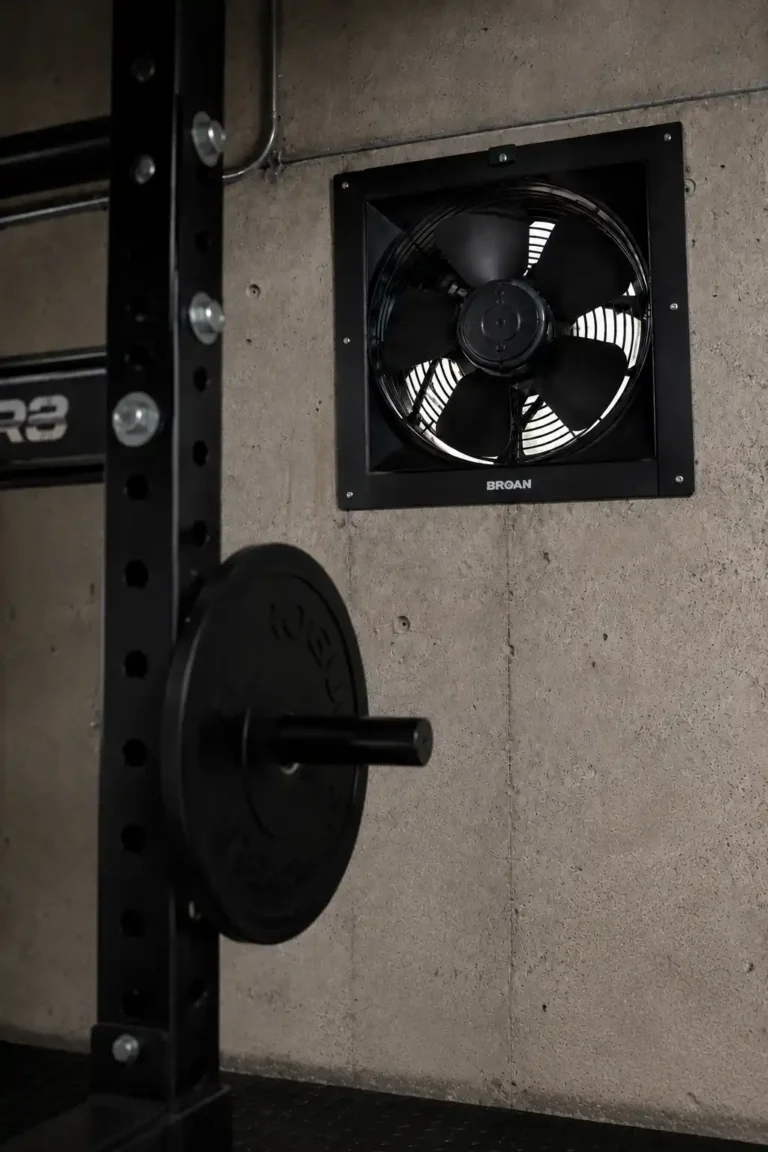
- Leave room for real life. If you still park a vehicle in the garage, make sure doors can open and walkways stay clear. A shared garage also means more humidity and heat than a dedicated gym space, which is worth planning for. Our Garage Gym Ventilation guide covers how to keep your equipment from rusting and your workouts from feeling like a sauna.
The best home gym storage ideas aren’t about adding more storage. They’re about making better use of the space you already have.
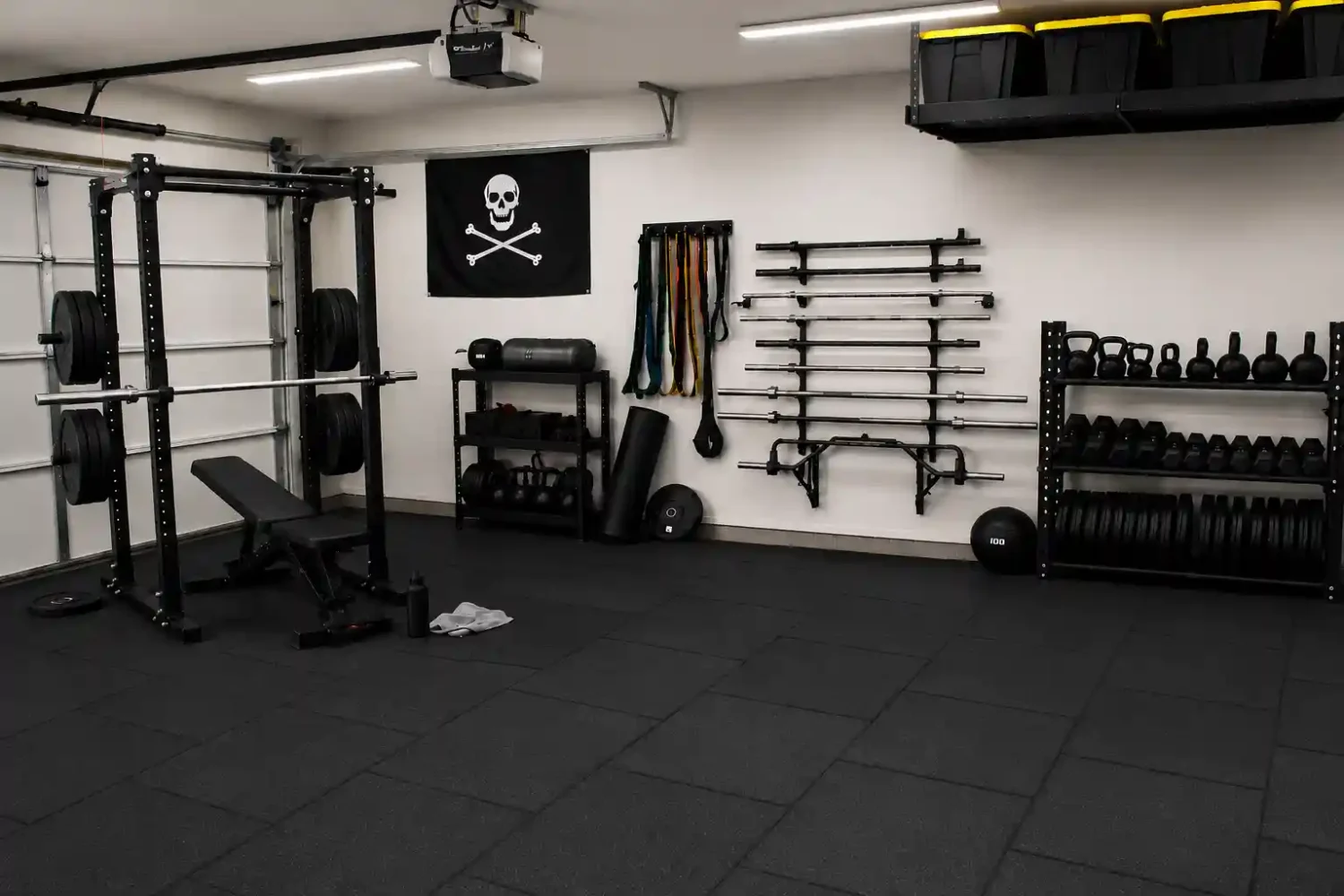
Garage Gym Organization by Zone
Most people organize their equipment by where it fits. The problem is that what fits isn’t always what functions best.
Good organization starts with creating a workflow, not just a floor plan. The less time you spend hunting for equipment or moving things around, the more likely you are to use the space consistently.
Here’s a simple way to break it down by zone:
| Zone | Purpose |
|---|---|
| Training Zone | Rack, bench, lifting area |
| Weight Storage Zone | Plates, dumbbells, kettlebells |
| Accessory Zone | Bands, collars, straps, chalk |
| Walkway Zone | Safe movement through the garage |
One of the biggest improvements you can make to garage gym organization is thinking about how you actually move through the room.
Garage Gym Storage Systems Compared
There are a lot of storage products marketed to garage gym owners. The truth is you don’t need all of them. The best garage gym storage ideas come down to matching the system to your equipment, your space, and how often you train, not buying whatever’s trending.
Here’s a quick comparison:
| Storage Type | Best For | Floor Space | Typical Weight Capacity | Drawback |
|---|---|---|---|---|
| Weight Tree | Weight plates | Medium | Varies by model, check plate count vs. peg length | Takes up floor space, needs a clear footprint |
| Slatwall | Accessories and gear | Low | 100-150 lbs per hook | Not built for full plate sets or heavy loads |
| Pegboard | Light equipment | Low | Not built for heavy loads | Hardboard flexes under real weight over time |
| Shelving | General storage | Medium | Varies, check load rating per shelf | Not ideal for odd-shaped gym equipment |
| Rack Storage | Small garage gyms | Very Low | Limited by your rack’s own post rating | Capacity depends entirely on your rack, not the storage itself |
A few thoughts before you buy:
- Weight trees are simple and work well if you own a lot of plates.
- Gym wall storage creates the biggest floor space savings in most garages, but only if you check the hook rating against your actual gear. A slatwall hook rated for 100 pounds won’t hold a full set of bumper plates.
- Pegboards work best for lighter accessories, not heavy equipment. The hardboard just isn’t built to flex under real weight the way slatwall is.
- Shelving is great for keeping smaller items organized and easy to find.
- Rack storage is often the most efficient solution if space is limited.
Garage Gym Storage FAQ
What is the best garage gym storage system?
For most homeowners, a combination of rack-mounted storage and gym wall storage gives you the best balance of organization, accessibility, and floor space savings. Start there before buying a separate weight tree or shelving system, most people don’t end up needing both. The most common mistake is buying a full storage system before checking what your rack already supports.
Is gym wall storage worth it?
Yes, but check the hook rating before you hang anything heavy on it. Most slatwall hooks are rated between 100 and 150 pounds, and that rating only holds up if your panel is at least half an inch thick. The common failure point isn’t the hook, it’s a thin panel flexing under repeated load until the hook loosens. If your gear regularly exceeds 150 pounds, rack storage or a floor-based weight tree is the smarter call.
How do I organize a small garage gym?
Start with a layout plan, store equipment vertically whenever possible, and keep frequently used items closest to your training zone. If you’re using overhead storage, spread the weight across at least three ceiling joists, never a single one, and load it to about 70% of the rated capacity, not the max. The most common mistake is overloading a single joist because the rack’s weight rating looked high enough.
Can weight plates be stored on the wall?
Yes, but bumper plates and cast iron store differently. Cast iron is thinner and stacks cleanly on a standard peg. Bumper plates are bulkier and put more strain on the mount, so they usually need a horizontal rack instead of a vertical wall peg. The typical failure point is mounting hardware rated for the hook but not verified against the wall material behind it. If you’re storing a full bumper plate set, rack storage is usually more reliable than wall mounting.
Do I need special flooring under my storage zone?
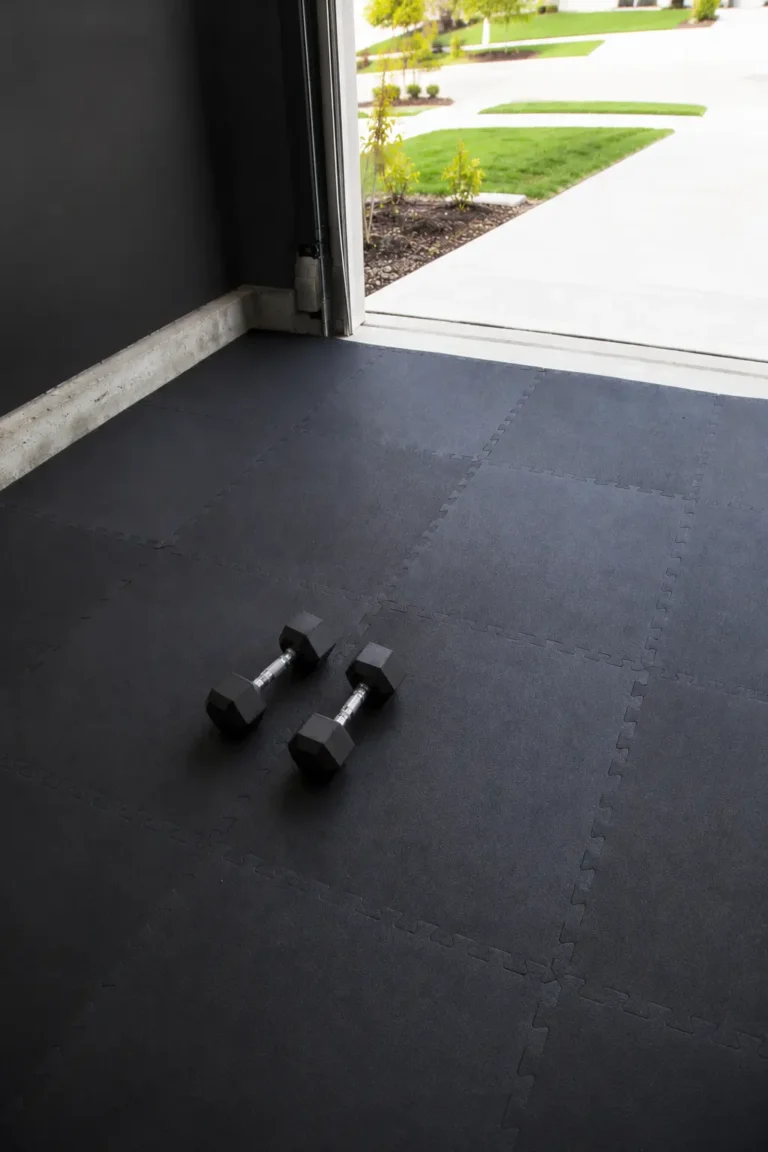
If you’re storing weight plates or dumbbells directly on concrete, yes. Bare concrete chips and cracks under repeated impact from dropped weight. A rubber mat under your storage zone protects both your equipment and your slab.
Home Hero Jen Mindset Shift
A well-organized garage gym isn’t the one that looks best online.
It’s the one you actually want to walk into tomorrow.
I’ve stood in garages that looked like a magazine spread and garages that looked like a yard sale exploded. The magazine one didn’t always win. The one that got used every day was the one that just worked, even if it wasn’t pretty.
So don’t try to fix all of it this weekend. Start with one corner. One wall. One storage problem that’s been driving you nuts.
You don’t need perfect. You need a system that gets you into the garage tomorrow instead of finding a reason to skip it.
A few smart garage gym storage ideas can completely change how the space feels. And when the room works better, you use it more. That’s the whole goal.