
I’ll never forget walking a listing with a stager where the backyard was nothing but a lonely concrete slab and some weeds. She rolled in with two chairs, a small table, and a potted plant, and suddenly buyers stopped, sat, and smiled.
That moment taught me everything I needed to know about creating an outdoor man cave: it’s not about size or budget, it’s about showing how the space is meant to be used. After 20+ years in real estate, I’ve learned what separates a forgettable patio from a backyard retreat that feels like home.
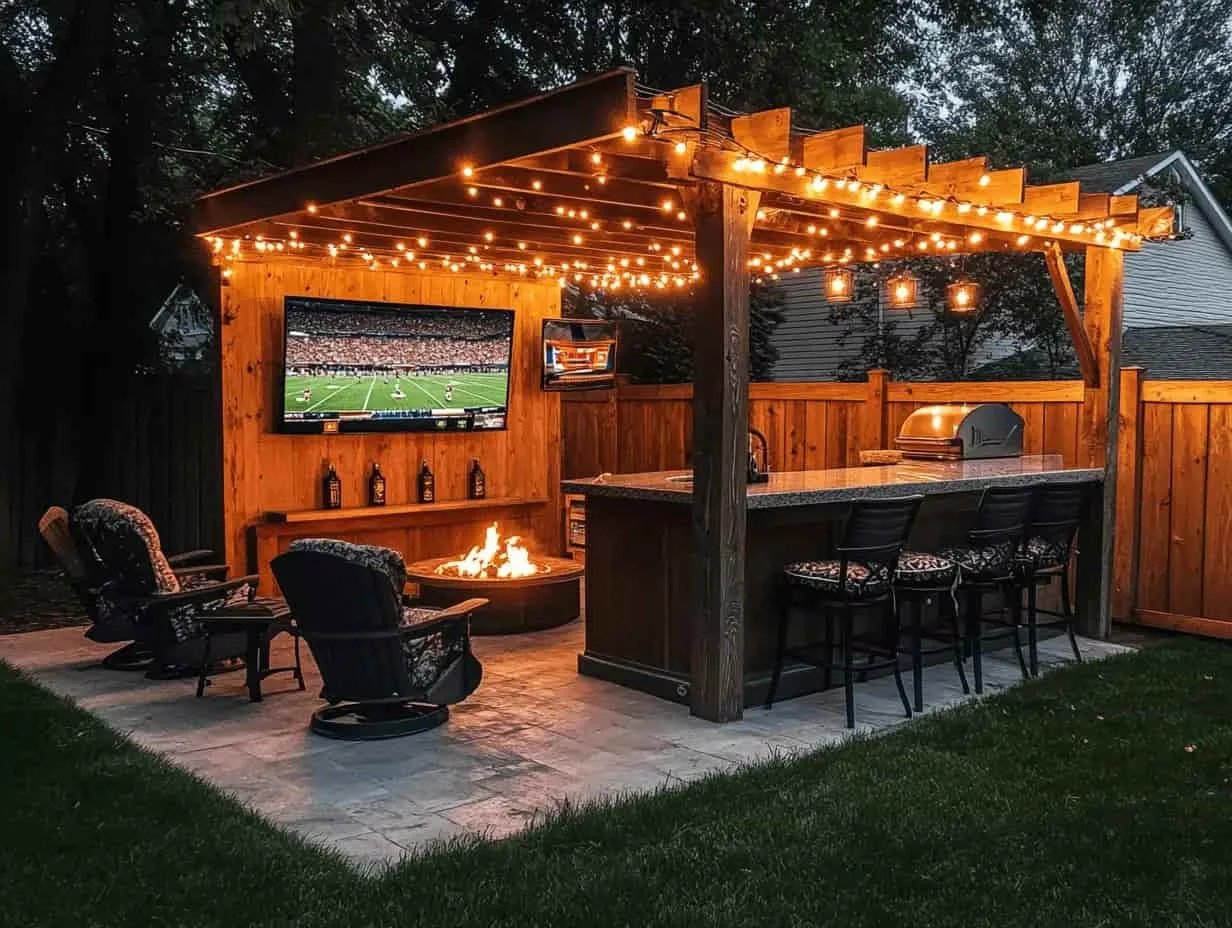
Table of Contents
Outdoor Man Cave Layout Ideas
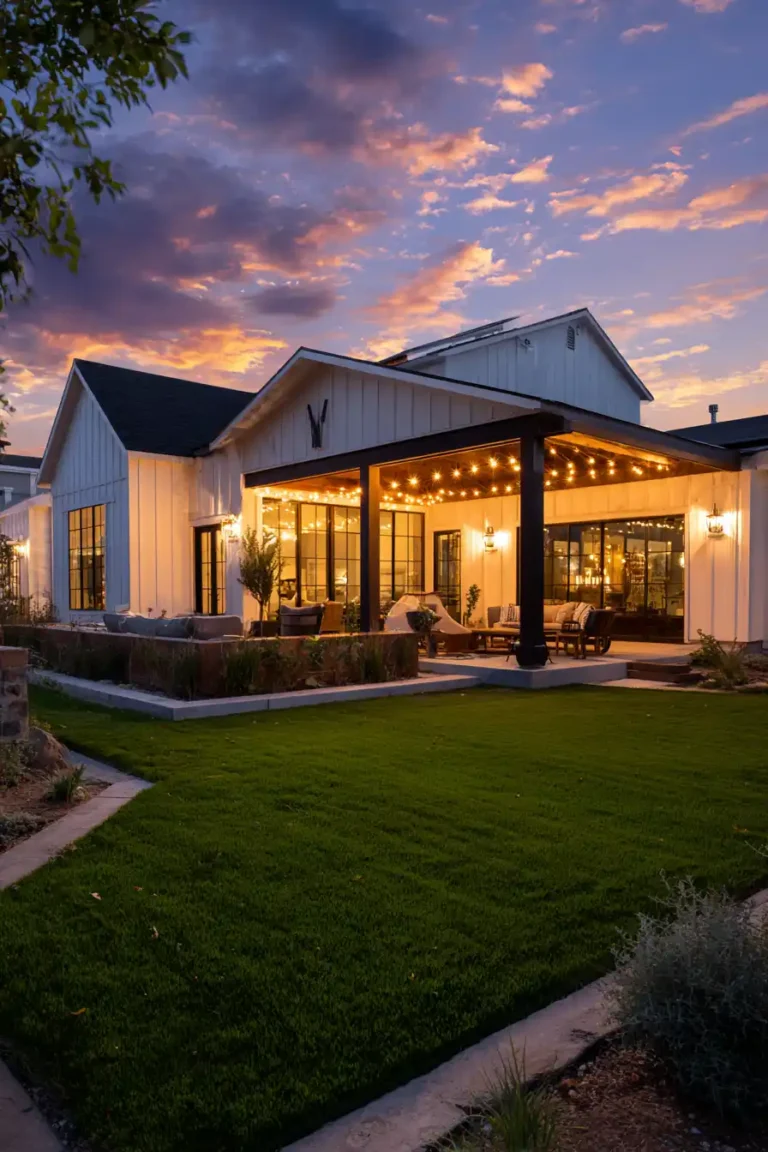
Define your seating area first, then layer everything else around it. The transition from your house to the outdoor space should feel natural, like an extension of your living area.
Start here:
- Seating zone first. This is where people actually plant themselves, so it’s your anchor point.
- Layer entertainment or prep zones around it. TV, fire pit, bar cart, built around the seating, not competing with it.
- Check the flow from your house. The walk from your back door to the space should feel easy, not an obstacle course.
- Leave walking room between zones. At least 3 feet so people aren’t squeezing past chairs or tripping over the fire pit to grab a drink.
- Match the layout to your yard’s actual shape. A long narrow yard wants zones in a line. A square yard can handle zones side by side. Forcing a layout that doesn’t fit your shape is where people get frustrated fast.
Pro Tip: Sketch it out or use tape on the ground to visualize the zones before you commit to anything permanent. If you’re looking for more ideas on creating intentional outdoor zones, check out my post on backyard retreat ideas for layout inspiration.
Outdoor Man Cave Dimensions: How Much Space Do You Need?
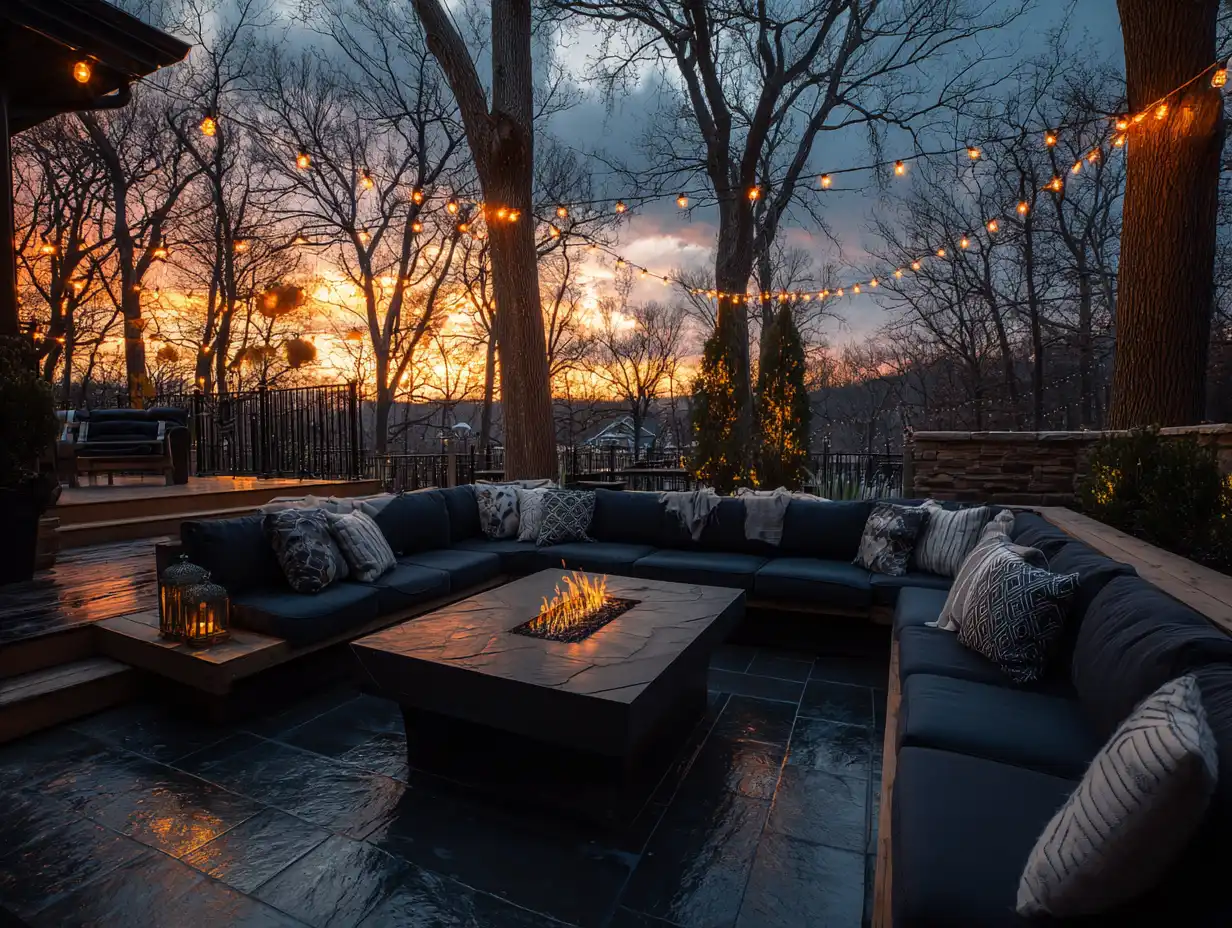
This is the question I get asked more than any other. The honest answer is it depends on what you want to do out there, but here’s what each size actually gives you.
Man Cave Size Guide
| Size | Sq Ft | Comfortably Fits | Best For |
|---|---|---|---|
| 8×10 | 80 | A couple of chairs, small side table, maybe a fire bowl | Tiny patios, townhouses, apartment balconies |
| 10×10 | 100 | Small seating area OR a single feature like a TV or fire pit, not both | Compact yards, budget builds |
| 12×16 | 192 | Defined seating plus a bar or prep counter, or seating plus one entertainment zone | Most suburban backyards |
| 16×20 | 320 | Full seating, entertainment setup, and a bar or small outdoor kitchen | Larger lots, multi-zone setups |
The real question isn’t square footage, it’s how many people you want out there at once and whether you want one feature or several. Instead of focusing on the numbers alone, think about how you plan to use the space:
- Choose an 8×10 or 10×10 layout if your goal is a quiet retreat with a couple of chairs, a TV, or a fire pit.
- Choose a 12×16 layout if you want defined zones, like comfortable seating plus a bar or prep counter, or seating with a dedicated entertainment area.
- Choose a 16×20 layout if you regularly entertain and want room for multiple conversation areas without the space feeling crowded.
A 10×10 space with just a TV and two chairs feels intentional. That same 10×10 space with a TV, a bar, a fire pit, and seating for six feels like a storage unit.
Pro Tip: Before you commit to any size, tape it out on your patio or lawn. What looks small on paper often feels bigger once you’re standing in it, and vice versa.
Where Should You Build a Backyard Man Cave?
Location and Site Considerations
Where you place your backyard man cave matters as much as what you put in it. Comfort and usability start with smart positioning.
I once listed a home with a gorgeous covered patio tucked in the back corner of the yard. Beautiful build, but it baked in full afternoon sun with zero privacy from the neighbors. Buyers loved the house, hated the patio. We ended up suggesting they add shade sails and privacy plantings before listing again. It sold in a week.
Sun exposure and shade:
- Full sun all day makes the space unusable during peak hours
- Morning sun with afternoon shade works best for most climates
- If you’re stuck with full sun, plan for a pergola, shade sail, or strategically placed trees
Privacy changes how the space feels. Natural screening options like hedges, fencing, or plantings create separation without feeling closed off.
Proximity to utilities saves money:
- Electrical access for lighting, TV, or a mini fridge
- Water access if you’re planning a bar or outdoor kitchen
- The farther from the house, the more expensive the build
Ground conditions matter. Check for low spots where water pools, ground that slopes toward the house, or unstable soil before building anything permanent.
Pick your location based on how the space will be used, not just where you have room.
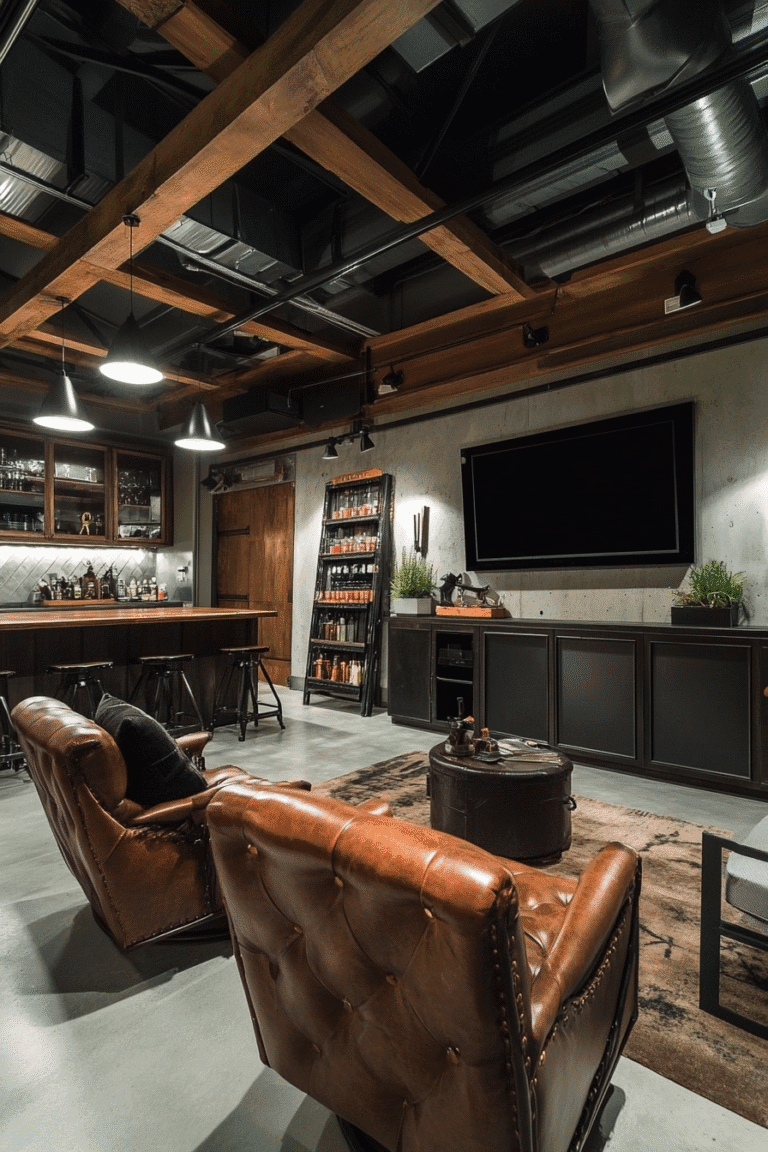
Not every man cave belongs in the backyard. If you’re deciding between building outside or converting your garage, my Garage Man Cave Ideas guide walks through insulation, lighting, flooring, storage, and layout considerations for an indoor space.
Best Shade and Cover Options for Outdoor Living
The biggest mistake homeowners make is either skipping weather protection entirely or overbuilding with permanent structures that require constant maintenance.
Covered vs. uncovered:
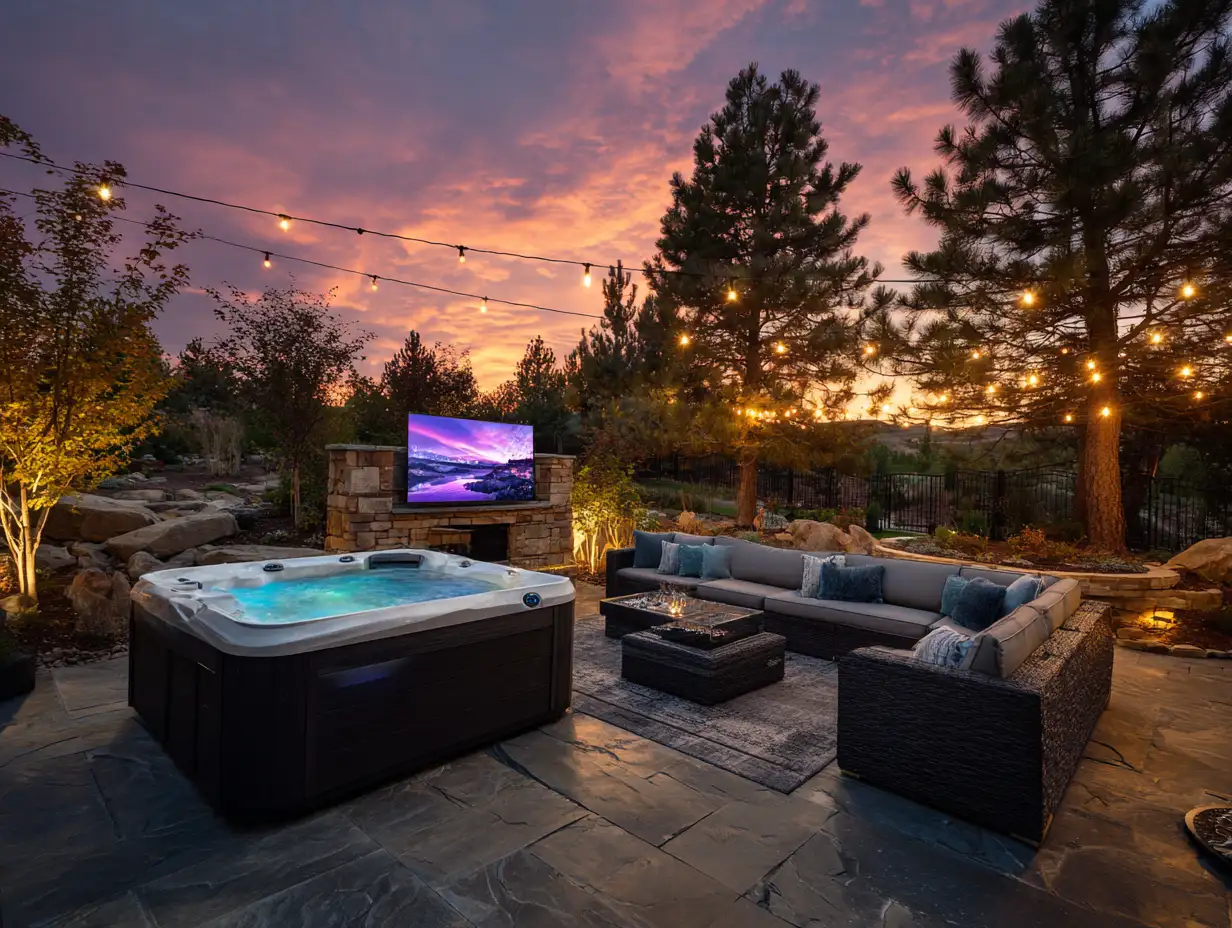
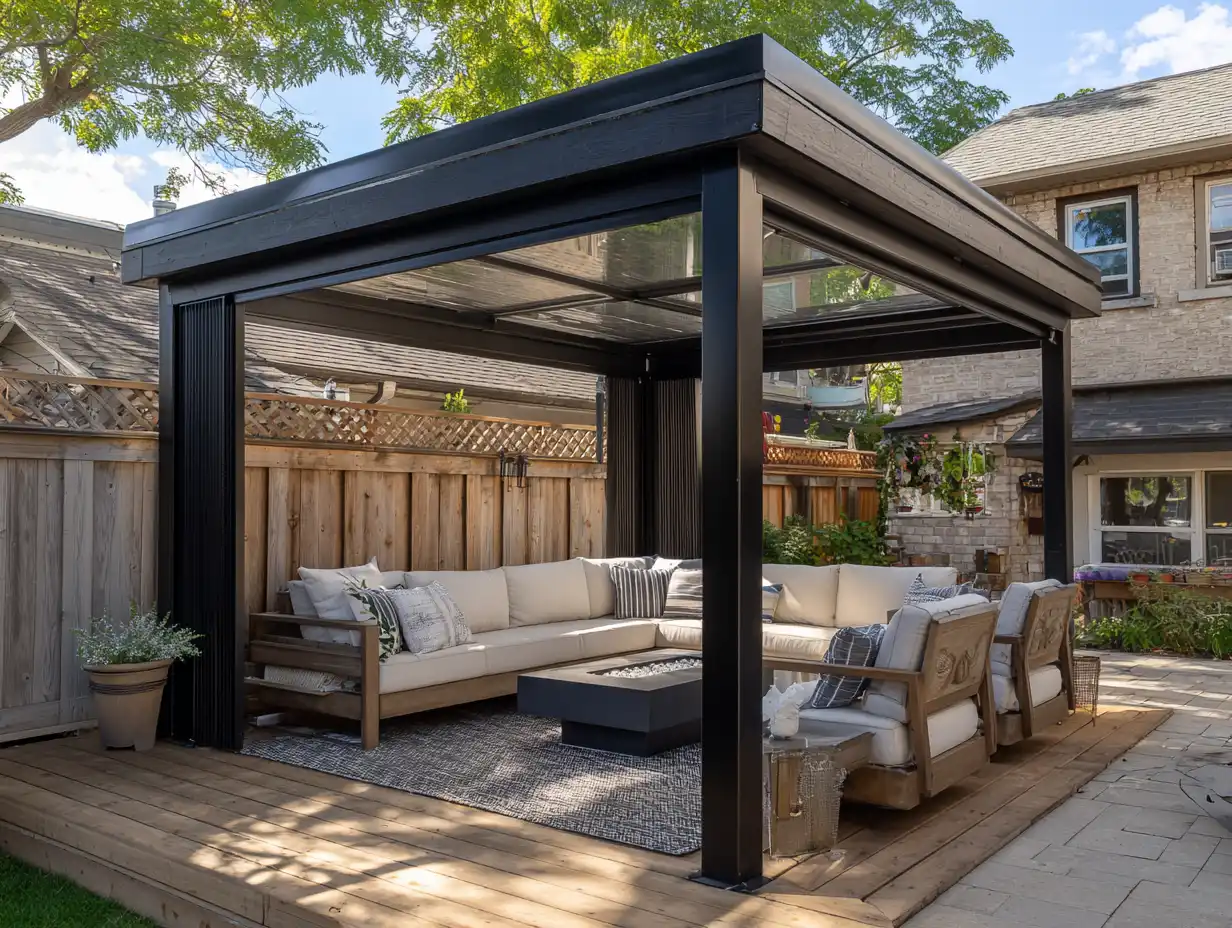
- Full coverage (pergola, roof extension, or gazebo) extends usability into shoulder seasons and protects furniture
- Partial coverage (shade sail or retractable awning) gives flexibility without the commitment
- Uncovered spaces work in mild climates or for occasional use
Permanent structures add value when done right. A well-built pergola or covered patio that feels proportional to your yard works. Overdone structures that block light or feel heavy don’t.
Flexible options work for renters or anyone testing the space first. Retractable awnings, shade sails, or large patio umbrellas give protection without permanence.
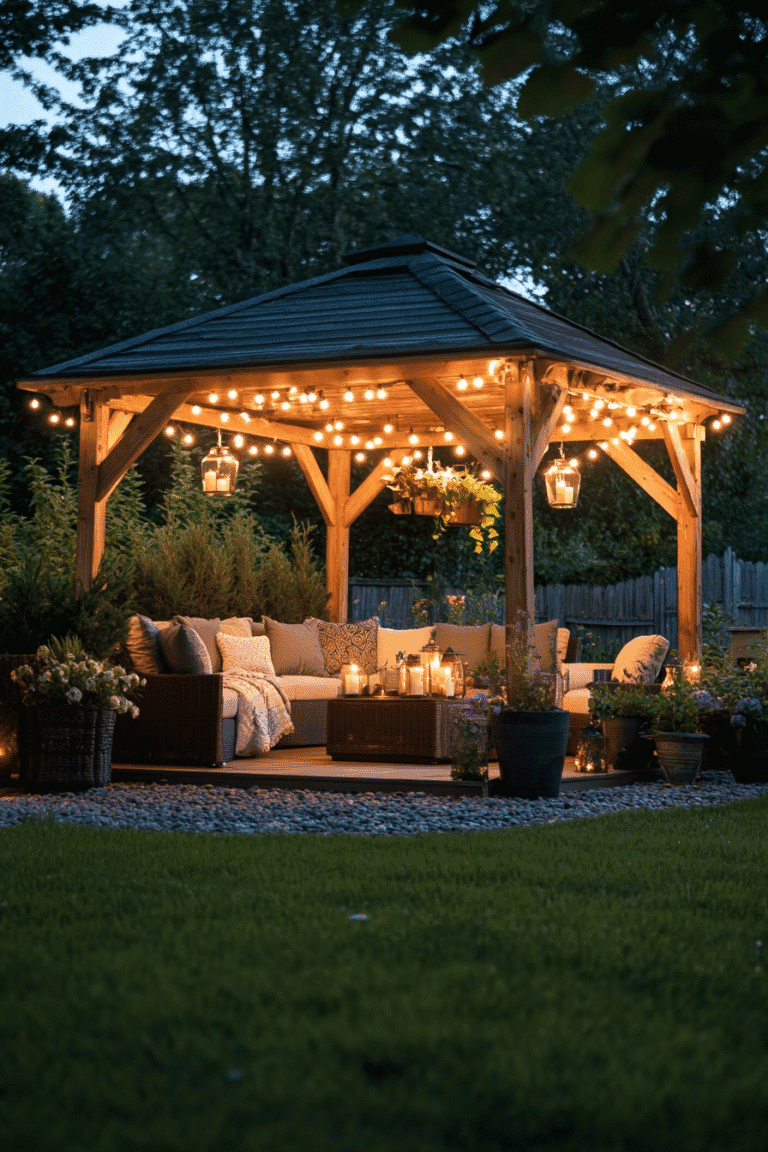
The sweet spot? Enough coverage to make the space usable on hot or drizzly days, but not so much that it feels dark or enclosed. If you’re considering a permanent structure, my Backyard Gazebo Ideas guide covers placement, styles, and how to choose the right size.
How to Protect an Outdoor Entertainment Area From Weather
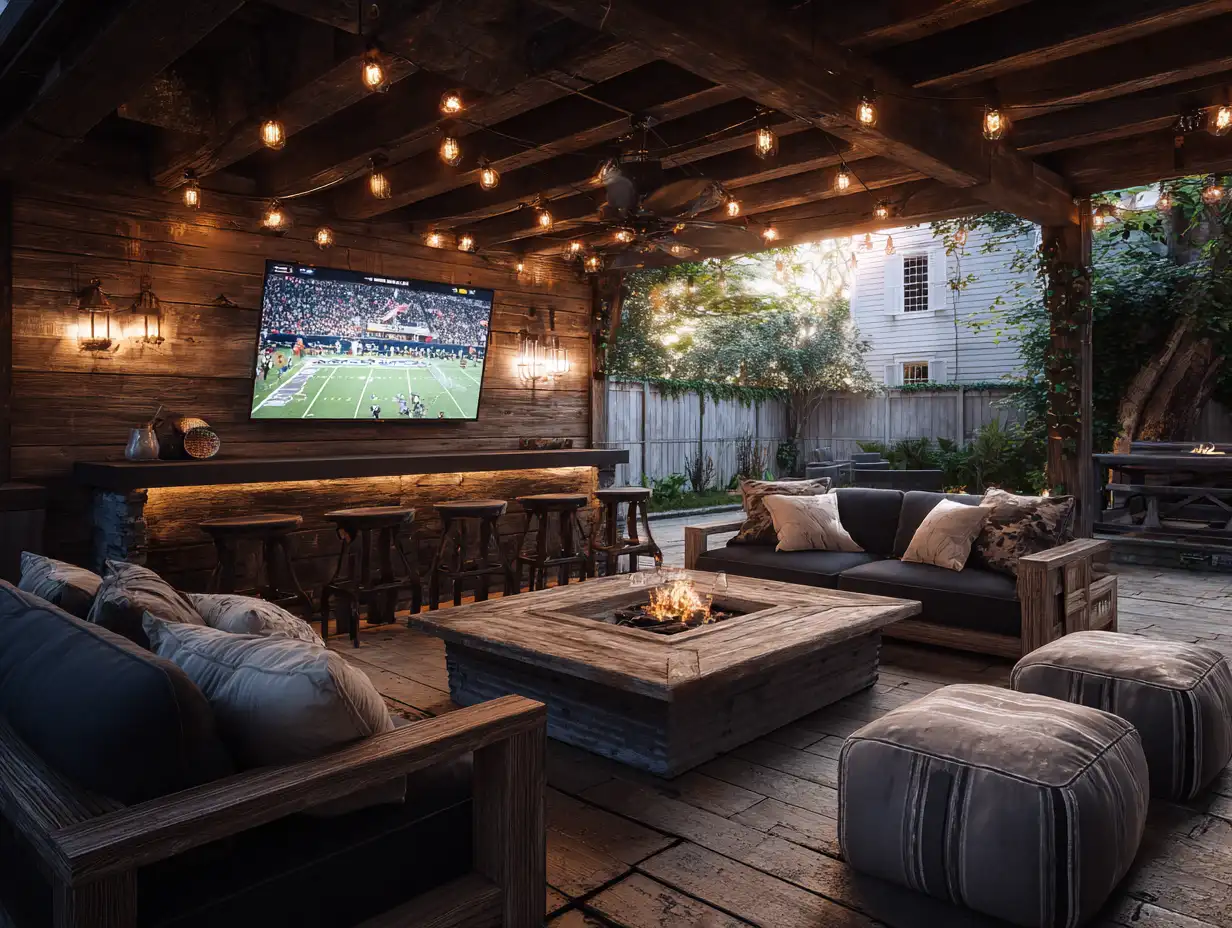
Shade keeps you cool. This section is about protecting your investment.
Rain and drainage
- Make sure your patio or seating area slopes away from the house to prevent standing water.
- Standing water after every rain points to a drainage problem, not just bad luck.
Sun, snow, and seasonal protection
- Store cushions and fabric items indoors during winter, and cover electronics, grills, fire features, and furniture during extended bad weather.
- Choose UV-resistant fabrics and durable materials like teak or powder-coated aluminum to reduce fading, cracking, and weather damage.
- Rotate cushions occasionally so they wear evenly instead of fading on one side.
Covers and storage
A weatherproof deck box or storage bench keeps cushions and accessories protected and organized. If your TV stays outside year-round, use a weather-rated enclosure. Quality fitted covers for furniture, grills, and fire features cost far less than replacing them.
Outdoor Electrical Planning for TVs, Man Cave Lighting, and Appliances
This is the part people plan last and regret first. Figure out your power needs before you buy anything, not after.
What actually needs power:
- TV, and depending on the setup, a soundbar or speakers too
- Mini fridge or beverage cooler
- Fans, especially in climates with real summer heat
- String lights or any permanent lighting
- Charging stations if people are out there for hours
Extension cords vs. permanent wiring:
- Extension cords work fine for a season or two of light use, but they’re not a real long term solution
- Running cords across walkways is a trip hazard and looks unfinished
- If you’re using the space regularly, a dedicated outlet or two pays for itself in convenience and safety
Dedicated outlets:
- A licensed electrician can run a weatherproof outdoor outlet from your existing panel
- GFCI protection is non negotiable outdoors, it’s what keeps water and electricity from becoming a real problem
- Plan for more outlets than you think you need, it’s cheaper to add them during the build than after
Before you commit to permanent wiring:
- Check if you need a permit, most areas require one for new outdoor electrical work
- Think about future additions, if you might add a hot tub or outdoor kitchen later, plan capacity now instead of redoing it twice
Man Cave Entertainment Ideas
The entertainment features you choose can either make your outdoor entertainment area feel like a lifestyle upgrade or turn it into a maintenance project. Balance what you want now with what adds value later.
TV mounting and weatherproofing:
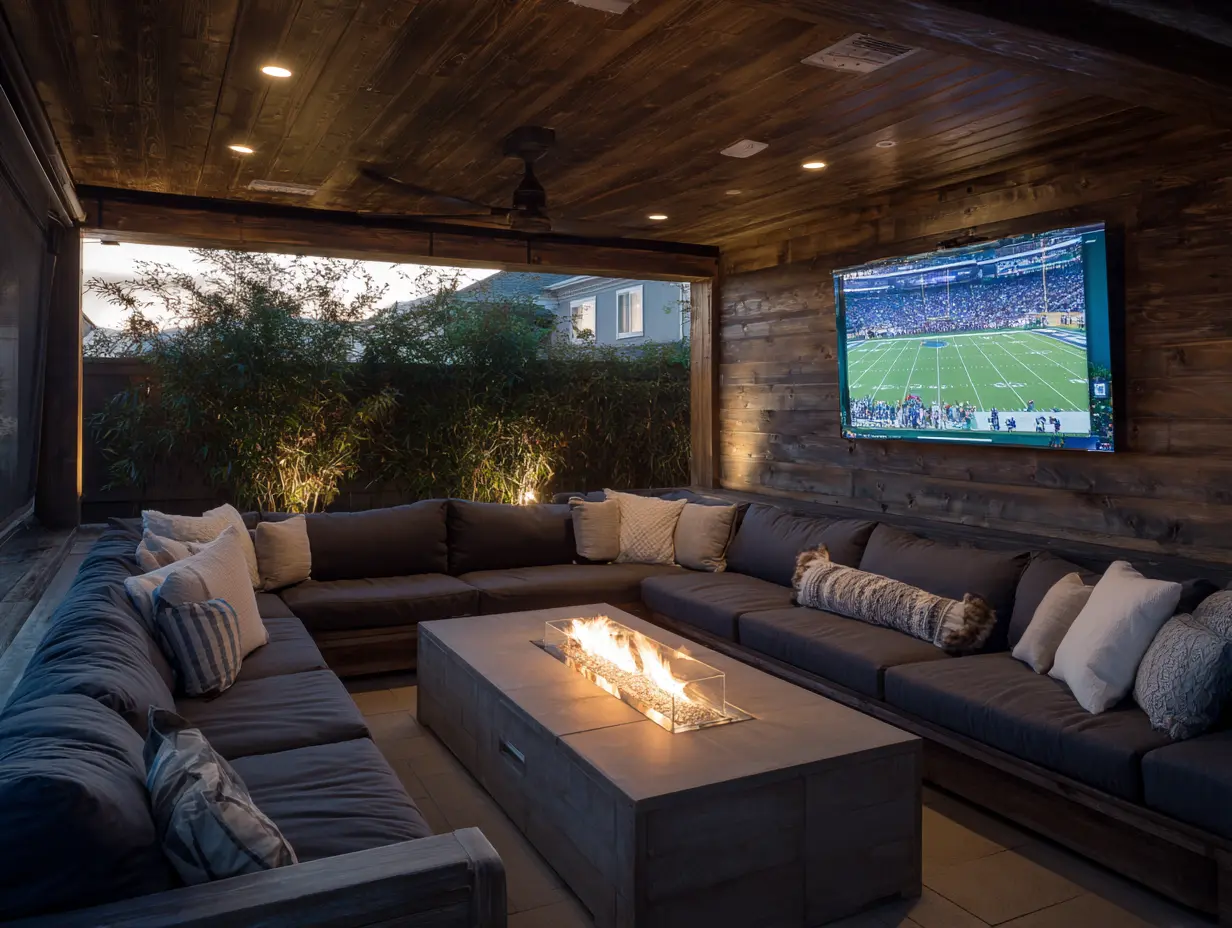
- Outdoor-rated TVs are expensive, but standard TVs in weatherproof enclosures work on a budget
- Avoid direct sunlight on the screen and position it where seating naturally faces
- Plan for cable management and electrical access before mounting
Audio setup:
- Bluetooth speakers work for most setups without running wires
- For permanent installs, outdoor-rated in-ceiling or landscape speakers blend in better
- Keep volume control accessible
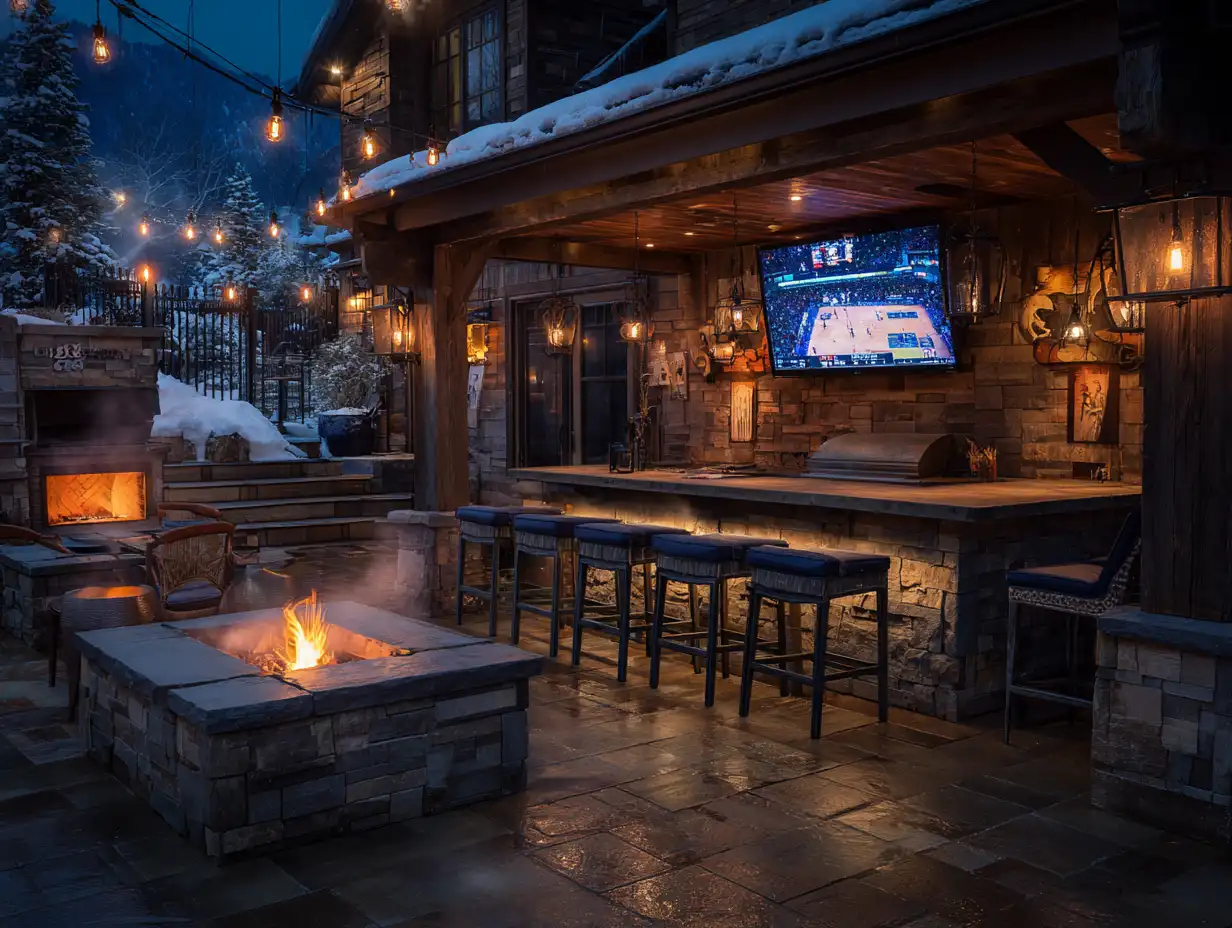
Fire features make people gather. Gas fire pits, built-in fire tables, or simple metal fire bowls feel intentional. Massive stone fireplaces that dominate the yard or DIY setups that look unsafe don’t.
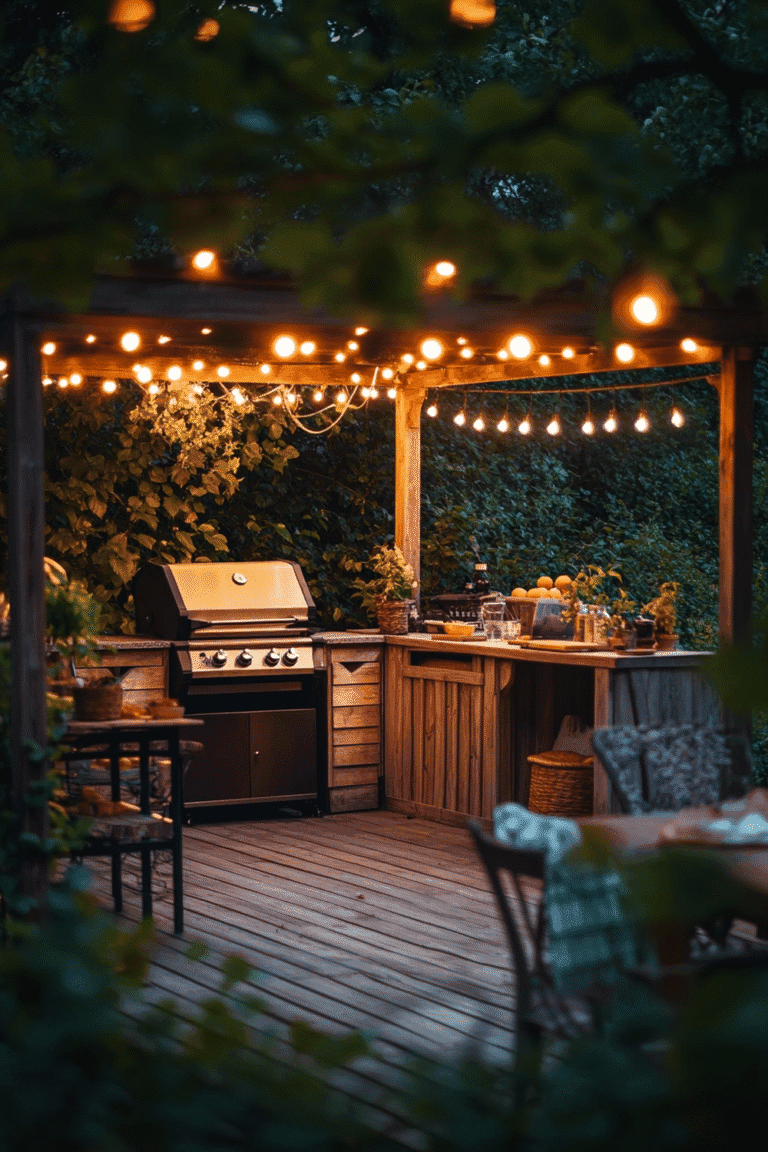
If you’re adding a full outdoor kitchen or bar, my post on backyard outdoor kitchen ideas walks through the planning process.
Man Cave Lighting Ideas for a Backyard Hangout
Lighting is one of the easiest upgrades to get right, yet it’s often treated as an afterthought.
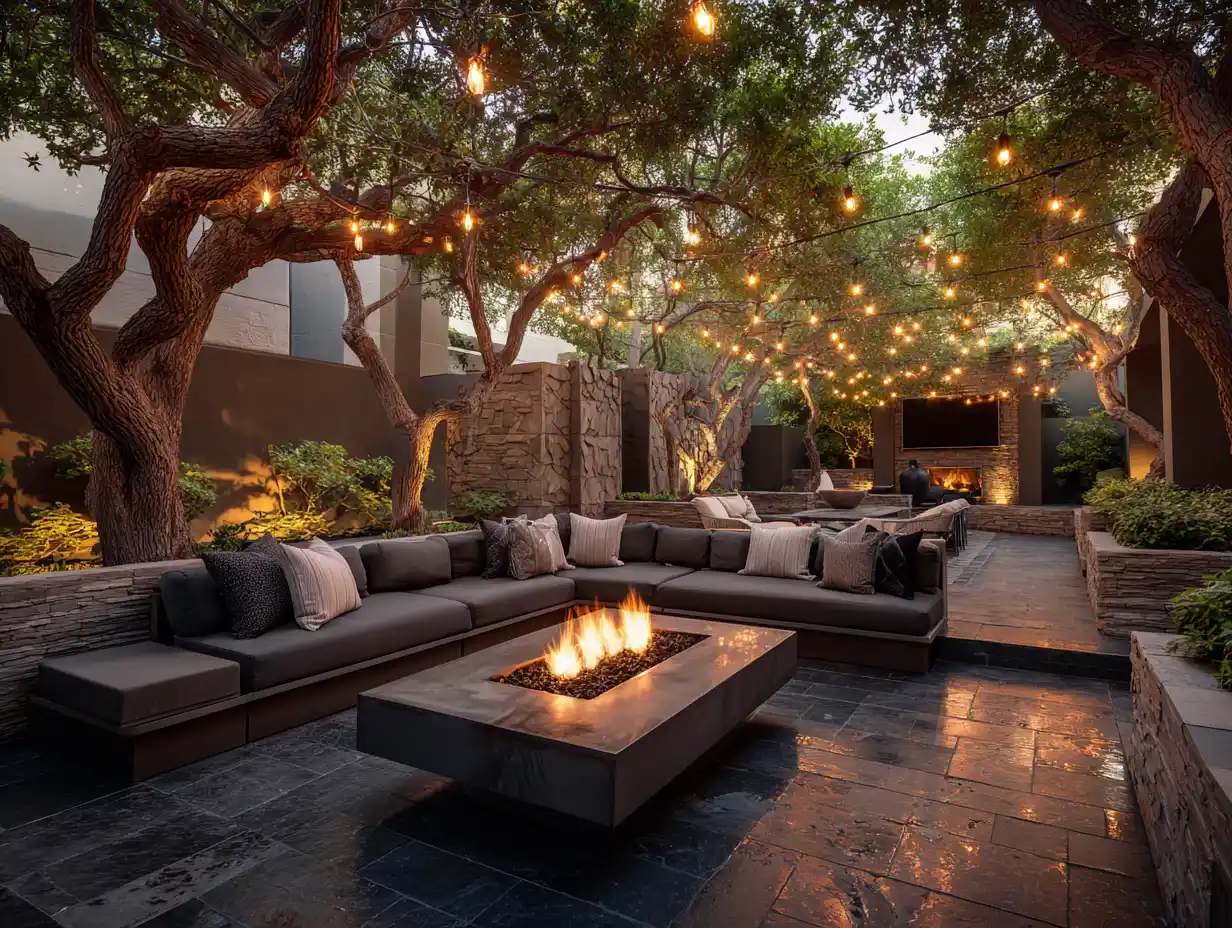
Choose warm white bulbs (around 2700K to 3000K) over cool white whenever possible. Warm lighting makes the space feel inviting and relaxed, while cool white can feel harsh and make an outdoor seating area resemble a parking lot.
Layer ambient and task lighting:
- Ambient lighting (string lights, lanterns) creates mood
- Task lighting (directional lights near seating or bar areas) makes the space usable after dark
String lights work when placed right:
- Zigzag patterns overhead work well
- Edison bulbs or warm-toned LEDs create better ambiance than cool white
- Add a dimmer or timer for versatility
For permanent setups, consider low-voltage landscape lighting along pathways, recessed lighting under pergola beams, or wall-mounted sconces near seating to create layers of light without overwhelming the space.
Check out my post on outdoor porch lighting ideas for more fixture placement ideas.
Best Outdoor Flooring for a Backyard Entertainment Area
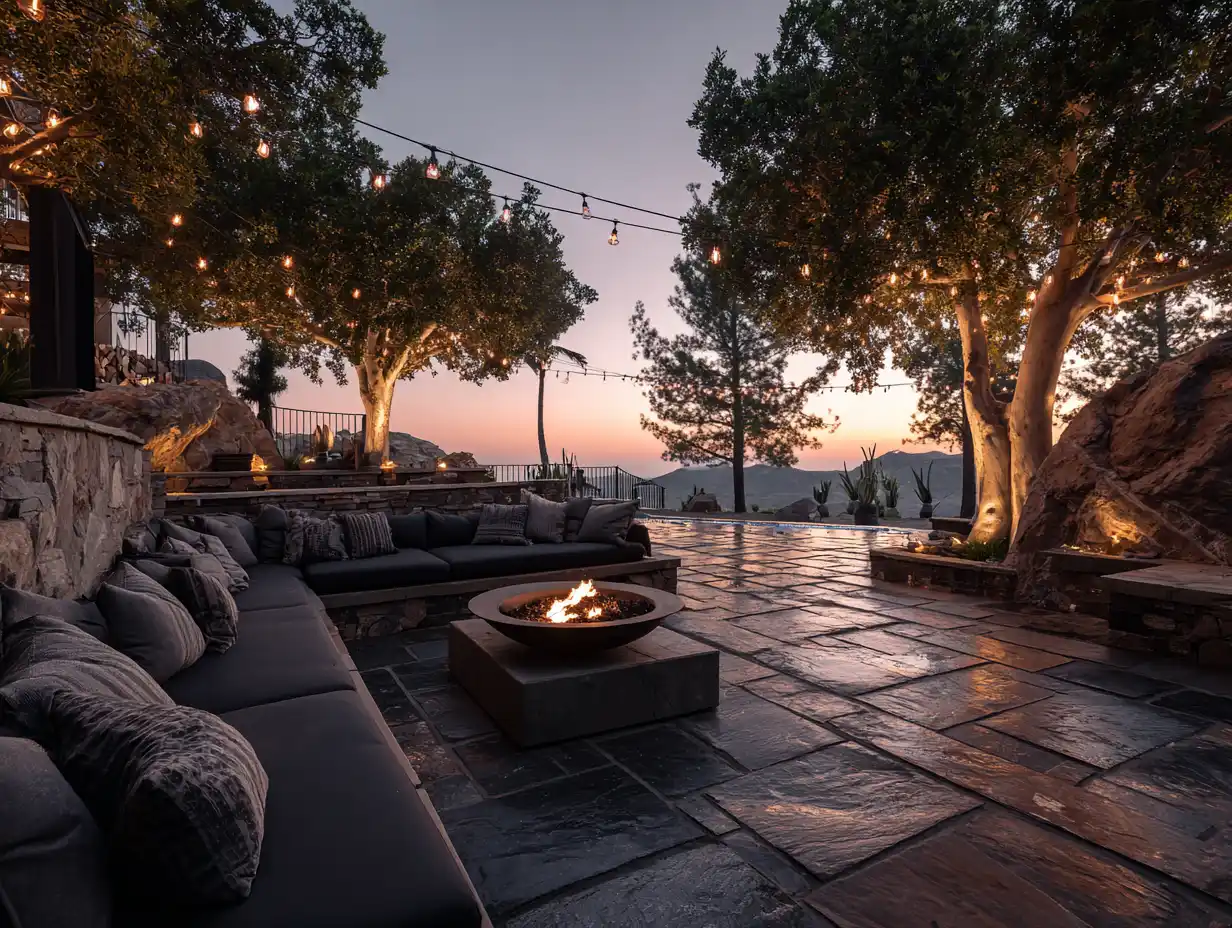
The best outdoor flooring balances durability, maintenance, comfort, and cost. Here’s how the most common materials compare.
Material Comparison
| Material | Durability | Cost | Maintenance | Resale Appeal |
|---|---|---|---|---|
| Concrete (poured) | High | $$ | Low | High (neutral, clean) |
| Pavers (stone/brick) | High | $$$ | Medium | High (classic look) |
| Composite Decking | Medium-High | $$$ | Low | Medium-High (modern feel) |
| Gravel/Decomposed Granite | Medium | $ | Medium | Medium (casual vibe) |
| Wood Decking | Medium | $$ | High | Medium (requires upkeep) |
Avoid wood decking unless you’re committed to regular sealing and maintenance. If you’re still deciding between building a deck or a patio first, my Patio vs. Deck guide compares cost, maintenance, and long-term value.
Best Weather-Resistant Outdoor Furniture
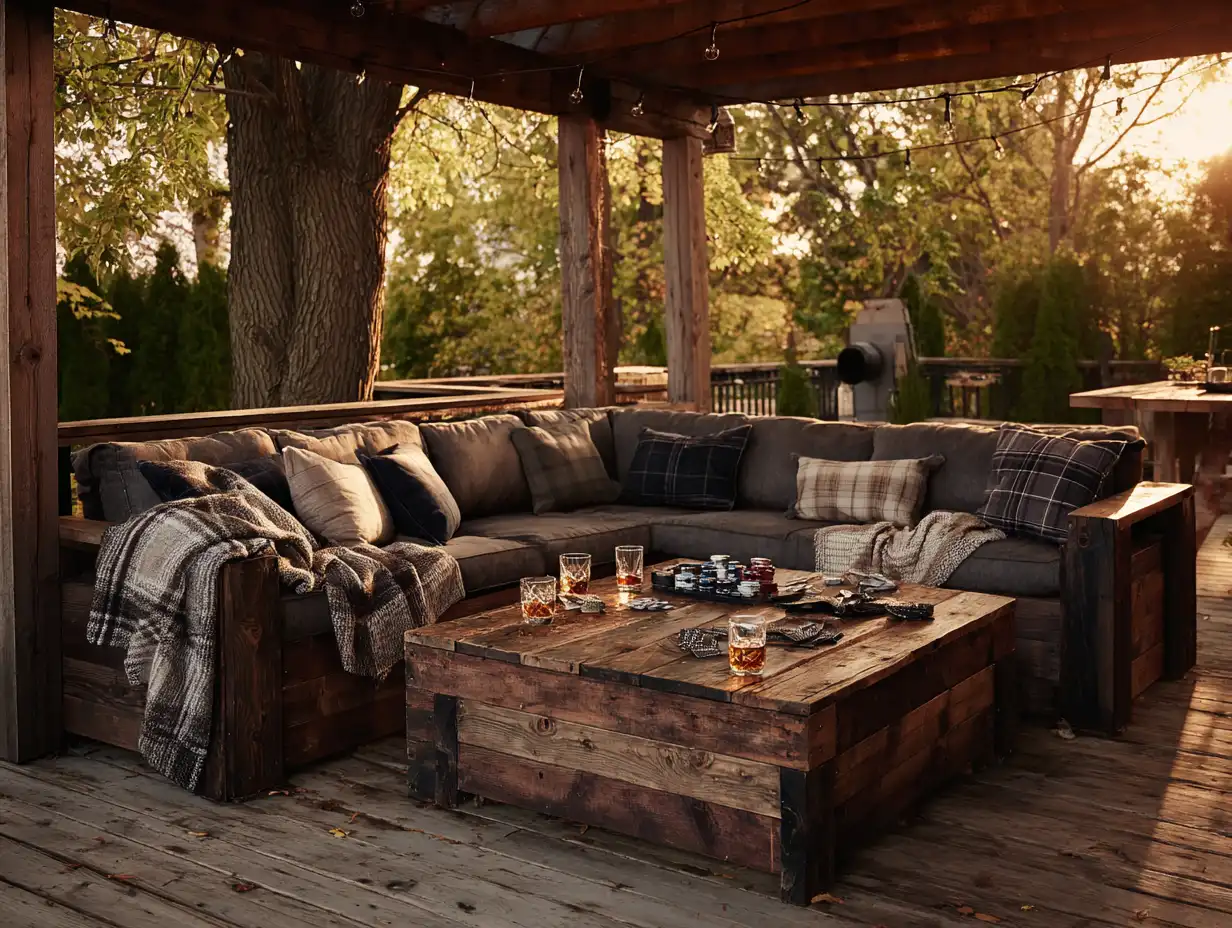
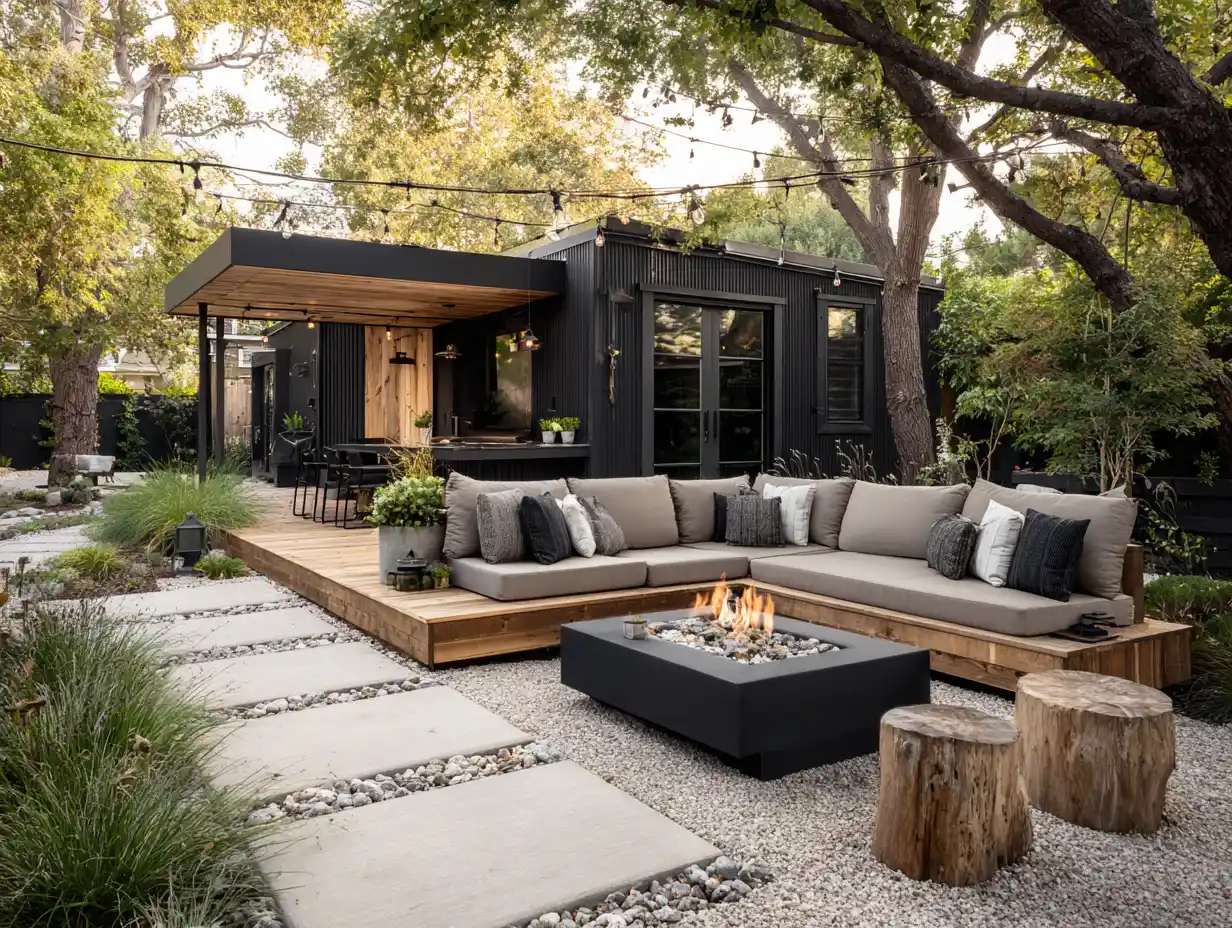
Furniture scale matters more than style. The right size makes your outdoor man cave feel comfortable, while oversized pieces can make even a large patio feel cramped.
Get the sizing right:
- Measure your seating area before buying furniture. Use tape to outline the footprint first.
- Leave at least 3 feet of walking space around seating areas.
- Oversized furniture overwhelms small patios, while undersized furniture can make large spaces feel unfinished.
Choose materials that last:
Buy furniture that’s comfortable enough to encourage people to stay and relax.
All-weather wicker, powder-coated aluminum, and teak are durable choices for most climates.
Look for cushions with quick-dry foam and removable, washable covers.
Backyard Man Cave Mistakes to Avoid
Overbuilding for the lot size: Outdoor entertainment areas that dominate small yards leave no usable lawn. Leave room for flexibility.
Ignoring flow and access: Stairs, tight pathways, or muddy lawn between house and outdoor man cave kill the vibe. The transition needs to feel natural and easy.
Maintenance nightmares: Weathered wood, cracked grout, or broken water features signal “expensive project.” Keep it ready to enjoy, not ready to fix.
Features that feel too niche: Elaborate home brewing setups, cigar lounges, or sports-themed spaces so specific people can’t imagine using them differently. Personal touches are fine, but when the whole space revolves around one interest, it limits appeal.
Frequently Asked Questions
How much value does an updated backyard add to my home?
It depends on the project and your local market. A thoughtfully designed outdoor entertainment area can make your home more appealing to buyers, especially in climates where outdoor living is a big part of everyday life. While it may increase perceived value, it doesn’t always translate into a dollar-for-dollar return on investment.
Do I need permits for structures?
Usually, yes, if you’re adding permanent structures like covered patios, electrical work, or plumbing. Check with your local building department before you start.
What’s the minimum space I need for a functional backyard man cave?
10×10 feet is the bare minimum for a small seating area or single entertainment feature. 12×16 feet gives you room to create zones. Anything smaller than 10×10 works better as a cozy nook.
How do I winterize my outdoor man cave?
Store cushions and fabric items indoors, cover or protect electronics and furniture, and shut off water lines if you have plumbing. Clean and cover fire features.
Should I make my outdoor setup permanent or keep it flexible?
Permanent structures add more value but require more investment. Flexible setups let you test the layout and adjust as needed. If you’re staying long-term, go permanent. If you’re selling soon or renting, keep it flexible.
Ready to Build Your Backyard Retreat?
The best outdoor man cave isn’t the biggest or the most expensive. It’s the one that fits your space, your budget, and the way you actually spend time outside.
Start with a realistic layout, choose durable materials that match your climate, and add features over time as your needs change. Whether you’re creating a quiet place to unwind or a backyard built for game days and family gatherings, thoughtful planning now will help you enjoy the space for years to come.
You got this!