
Outdoor porch lighting sounds simple until you’re standing in the Lowe’s aisle staring at 47 nearly identical fixtures, wondering if “oil-rubbed bronze” is the same as “aged bronze.”
Here’s what I learned as a former Real Estate Broker: porch lighting isn’t just about seeing where you step. It’s the first impression, the handshake before the door even opens.
I’ve seen homes sit on the market for weeks because the porch felt unwelcoming. I’ve also watched offers come in fast when the outdoor porch lighting made people feel safe, seen, and eager to walk inside.
This guide covers front porch lighting ideas that include sizing rules, placement formulas, fixture types, and how to layer your lighting so it works as hard as it looks good. Whether you’ve got a tiny stoop or a wraparound porch, we’re building curb appeal that sells.
Table of Contents
Psst… some posts may include affiliate links, which means I might earn a small commission if you shop through them — at no extra cost to you. As an Amazon Associate, I earn from qualifying purchases.
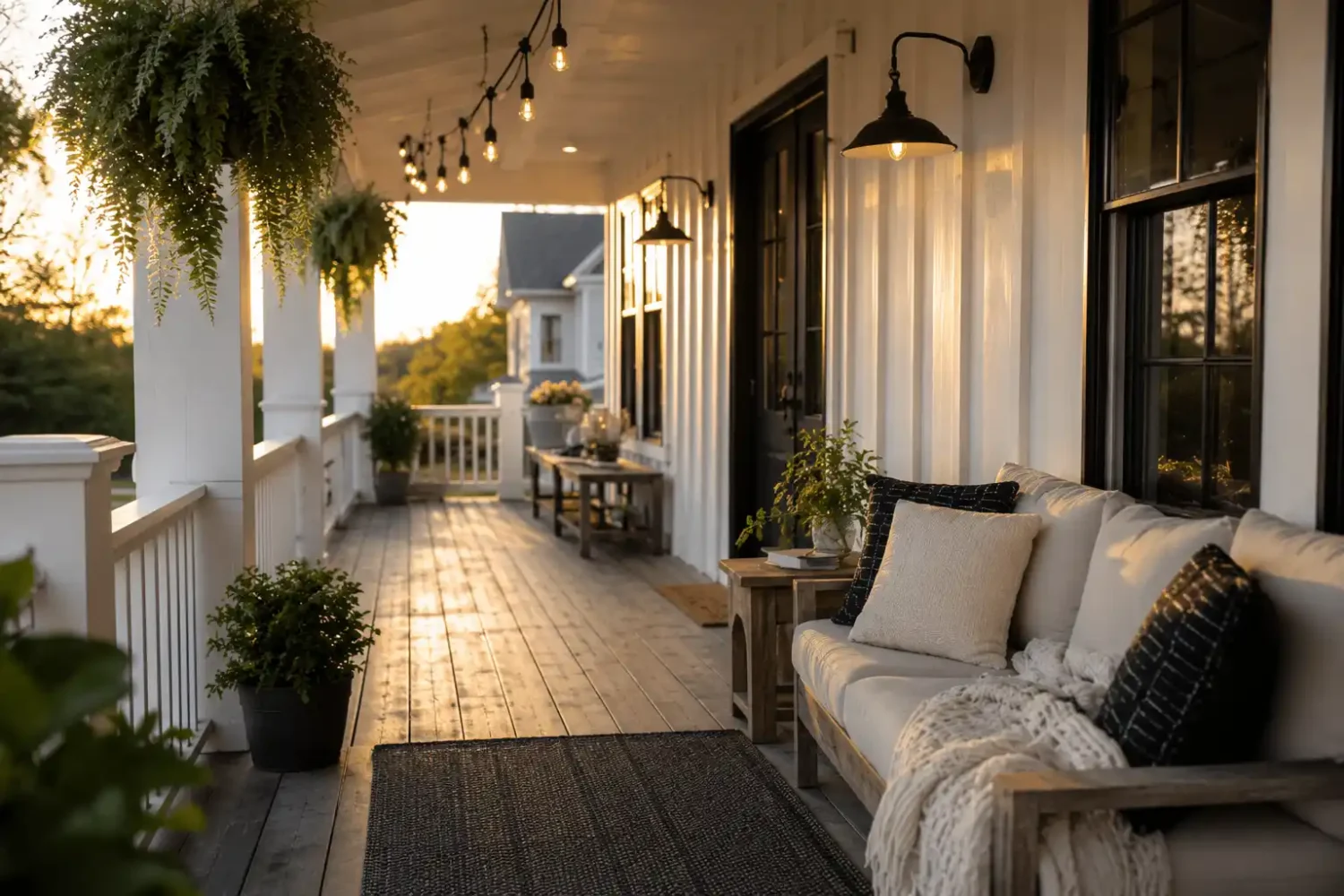
Why Outdoor Porch Lighting Matters
I once showed a house in the dead of winter when it gets dark by 4:30 PM in the Pacific Northwest. The porch had one lone light, and it was flickering like a horror movie set. My buyer’s wife took one look and said, “First impression? I don’t know if I want to see it. This might be a sign!” And that’s the power of lighting. It either says “come on in, you’re safe here” or “maybe keep walking.”
What Good Lighting Does:
- Creates a welcoming first impression for guests and buyers
- Improves safety by lighting steps, pathways, and entries
- Boosts curb appeal and home value instantly
- Extends usable outdoor space into evening hours
- Shows that homeowners care about the details
Want more ways to boost your curb appeal without a major investment? Check out Front Yard Decor Ideas That Instantly Boost Curb Appeal for simple upgrades that make a big impact.
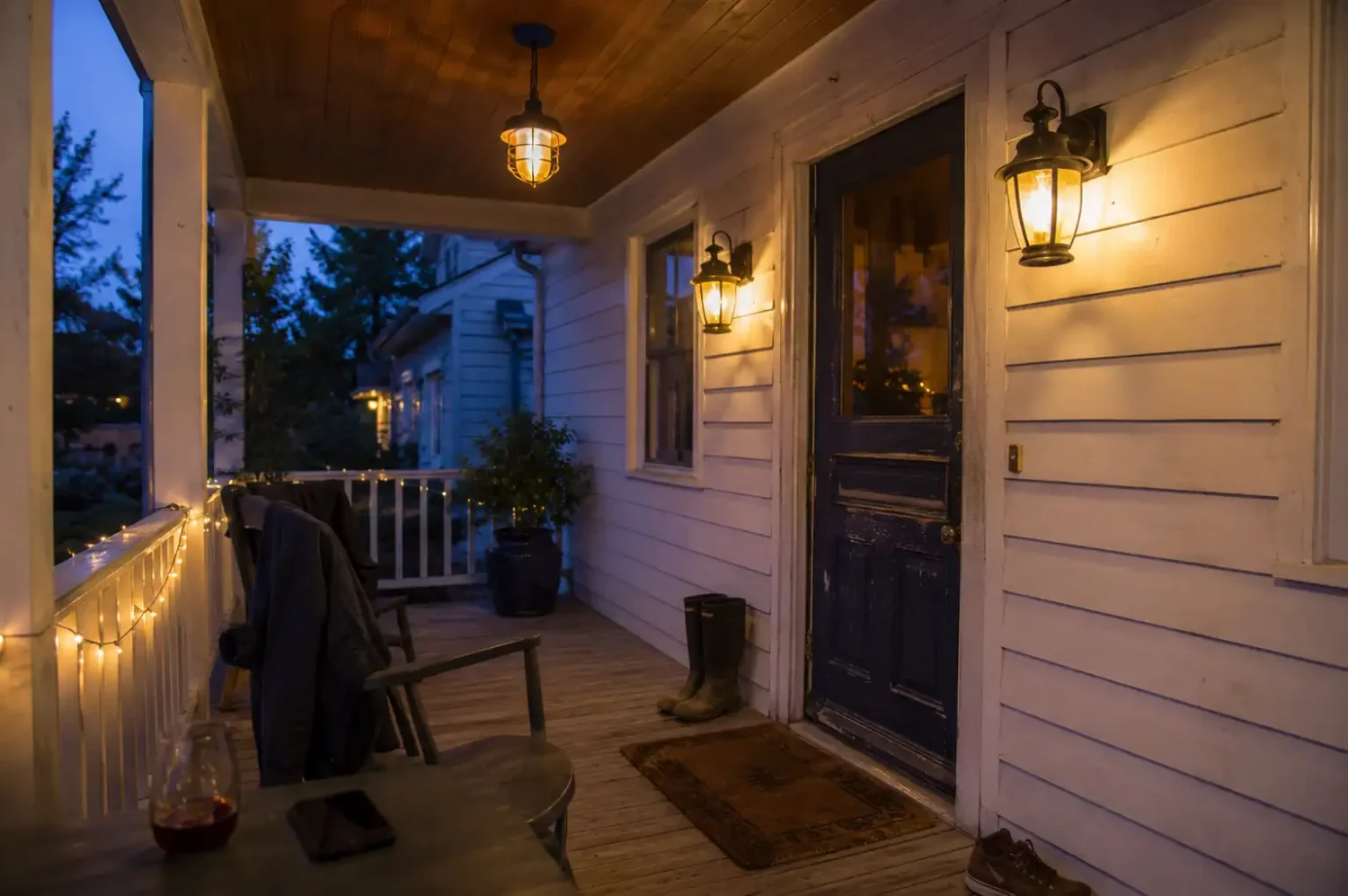
Outdoor Porch Lighting: Size, Brightness & Placement
Getting the sizing and placement right is the difference between a porch that feels polished and one that feels like an afterthought. Here are the rules I used when staging homes for sale, the same ones that made buyers pause and say “this feels right.”
Sizing Rules for Entryway Light Fixtures:
- Measure your door width in inches, then divide by 4. That’s your minimum fixture width. (Example: 36″ door = 9″ fixture minimum)
- For double doors or grand entries, go wider. Aim for fixtures that are ⅓ to ½ the width of the door.
- When in doubt, size up. An oversized fixture reads planned, while undersized always looks cheap.
Spacing & Placement for Outdoor Sconce Lights:
- Mount sconces 65-70″ from the ground to the center of the fixture (roughly eye level)
- Space sconces 8-10 feet apart along porches or walkways for even coverage
- Flank your front door with matching sconces spaced 4-6 feet apart for balanced symmetry
Brightness Guidelines:
- Entryways: 1,200-1,600 lumens total (split between fixtures if using two)
- Accent lighting: 400-600 lumens per fixture
- Pathway lights: 100-200 lumens each for soft guidance without glare
- Always choose warm white bulbs (2700-3000K) for inviting glow
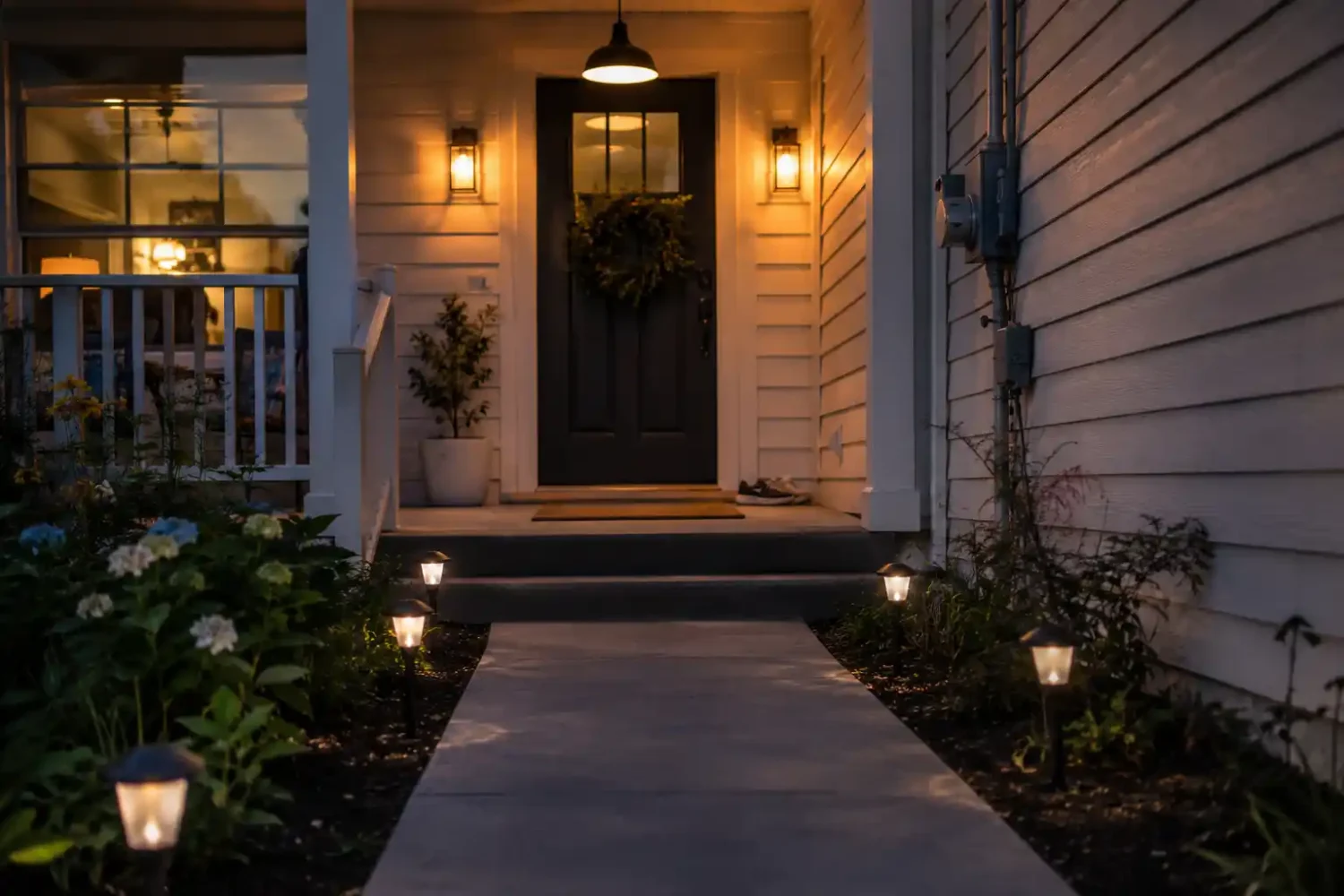
Best Exterior Light Fixtures by Porch Type
Not all porches are created equal, and your lighting strategy should match the space you’re working with. Here’s a quick breakdown of what works best for different porch types.
| Porch Type | Best Fixture Type | Placement Tips | Brightness Guide |
|---|---|---|---|
| Small Porch | Compact wall sconces or flush mounts | Mount one centered fixture above the door, or flank with two slim sconces | 800-1,200 lumens total |
| Large Porch | Oversized lanterns or statement pendants | Use matching fixtures on both sides of the door, plus overhead pendant if covered | 1,500-2,000 lumens total |
| Screened Porch | Ceiling fans with integrated lights or string lights | Install ceiling-mounted fixtures for even coverage, add accent lamps on tables | 1,000-1,500 lumens total |
| Covered Porch | Hanging lanterns or recessed lights | Hang fixtures from ceiling beams, layer with wall sconces for depth | 1,200-1,800 lumens total |
When considering front porch lighting ideas, choosing the right fixtures comes down to proportion. A tiny sconce on a wraparound porch looks lost, while an oversized lantern on a narrow stoop feels like overkill. Match your fixture scale to your porch size, and you’ll nail the look every time.
When shopping for exterior light fixtures, look for weather-resistant finishes like powder-coated steel, aluminum, or treated bronze. These hold up against rain, snow, and UV exposure without fading or rusting.
Want more ideas for creating an inviting outdoor space? Check out Summer Porch Decor That Feels Like a Mini Getaway for seasonal styling tips that pair perfectly with great lighting.
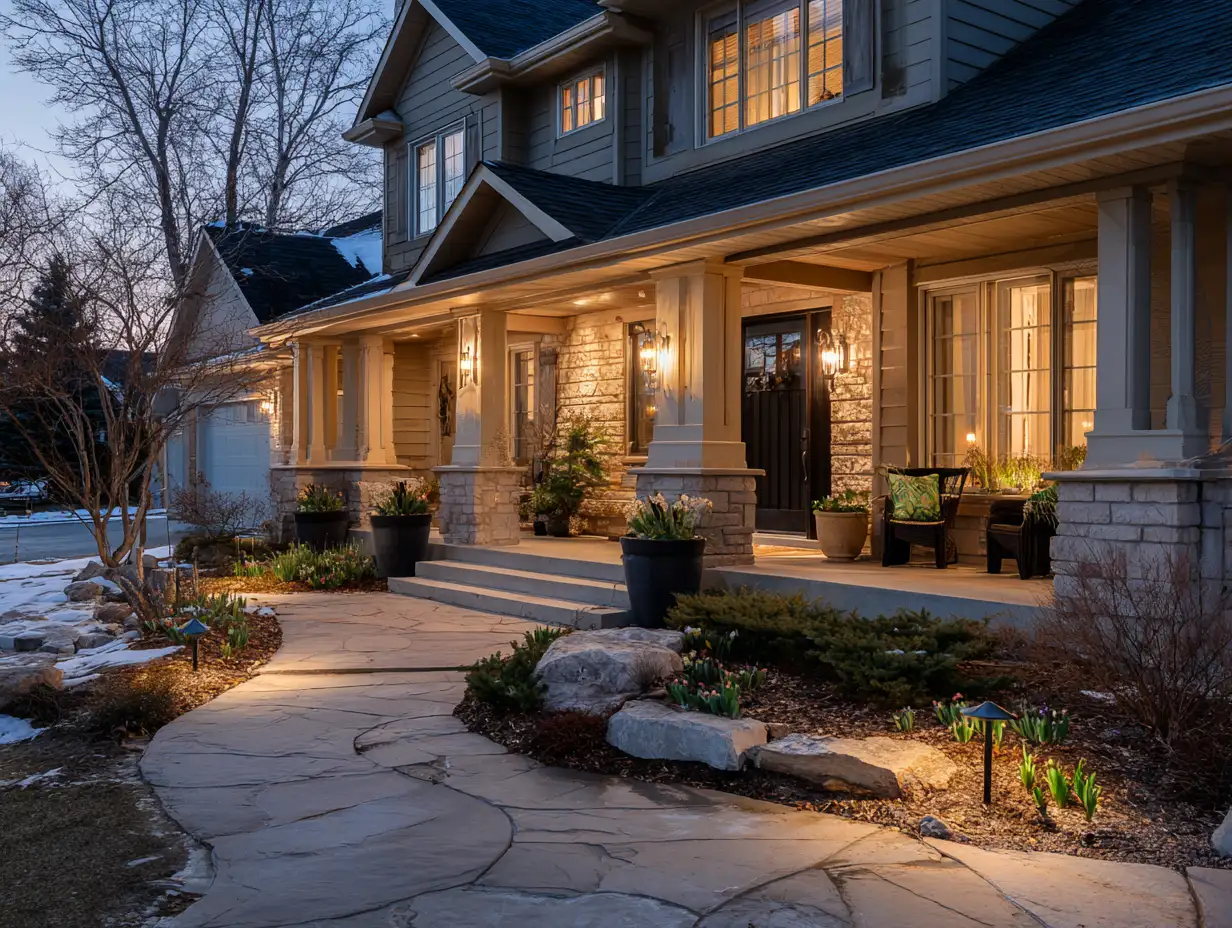
Layering Your Porch Lighting: Ambient, Task & Accent
The best outdoor spaces don’t rely on one overhead light doing all the work. Layering creates depth, warmth, and flexibility. Think of it like styling a room: you need a mix of lighting types to make the space feel complete.
How to Layer Your Lighting:
- Ambient lighting: This is your base layer. Overhead fixtures, ceiling fans with lights, or wall-mounted lanterns that provide general illumination.
- Task lighting: Functional light for specific areas like steps, doorways, or seating zones. Outdoor sconce lights work perfectly here.
- Accent lighting: The finishing touch. String lights, solar lanterns, or uplights that highlight plants, architecture, or decorative elements.
When you combine entryway light fixtures with outdoor sconce lights and a few accent pieces, your porch shifts from “just lit” to “designed.” Buyers and guests notice the difference immediately.
Layering Tips:
- Start with one strong ambient fixture, then add task lighting where needed
- Use dimmers wherever possible so you can adjust the mood
- Mix fixture styles that share a common finish (like all matte black or all bronze)
- Don’t forget vertical surfaces: wall sconces add dimension that overhead lights can’t
For more front porch lighting ideas that refresh your outdoor spaces without breaking the bank, check out 7 Easy Home Refresh Tips That Don’t Require a Contractor.
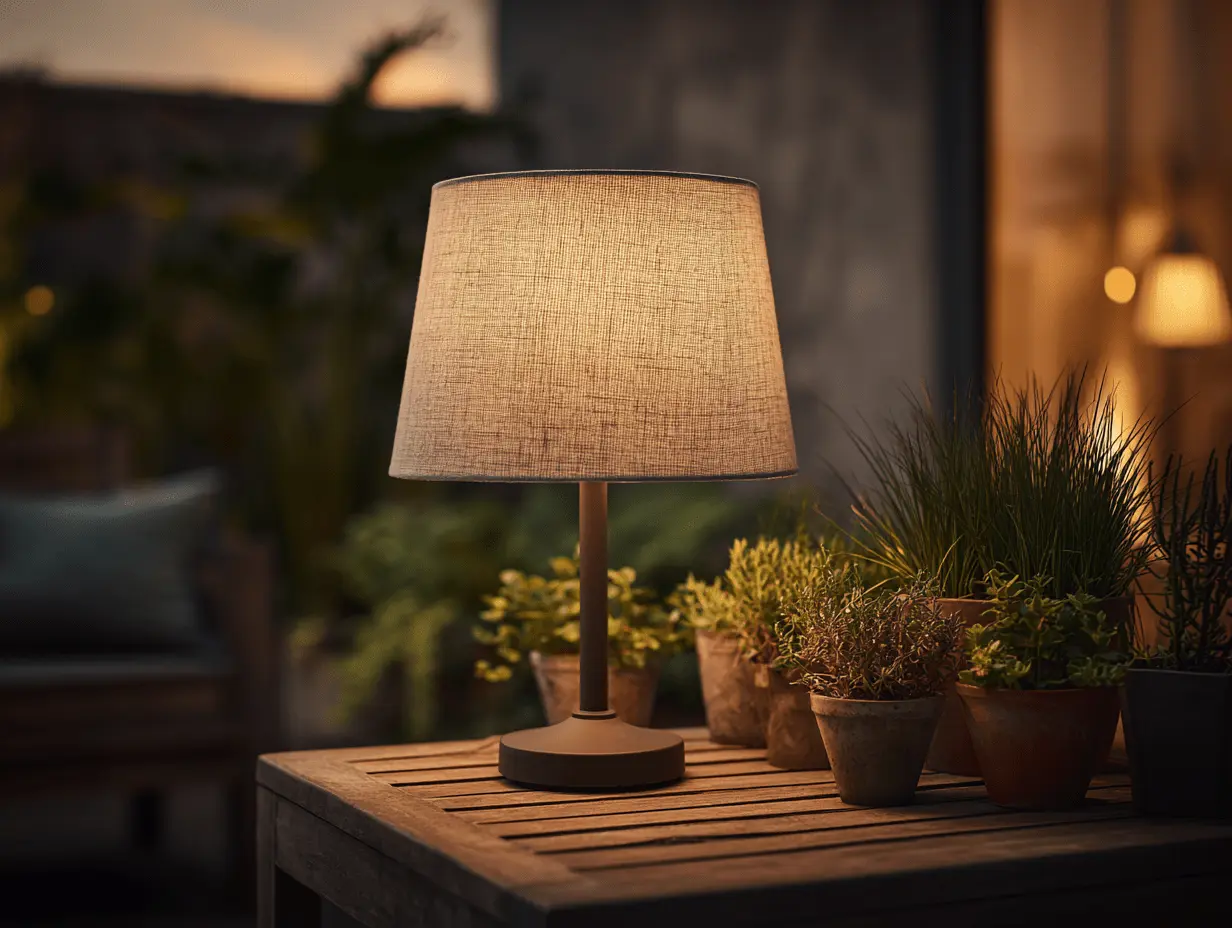
Porch Pathway Lighting That Guides Without Glare
According to the National Association of Realtors, lighting plays a dual role: safety and ambiance. They note that “lighting is one of the most important and most impactful features for your front yard.” One of the easiest ways to achieve both? Pathway lights.
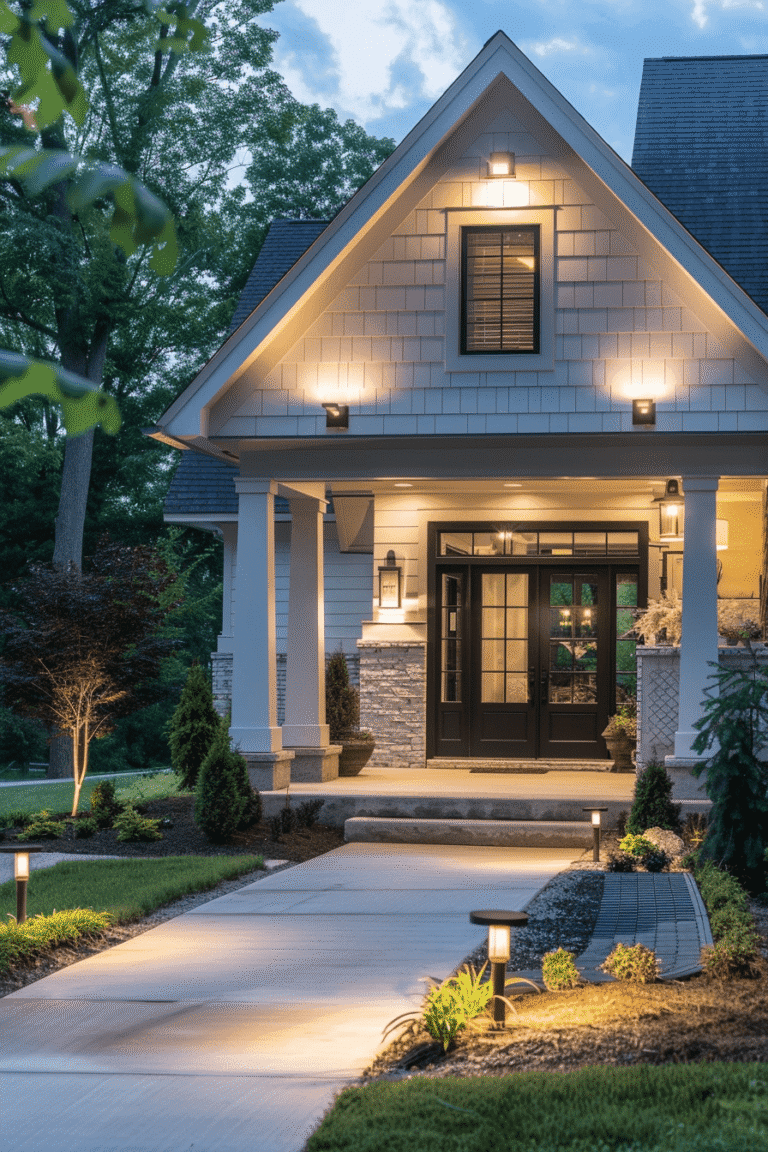
These low-profile fixtures guide guests safely to your door while adding a polished, welcoming glow. The key is spacing them correctly and choosing warm tones that feel inviting, not institutional.
Placement Tips:
- Space lights 6-8 feet apart along walkways for even coverage
- Stagger them on alternating sides of the path for a natural look
- Use solar-powered options to save on energy and skip the wiring
- Aim for 100-200 lumens per fixture so they guide without blinding
- Choose warm white (2700-3000K) to keep the vibe warm and inviting
Pathway lighting isn’t just functional. They frame your home’s approach and make it more welcoming.
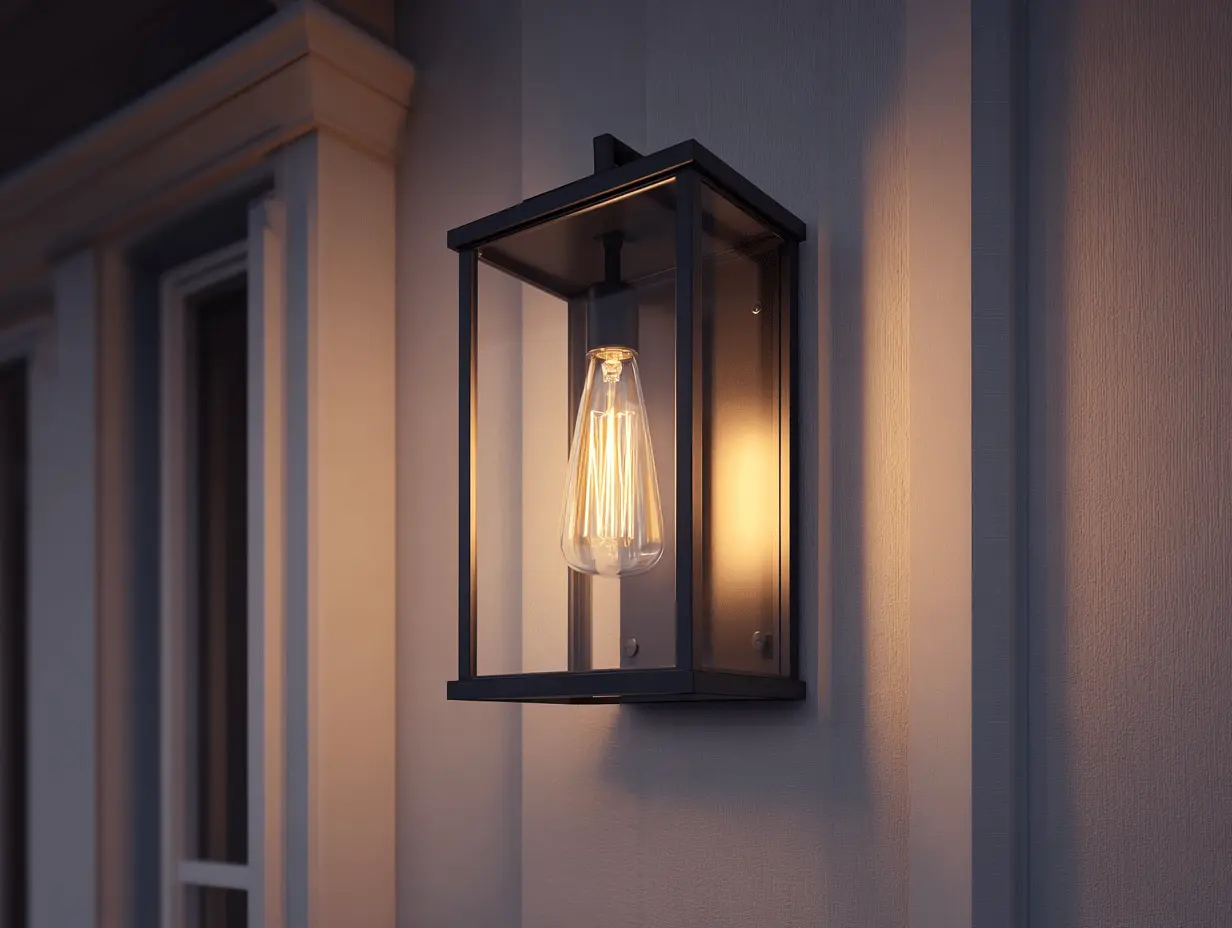
Small Porch Lighting Solutions
As a former Real Estate Broker, I’ve shown hundreds of homes with small porches in the Spokane area. Most homes are older and the porches aren’t exactly glamorous. But here’s what I learned: it’s not always about how big the porch is, it’s about how purposeful you are with your lighting.
That’s the mindset shift: you’re not decorating a small porch, you’re designing a welcome. Lighting can make or break a buyer’s first impression of your home. So even if your porch is small, think outside the box and make sure you’re giving off the best first impressions possible.
Small Porch Tips:
- Choose slim-profile fixtures like narrow wall sconces or compact flush mounts
- Mount one centered fixture above the door if space is tight
- Add a battery-powered lantern on a small table or hook for extra ambiance
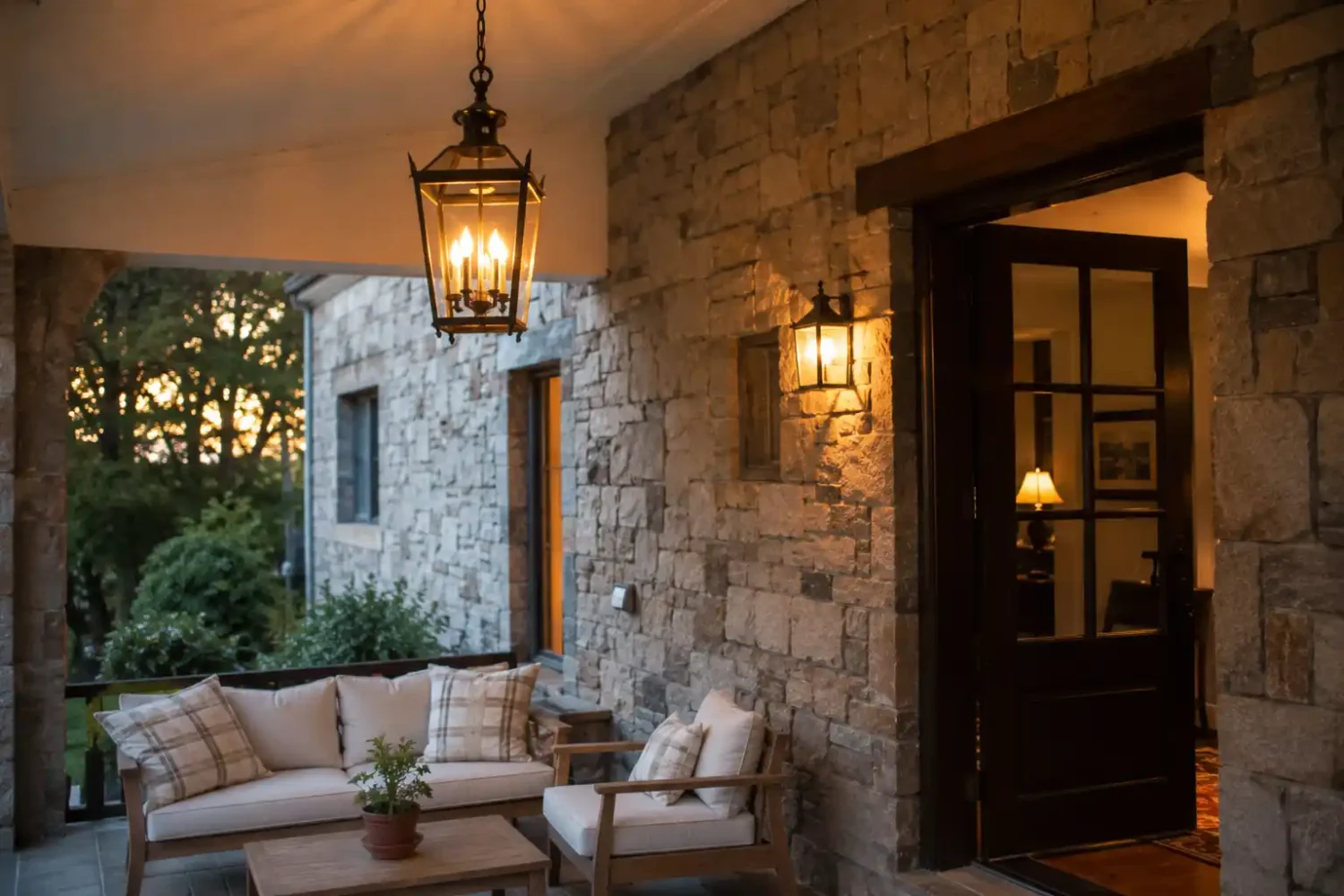
- Use vertical space: a hanging lantern draws the eye up and makes the entry feel taller
- Stick with one finish to keep the look cohesive and uncluttered
Looking for more small-space solutions? Don’t miss 7 Tiny Bedroom Ideas That Instantly Transform Small Spaces for design tricks that work inside and out.
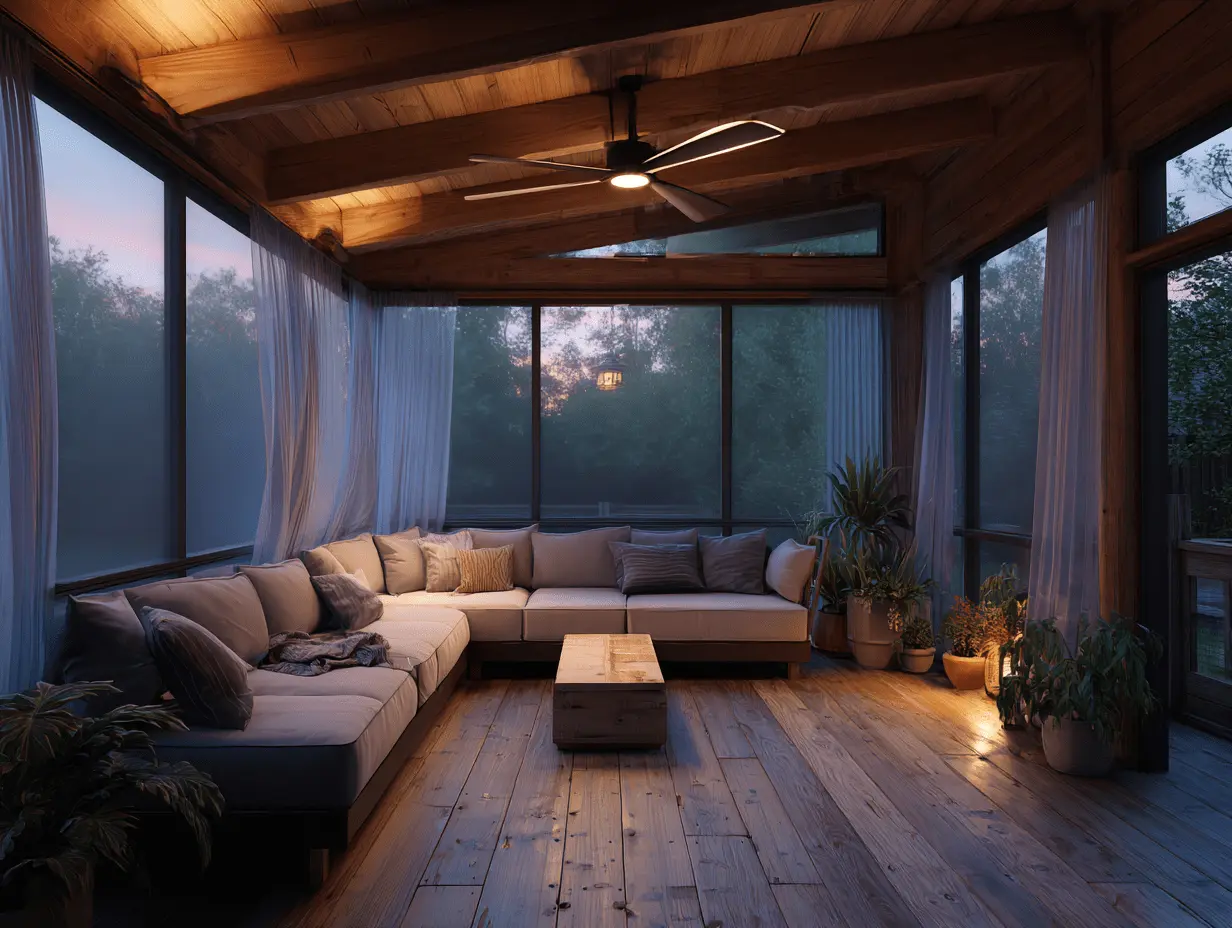
Screened Porch & Covered Porch Lighting Tips
Screened and covered porches are bonus living spaces, and the lighting should reflect that. You want fixtures that create ambiance without feeling too bright or sterile. Think warm, functional, and gathered.
Screened & Covered Outdoor Porch Lighting Tips:
- Install a ceiling fan with integrated LED lighting for dual-purpose comfort
- Add outdoor sconce lights on walls or posts for accent glow
- String lights across the ceiling or wrap them around beams for soft, festive vibes
- Use battery-powered lanterns on tables or shelves for flexible mood lighting
- Consider pathway lights along the porch perimeter to define the space at night
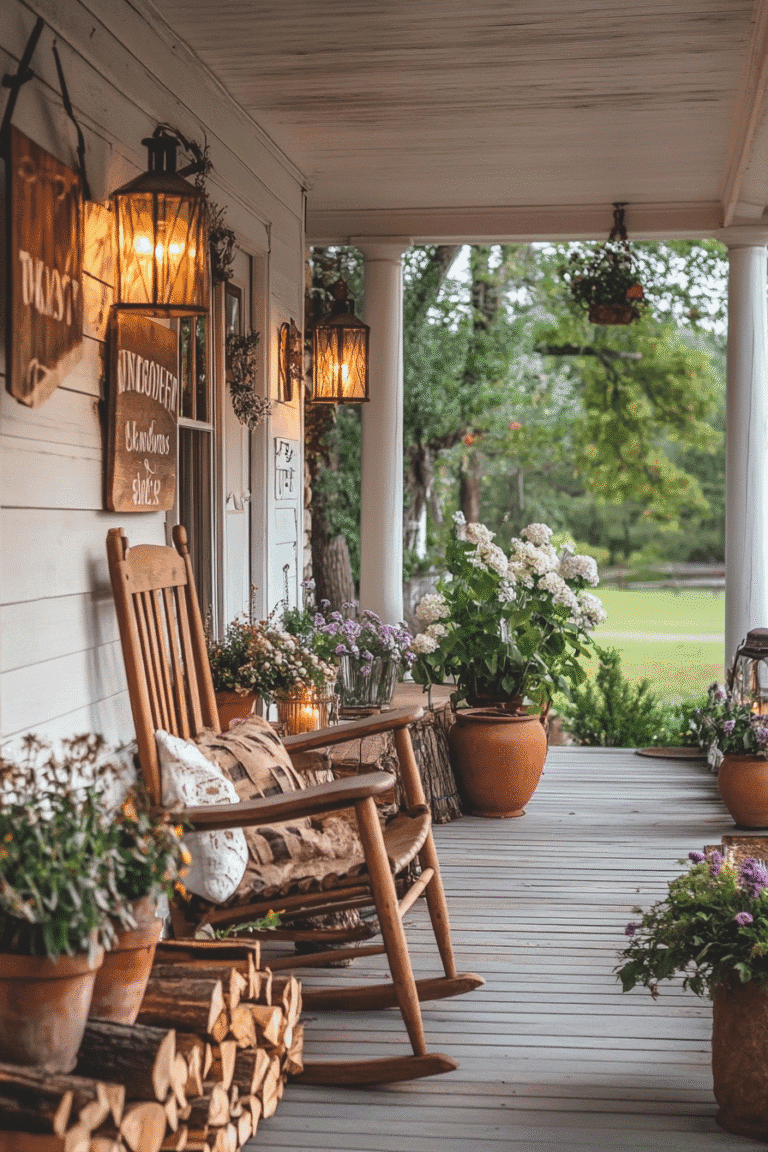
These spaces are perfect for layering multiple light sources. A ceiling fixture handles the base lighting, while sconce lights and lanterns add warmth and personality. The result? A porch that feels like an extension of your living room, not just a pass-through.
Want to create the ultimate outdoor retreat? Check out Backyard Retreat Ideas: Seating, Lighting, Shade, & Design Tips for more inspiration on turning outdoor areas into your favorite hangout spots.
FAQ: Everything You Asked About Outdoor Porch Lighting
What size fixture should I use for my front door?
Measure your door width in inches and divide by 4. That’s your minimum fixture size. For a 36″ door, aim for at least a 9″ wide fixture. When choosing entryway light fixtures, always size up if you’re between two options.
What’s the best bulb color for outdoor lighting?
Stick with warm white bulbs in the 2700-3000K range. They create an inviting glow that makes your home feel welcoming. Avoid cool white or daylight bulbs, they feel harsh and uninviting at night.
How far apart should I space pathway lights?
Space them 6-8 feet apart along walkways for even coverage. Stagger them on alternating sides of the path for a natural look, and keep them at 100-200 lumens each so they guide without glaring.
Can I use solar lights for my lighting?
Yes! Solar lights work great for pathway lighting, accent lighting, and even some wall-mounted fixtures. Just make sure they get enough sun exposure during the day to charge properly. They’re budget-friendly and require zero wiring.
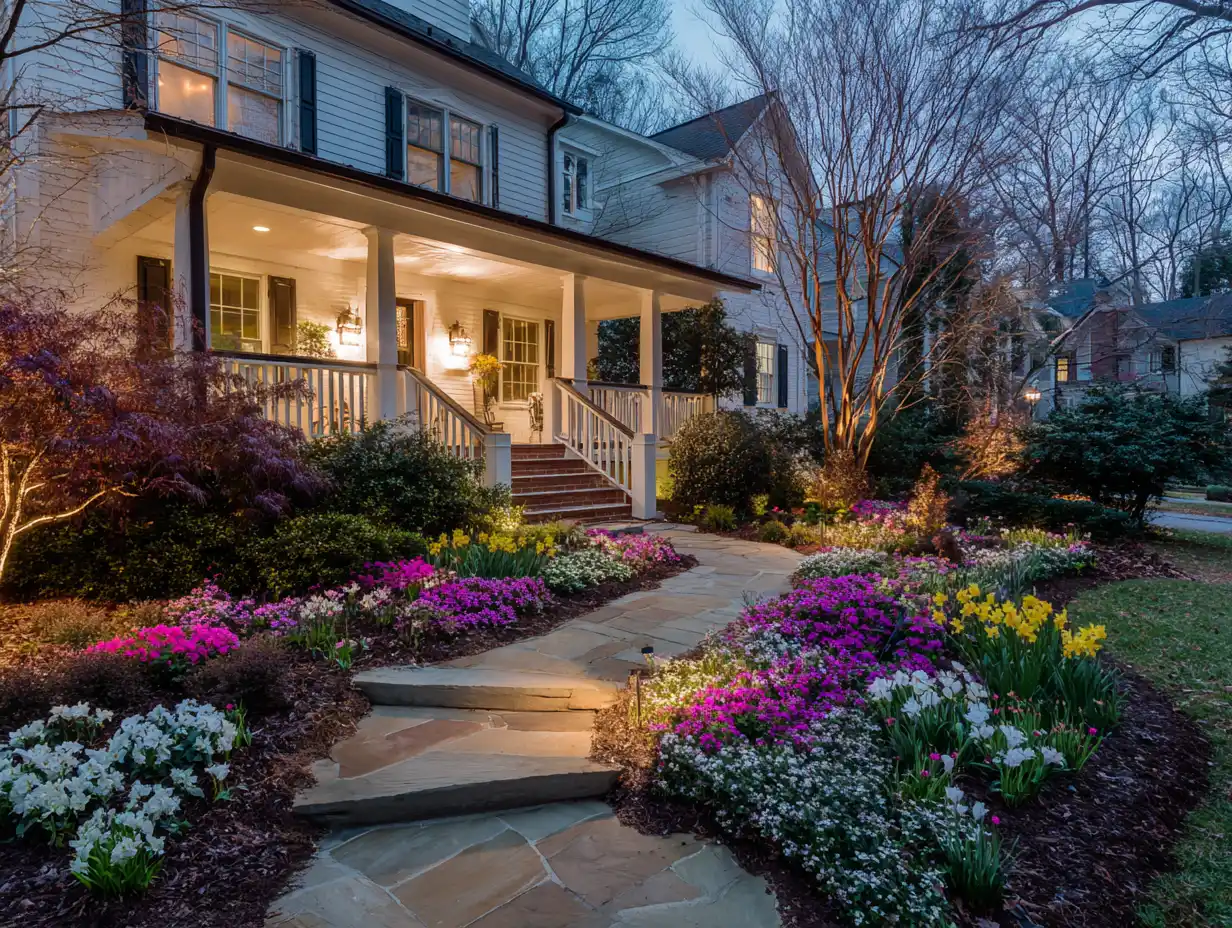
The Right Porch Light Changes Everything
You don’t need a massive renovation or an electrician on speed dial to transform how your home feels at night. That’s the mindset shift: you’re not just installing lights, you’re creating a vibe. The right fixtures in the right places create safety, warmth, and curb appeal all at once. Whether you’re staging for a sale or just want your front entry to feel more like home, start with the lights. Everything else follows. You’ve got this!
Want more elevated outdoor porch lighting ideas? Room for Tuesday’s guide to Choosing Timeless Exterior Lighting breaks down how to select fixtures that age beautifully and complement architectural style. It’s packed with designer-level advice that pairs perfectly with the lake house aesthetic.