
Steep hill landscaping starts with deep-rooted ground covers like creeping phlox and vinca to stop erosion, DIY terracing to create flat usable space, and native plants like sumac and switchgrass that hold soil without much maintenance. Professional steep slope landscaping runs $3,000 to $10,000, but DIY brings it down to a few hundred.
Steep hill landscaping ideas don’t have to be complicated or expensive. If you’re staring at a bare, eroding slope and wondering what to plant, you’re in the right place.
In this guide, you’ll get:
– Simple slope landscaping layouts that stop washouts
– Low‑maintenance hillside landscaping plants that love tough terrain
– Budget‑friendly ways to turn a tricky backyard slope into a standout feature
Table of Contents
1. Ground Covers for Steep Hill Landscaping Ideas That Beat Erosion
Bare soil on a hillside will wash away the first time it rains hard. Ground covers are the foundation of any good low maintenance hillside landscaping plan, rooting deep and spreading fast to lock everything in place.
Best ground covers for steep slopes:
- Creeping phlox – Low maintenance, blooms in spring, spreads like wildfire and chokes out weeds
- Vinca – Thrives in shade, stays green year-round, and handles drought once established
- Pachysandra – Perfect for shady slopes where grass won’t grow and nothing else wants to either
- Clover – Fixes nitrogen in the soil, looks lush, and costs almost nothing to plant
- Creeping thyme – Handles foot traffic, smells amazing, and works beautifully between stepping stones
- Ice plant – Thrives in hot dry slopes, blooms in bright colors, and needs zero babysitting
How to get ground covers established on a slope:
- Plant in early fall or spring when soil moisture is naturally higher
- Space plants closer than the tag says, you want fast coverage
- Water deeply for the first 6 weeks then back off to encourage deep roots
- Mulch between plants until they fill in to prevent washout
These slope ideas start cheap and pay off fast. Ground covers are the single best low maintenance hillside landscaping investment you can make.
If you’re working with a front-facing hillside, pair these ground covers with natural stone accents (the same approach that creates texture in rustic front yard landscaping without adding maintenance).

2. DIY Terracing for Slope Landscaping
You don’t need a contractor or a five-figure budget to terrace a slope. Hillside landscaping ideas on a budget are easy when you have a plan. Start with one simple tier to add structure, slow water runoff, and give your hillside definition.
Why terracing works for sloped landscaping:
- Creates flat, usable spaces on steep terrain
- Prevents soil erosion by breaking up water flow
- Adds visual interest to an otherwise plain hillside
- Gives you a starting point for planting beds, seating, or pathways
How to build your first terrace:
- Pick the flattest natural line on your slope as your starting point
- Mark it with stakes and string so you have a clear guide to follow
- Dig back into the hill about 12 inches to create a stable base
- Stack your retaining blocks from the bottom up, checking level as you go
- Backfill behind the wall with gravel before adding soil on top
- Wait one full season before adding the next tier
One well-placed terrace is one of the best hillside landscaping ideas on a budget, transforming your backyard slope from “challenging incline” to a planned out design feature.
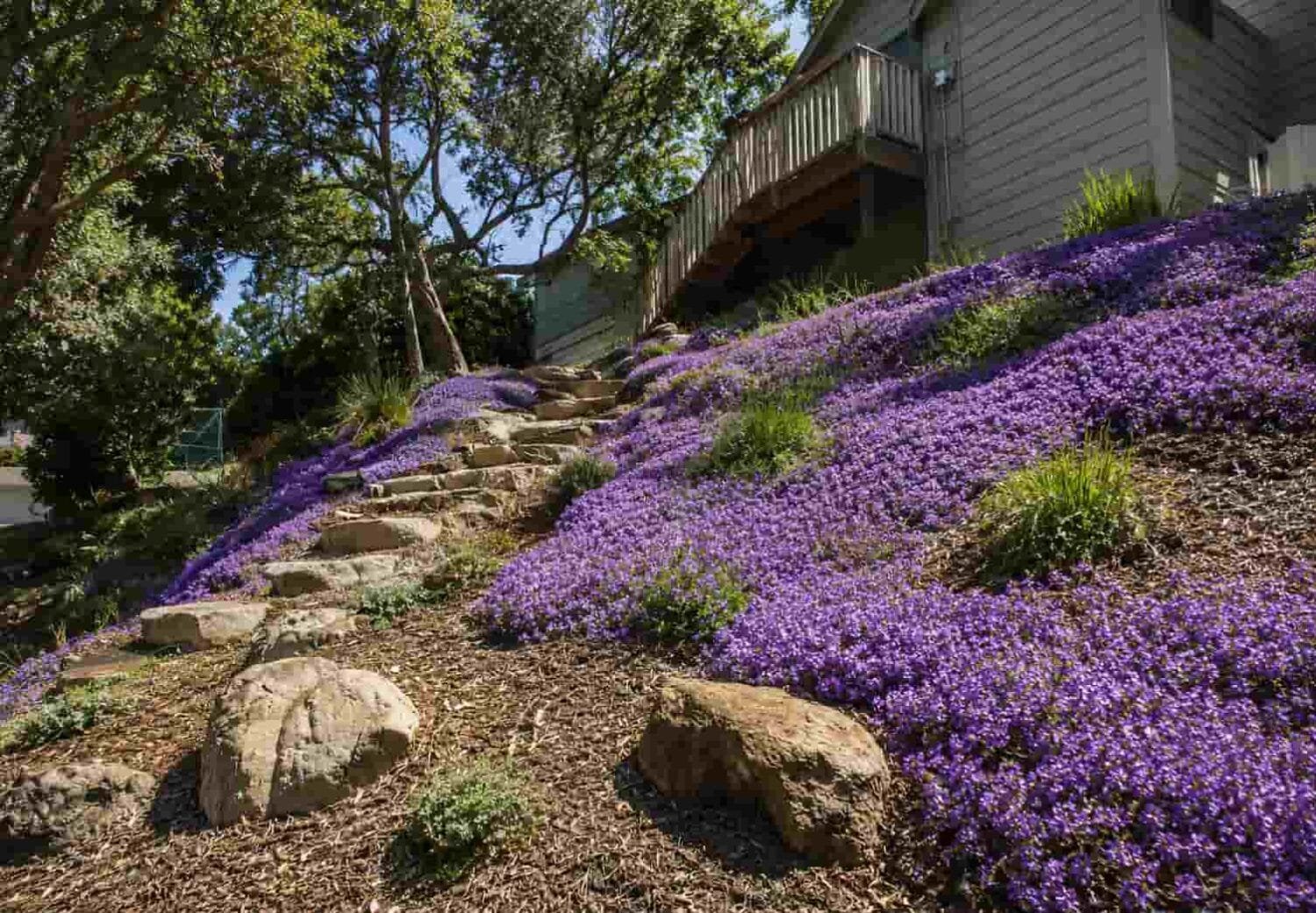
3. Turn Your Slope Into a Backyard Showpiece
Your steep hillside is a design opportunity. Stop seeing your slope as something to fix and start seeing it as a natural stage for layered, dramatic landscaping.
With the right backyard slope ideas, steep hill landscaping transforms from “challenging” to stunning.
How to create a showpiece hillside:
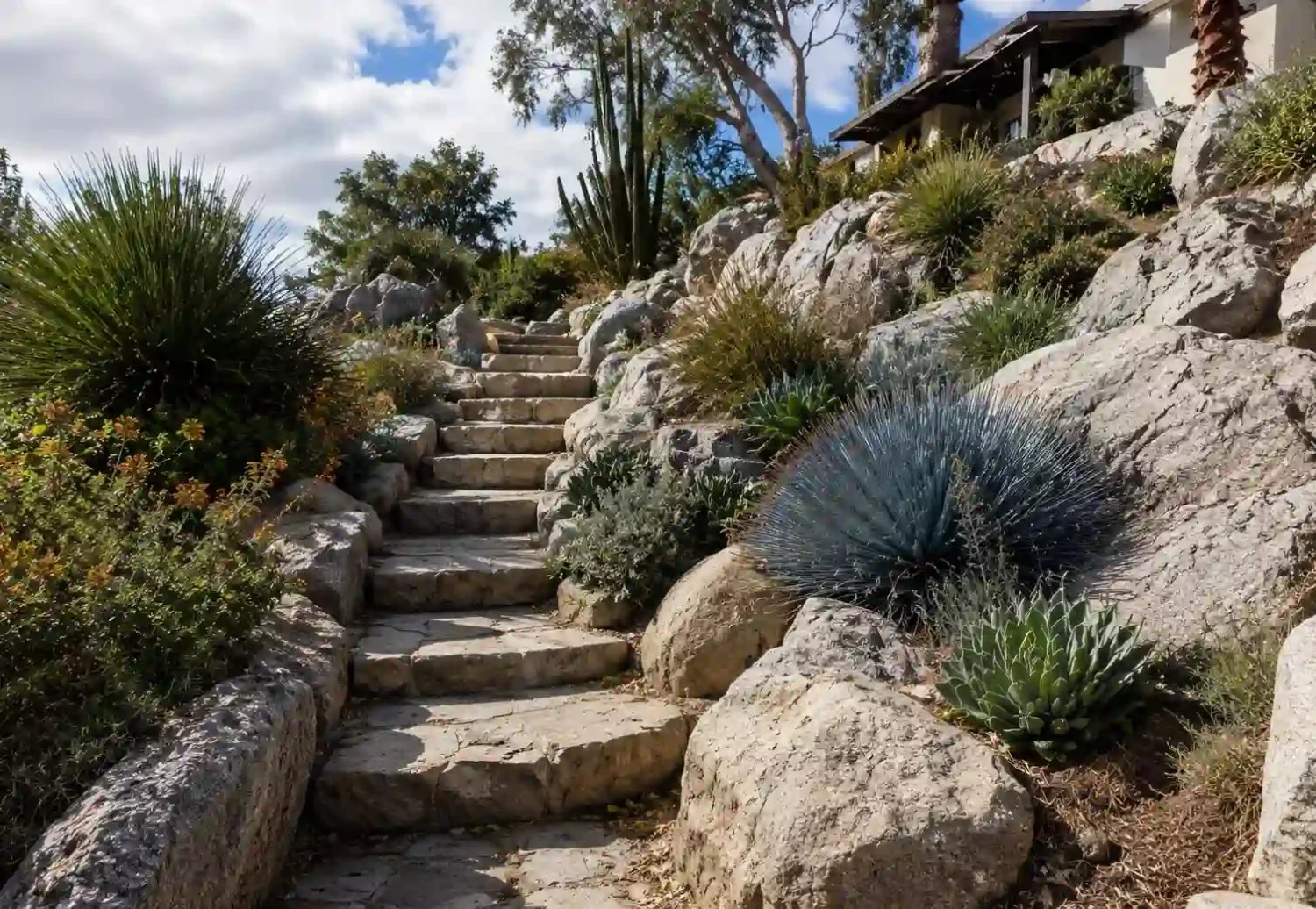
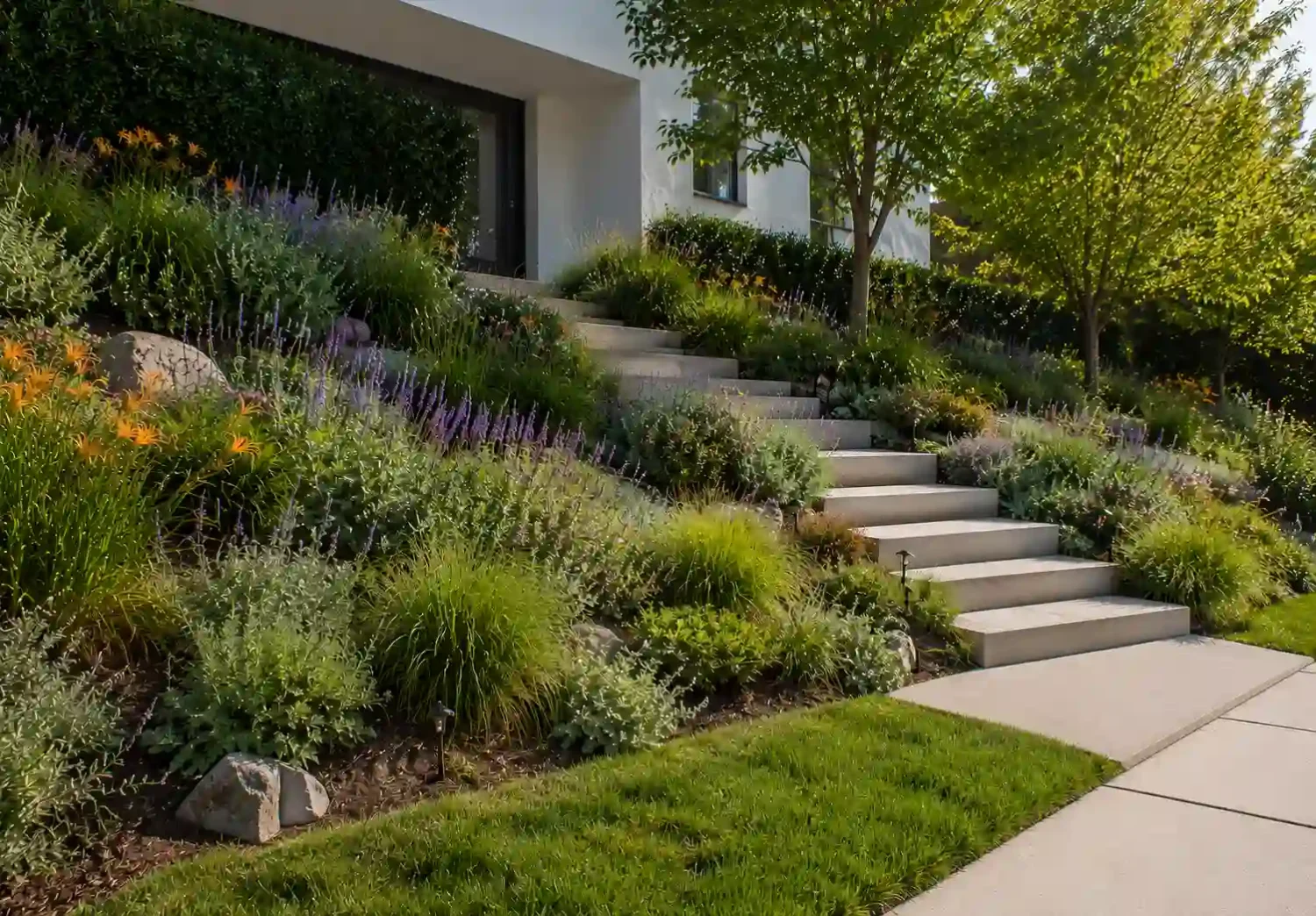
- Use boulders as anchors – They prevent erosion, add visual weight, and create natural planting pockets between them
- Plant in layers – Tall shrubs and grasses in back, mid-height perennials in the middle, low trailing plants like creeping Jenny or petunias in front
- Add dimension with rock – Decorative boulder sets look natural while holding soil in place and breaking up water flow
- Light it up – Low-voltage uplights turn your landscaping into a nighttime feature that stops people in their tracks
- Add a focal point – A single ornamental tree, a large urn, or a birdbath gives the eye somewhere to land
What to avoid on a showpiece slope:
- Planting everything the same height, it looks flat and unintentional
- Skipping mulch between plants, bare soil always looks unfinished
- Choosing plants just for looks without checking their root depth
- Overcrowding, give plants room to fill in naturally over two seasons
Adding plants by height creates depth and makes your backyard slope look purposefully designed instead of accidentally steep.
If you’re looking for more ways to turn outdoor spaces into destinations, check out these backyard retreat ideas that work on any terrain.
Jen’s Picks — Shop This Post
Shop my Amazon Storefront
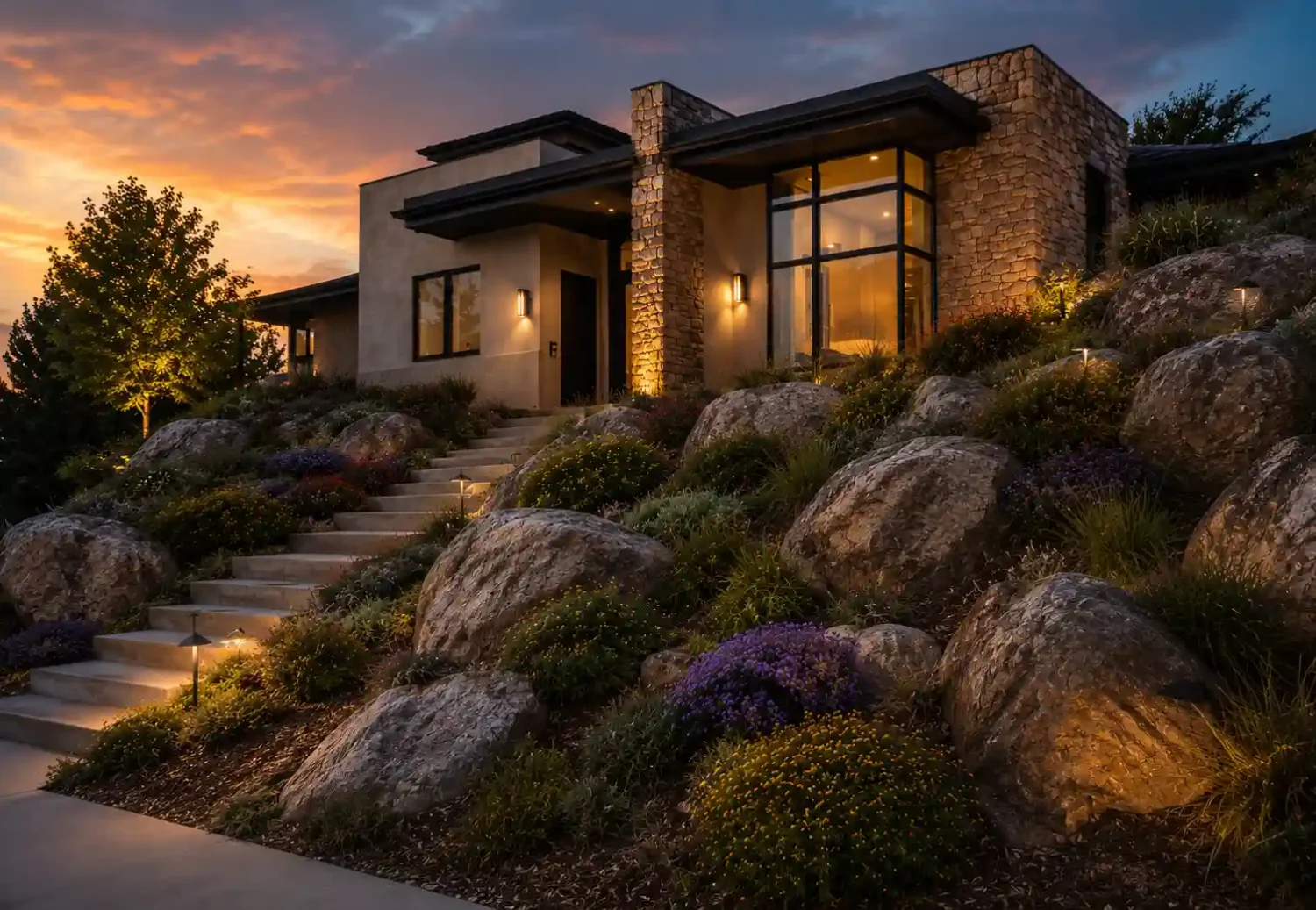
4. Create Functional Spaces on Your Hillside
A sloped yard doesn’t mean you can’t use it.
Ways to make your backyard slope functional:
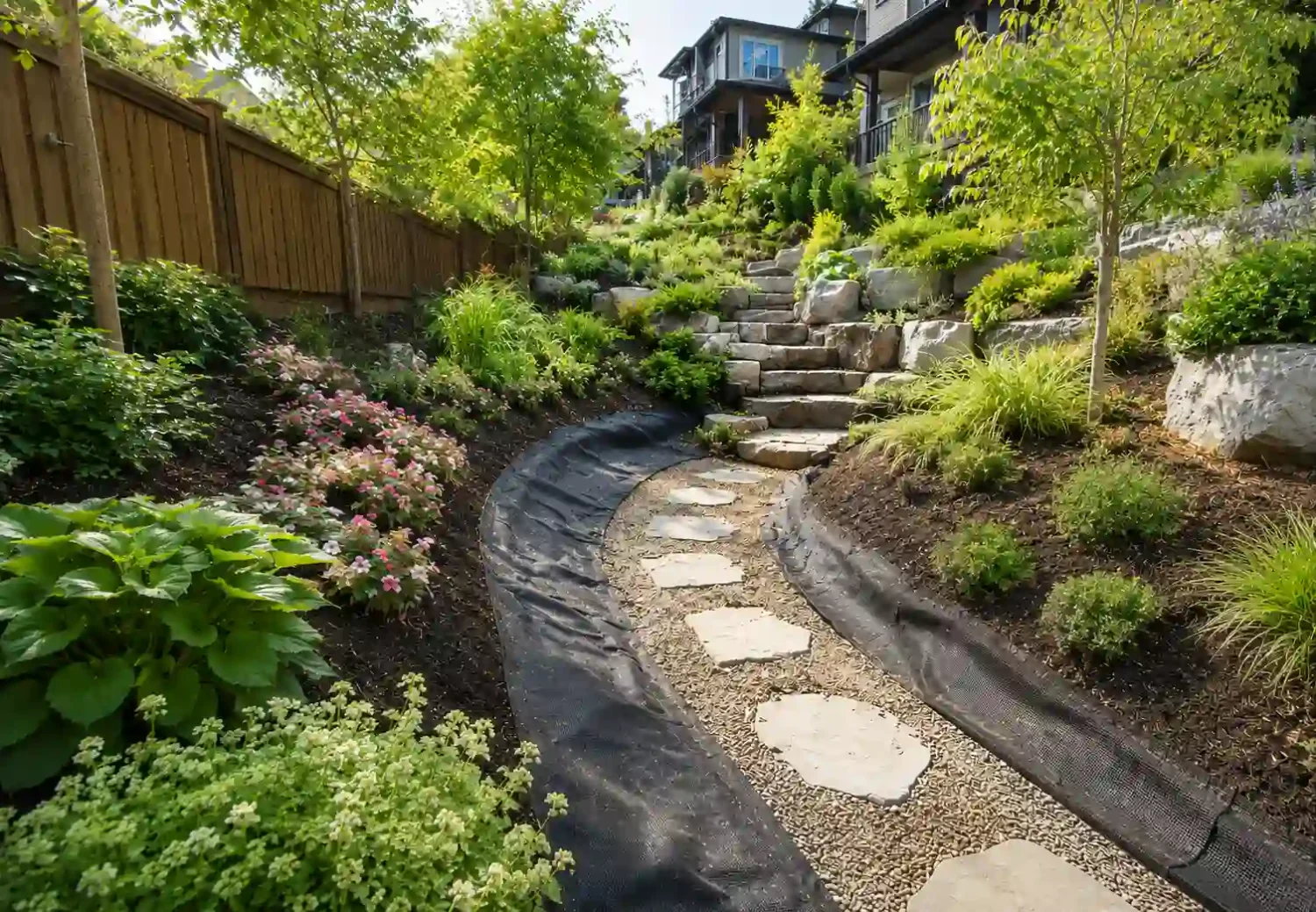
- Switchback pathways – Reduce the grade while creating natural viewing points and making the slope feel planned
- Stepping stone trails – Improve safety, blend naturally with plantings, and give you access without damaging ground covers
- Built-in seating – Turn a terrace into a hillside lounge spot with a fire pit below and a view above
- Tiered decks – Create flat zones for dining, gardening, or relaxing at different elevations
- Raised garden beds – Tuck them into a terrace for vegetables or flowers without fighting the grade
- Outdoor lighting – Solar path lights along switchbacks make your slope usable after dark and stunning at night
What makes a hillside space work:
- Keep pathways at least 36 inches wide so two people can walk comfortably
- Use slip-resistant materials on any path or step, slopes get slippery fast
- Build seating areas on the flattest natural section of your slope first
- Add handrails on any path steeper than a gentle grade, safety first always
Design around your hillside instead of fighting it. These backyard slope ideas turn challenging terrain into the most interesting part of your yard.
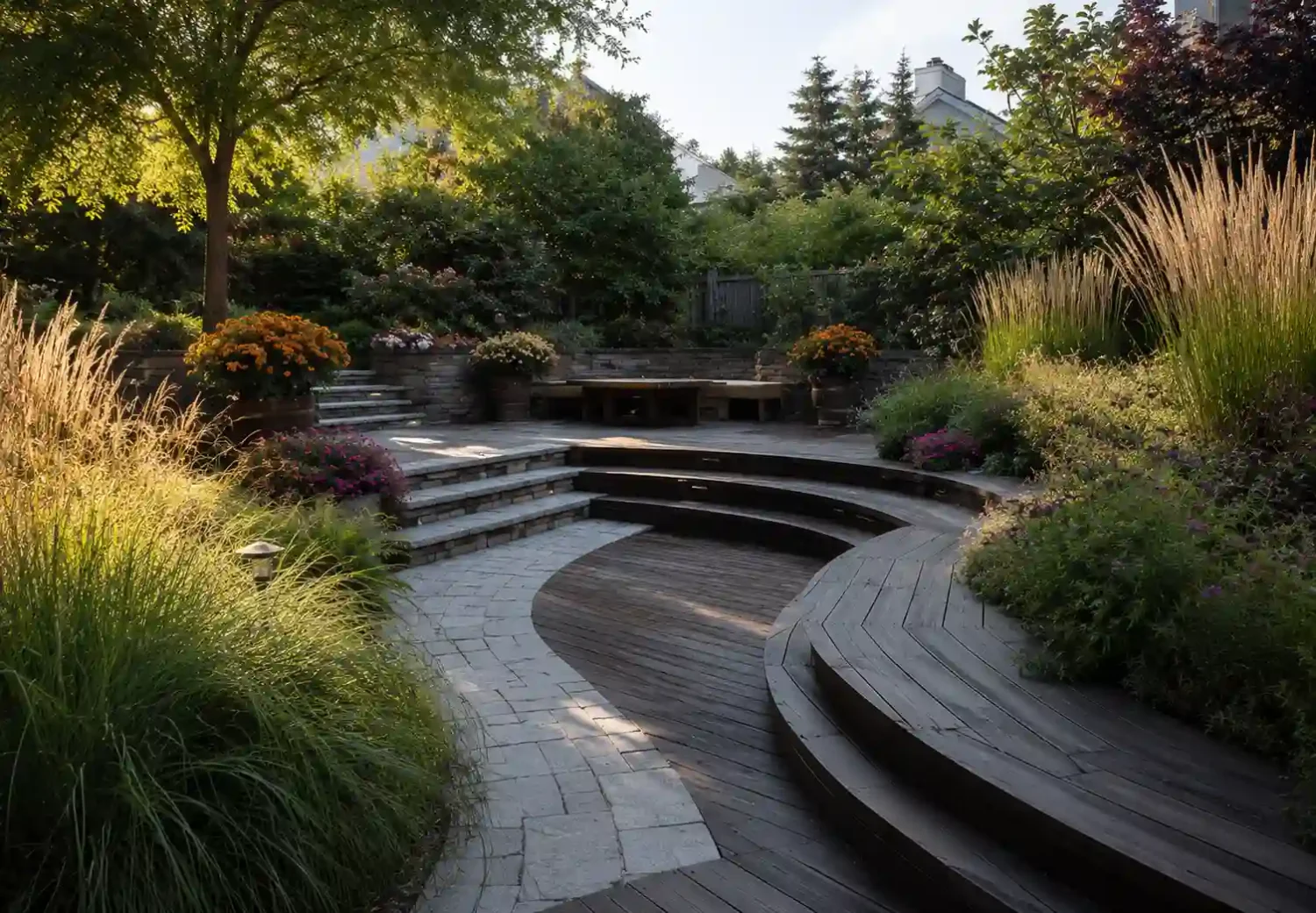
5. Seasonal Slope Care for Sloped Garden Ideas
Sloped yards need seasonal attention to stay strong through weather extremes. A little maintenance at the right times prevents erosion and keeps your slope looking planned.
Spring slope care:
- Fill bare patches left by winter weather
- Edge pathways to prevent overgrowth
- Apply fresh mulch while plants are establishing roots
Fall slope prep:
- Swap lightweight mulch for shredded bark that clings to slopes
- Check erosion-prone areas before heavy rain season
- Add Coir Erosion Control Mats to vulnerable spots for winter protection
Your sloped garden will handle freeze/thaw cycles and spring storms without losing ground when you prep it properly.
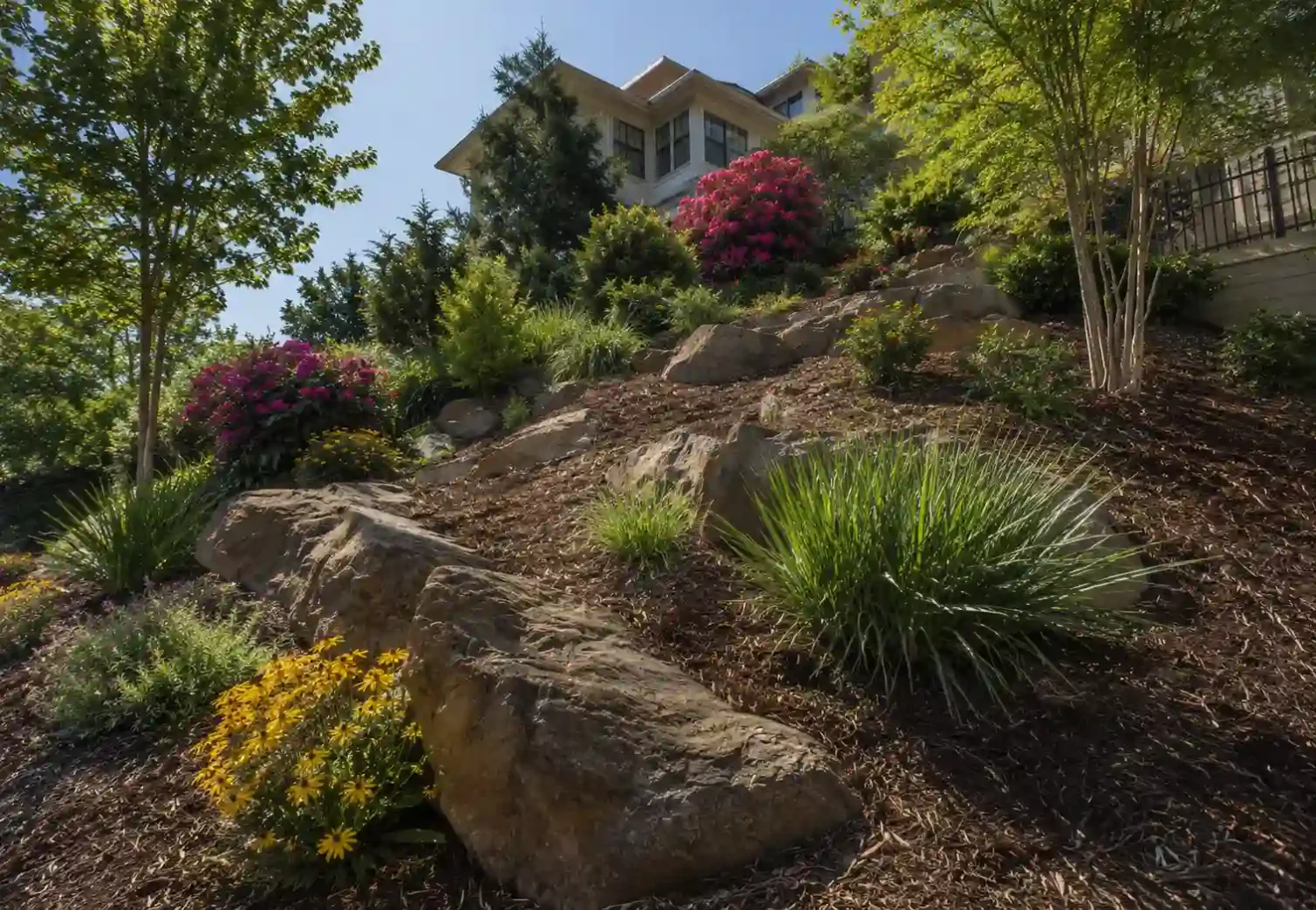
6. Troubleshoot Hillside Problems
Even well-planned slopes can develop issues over time. Watch for water pooling, erosion channels, or plants dying off mid-season.
Fix drainage issues:
- Rain garden at the base – Catches runoff and turns it into a planted feature
- Redirect downspouts – Use Rain Gutter Downspout Extension Kits to aim roof water toward your rain garden
- Dry creek bed – Lined with river rocks, creates a natural drainage path year-round
- Plant water-loving species – Iris, swamp milkweed, and rushes thrive in wet zones
Fix other common problems:
- Redirect water flow – Use berms or swales to guide runoff away from problem areas
- Replace struggling plants – Swap in native species with deeper root systems
- Anchor vulnerable zones – Layer shredded bark over ground covers
- Add permanent access paths – Flagstone, pavers, or timber steps prevent new erosion
If you’re seeing the same bare spots year after year, the problem isn’t the plants, it’s foot traffic or water flow. Fix the root cause first, then replant.
7. Long-Term Steep Slope Maintenance
Successful steep hill landscaping ideas aren’t a one-and-done project. Start with fast-spreading ground covers to prevent erosion while roots establish. Once your hillside is stable, layer in slow-growing shrubs and perennials for year-round structure.
Keys to long-term hillside success:
- Don’t overcrowd plants – Tight spacing blocks airflow and hides erosion problems until they’re serious
- Check in regularly – Walk your slope after heavy rain to spot issues early before they become expensive
- Trim overgrowth – The Greenworks 40V Cordless String Trimmer handles slope edges without dragging a cord uphill
- Replace underperformers – If a plant isn’t thriving after two seasons, swap it for something tougher
- Refresh mulch every spring – It breaks down over winter and bare soil on a slope is always one rainstorm away from a problem
- Document what works – Take photos each season so you can see what your low maintenance hillside landscaping is doing over time
Signs your slope needs attention:
- Bare patches appearing where ground cover used to be solid
- Water channeling in the same spot after every rain
- Plants leaning downhill instead of growing upright
- Soil visible between plants that were fully covered last season
Treat your slope like the long game they are, and your hillside will reward you with stability and beauty that lasts for years.
FAQ – Steep Hill Landscaping Ideas
What is the cost of landscape design for a steep hill?
The cost of landscape design for a steep hill can hit $3,000-$10,000+ with a contractor, but DIY brings it down to a few hundred. Creeping phlox, vinca, and clover spread fast, fight erosion, and cost next to nothing. Add erosion fabric, and you’ve got a professional-looking slope without the designer price tag.
What plants work best for steep slopes?
Native plants don’t play. Go for deep-rooted shrubs like sumac, ornamental grasses like switchgrass, and perennials like wild bergamot. They’re tough, low-maintenance, and act like plant bodyguards for your slope. The best part? They work with your climate, not against it, so you spend less time babysitting and more time winning.
How can I prevent erosion on a hillside?
Erosion’s a bully, but you’ve got tricks. Lay down an erosion control blanket, stack on deep-rooted ground covers, and redirect runoff with dry creek beds or soft berms. Bark helps too. Think of it as locking the hill in place so it stops trying to escape every time it rains.
Do I need a retaining wall for steep hill landscaping?
Not always. Unless your slope is wild or you’re carving out major flat zones, you can skip the wall. Plenty of steep hill landscaping ideas work without one, think terraced landscaping, anchor boulders, and deep-rooted plants that hold their ground. The wall? Optional. Smart landscaping that looks like you had a plan? Non-negotiable.
Can I make my steep hill usable space?
Absolutely. That slope’s just begging for sloped yard landscaping magic. Add switchback paths, tiered decks, or slope seating for dining, gardening, or late-night hangs. Slopes don’t flatten, they elevate. Embrace the terrain, build with it, and turn that hill into the standout feature you didn’t know you needed.
Your Steep Hill. Your Rules.
If your hill’s ever made you feel overwhelmed, behind, or like you somehow “should’ve figured it out by now”, hey. I see you. I’ve been there, mud up to my ankles, wondering if I should just move.
But that slope? It’s not a mistake. It’s a canvas. A challenge, sure, but one that’s made for something beautiful, strong, and yours. Don’t look at it like something you can’t tackle. Instead, have a mindset shift on how you view it.
You don’t need to do it all at once. Just start. One step, one plant, one path at a time. It’s the mindset shift that says, “I don’t need to do it all in one day!”
You’ve already got the grit. Now you’ve got the plan. And when that hill finally blooms into something stunning? You’ll know, it didn’t beat you. You built it.
And I’ll be over here cheering you on!
Dreaming of slope-side entertaining? Take it further with Backyard Outdoor Kitchen Ideas That Slay because your hillside deserves margaritas and grill marks.