I once showed a house where the backyard outdoor kitchen looked like it had survived a small war. Rust freckles on the grill, swollen cabinets, a counter cracked like it had been hit. The buyers stepped outside excited, then froze, then slowly backed away like the space might bite. Someone whispered “liability” the way people say “haunted.”
Two days later they bought a smaller house down the street with a grill from Costco, because peace of mind beats granite every single time.
Here’s what 20+ years in real estate taught me: a bad outdoor kitchen doesn’t just fail to add value, it actively subtracts confidence. But when done right? According to the National Association of Realtors, 68% of homeowners report a greater desire to be in their homes after adding outdoor features, with a Joy Score of 9.7.
This post breaks down how to plan one that adds value instead of becoming a liability.
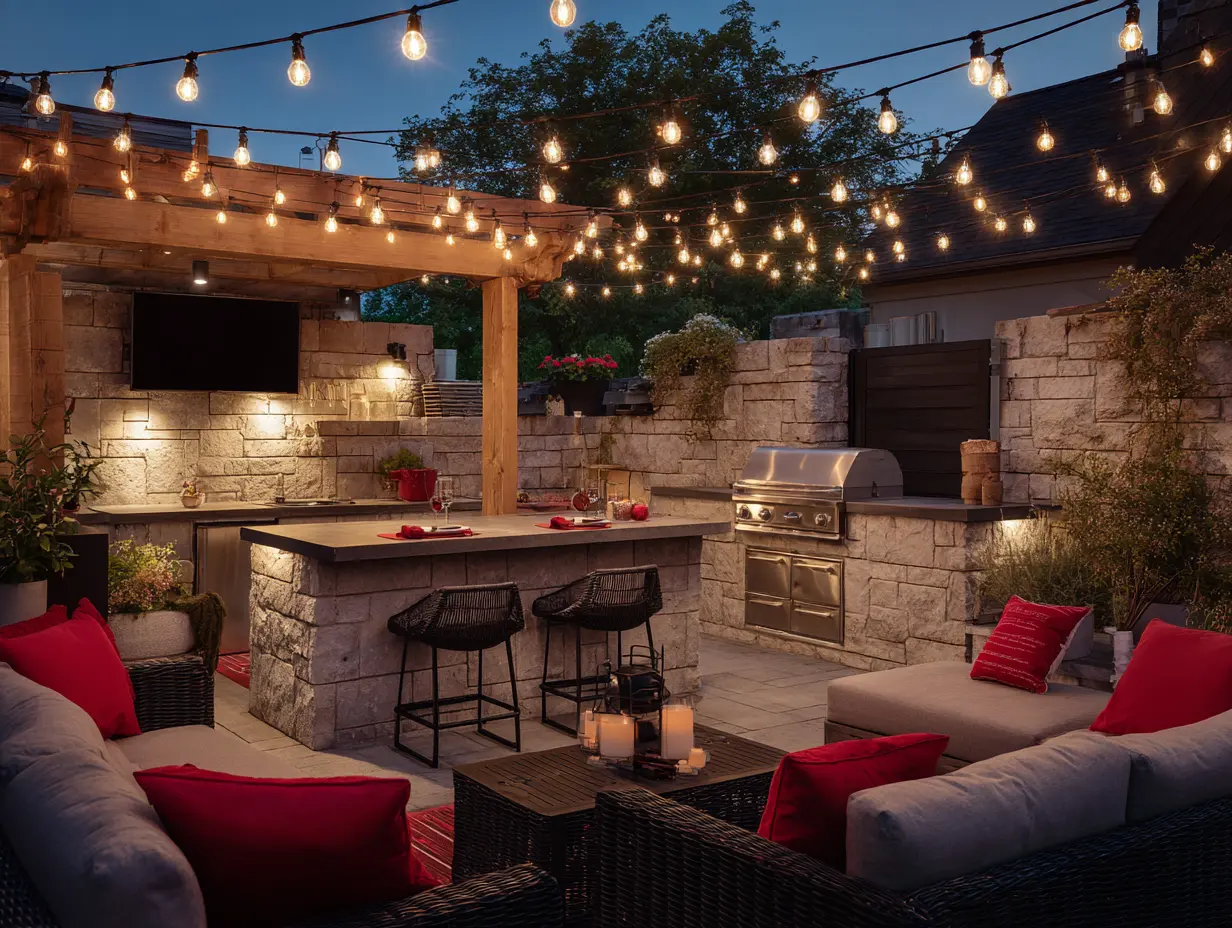
Table of Contents
What Backyard Outdoor Kitchens Do (and Don’t Do) for Resale Value
Outdoor kitchens can add serious value, but only when they’re built to last and maintained well. The problem isn’t the concept. It’s the execution. A luxury outdoor kitchen with quality materials and proper coverage signals care and intention. A rusted grill surrounded by warped wood signals neglect, and buyers will either walk or price that risk into their offer.
What kills resale value:
- Weather damage (rust, rot, cracked counters)
- Cheap materials that don’t hold up
- No coverage or protection from the elements
- Poor maintenance that screams “expensive fix”
What adds value:
- Covered outdoor kitchens that protect the investment
- Stainless steel, sealed stone, composite materials
- Clean, functional layouts that feel intentional
The outdoor kitchens that held their value best over the years? The ones that didn’t require constant upkeep just to stay usable. Bottom line: outdoor kitchens aren’t automatically valuable. They’re valuable when they look like an asset, not a project.
How to Plan Your Backyard Outdoor Kitchen Layout
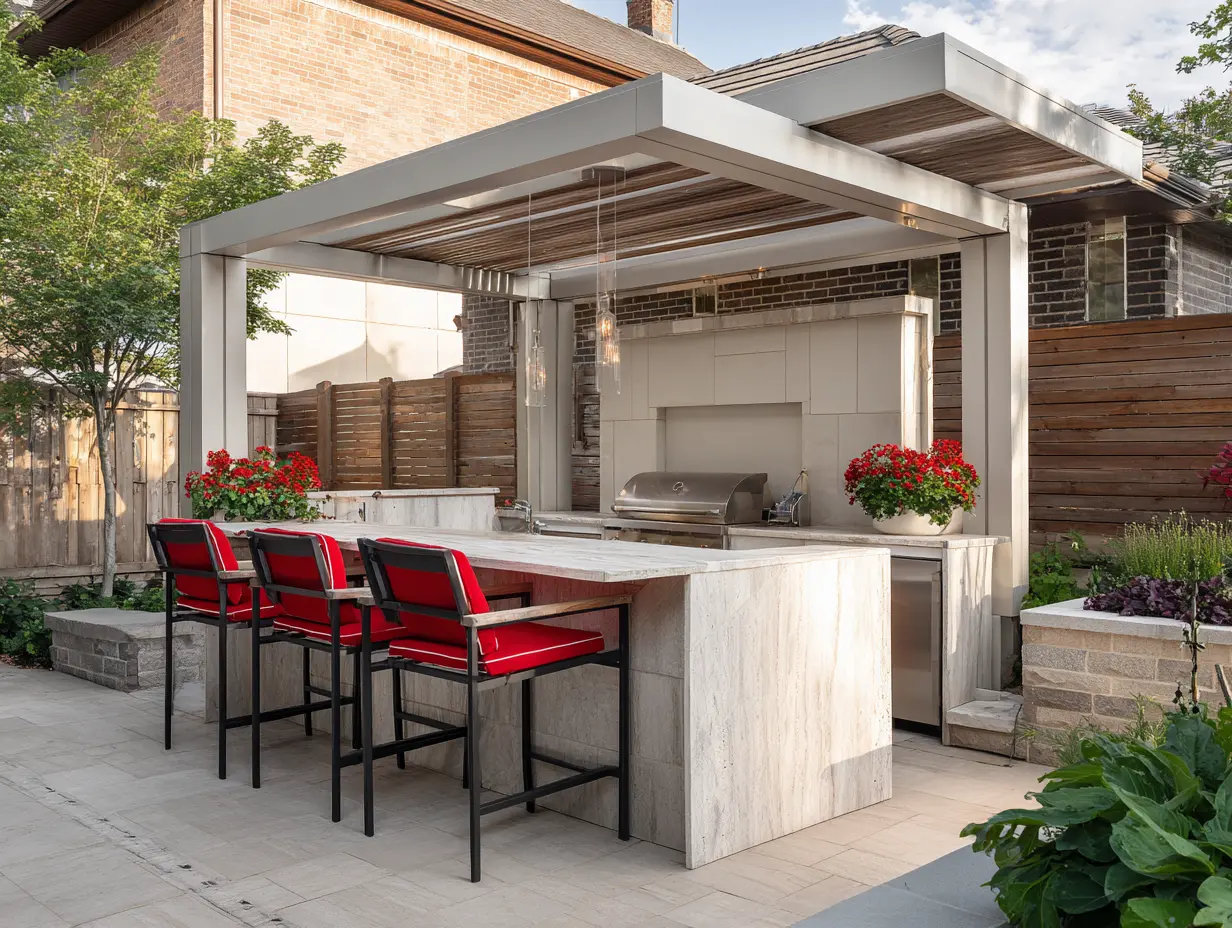
Before you buy a single appliance, picture how you’ll actually use the space. Are you grilling for two on a Tuesday or hosting taco night for ten? Your layout should match your reality, not an HGTV fantasy. Think in stations: prep, cook, serve, and seating. Even small spaces can feel intentional when you plan the flow right.
If you’re working with a compact yard, 7 Brilliant Townhouse Backyard Ideas for Small Spaces has layout strategies that maximize every inch without cramping your style.
What your layout needs:
- A prep zone (cutting, plating, organizing)
- A cooking zone (grill, burners, counter space)
- A serving spot (somewhere to set food down)
- Seating that keeps people close without crowding the cook
Pro tip: If you’ve got a pergola or covered area, that’s your natural anchor point. Build your DIY backyard kitchen around it so you’ve got instant weather protection and a defined zone.
Covering Your Outdoor Kitchen (The #1 Thing That Protects Your Investment)
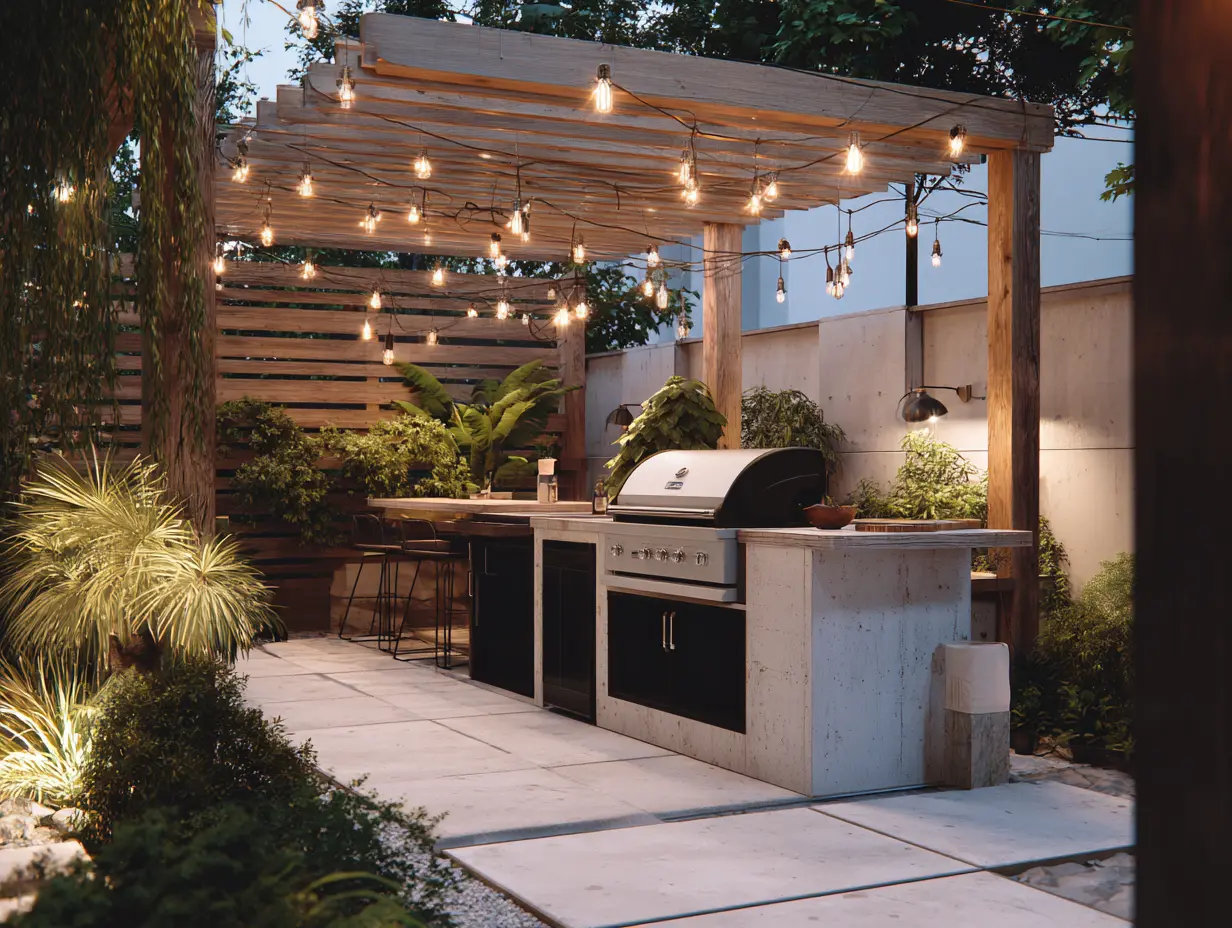
Coverage is the difference between an outdoor kitchen that lasts 10 years and one that looks like a crime scene in three. Without protection, even stainless steel rusts, wood swells, and counters crack. A covered outdoor kitchen keeps your investment functional, not just comfortable.
You don’t need a full roof. A pergola, awning, or shade sail does the job. If you’re exploring options, Gazebo Ideas That Transform Your Backyard breaks down different setups that work.
Coverage options that work:
- Pergola with a retractable canopy
- Fixed roof or extension from your house
- Shade sail angled for rain runoff
- Retractable awning for flexibility
Bottom line: if it’s not covered, it’s not protected. And that affects both how you enjoy it now and what it’s worth later.
Cost Breakdown – What to Expect at Every Budget Level
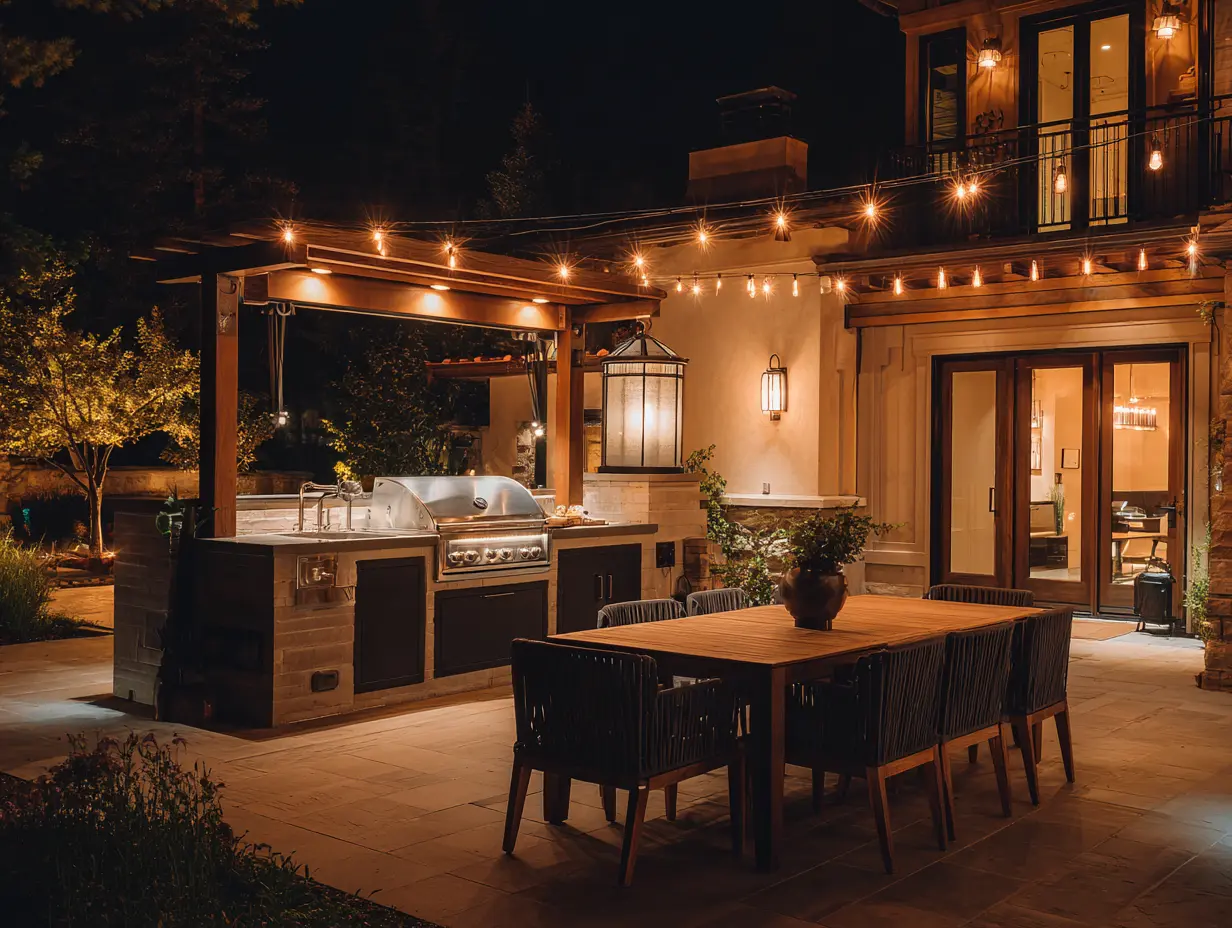
One of the biggest questions people have when planning a backyard outdoor kitchen is “how much is this going to cost?” The answer depends on how you build it, what materials you choose, and whether you DIY or hire out. Here’s a realistic breakdown of what you can expect at three different budget levels.
| Budget Level | Cost Range | What You Get | Best For |
|---|---|---|---|
| Budget-Friendly | $500 – $3,000 | Freestanding grill, rolling cart, basic storage, DIY assembly | Weekend warriors testing the outdoor kitchen vibe |
| Mid-Range | $5,000 – $15,000 | Built-in grill, countertops, covered outdoor kitchen with pergola, beverage cooler, some pro help | Homeowners serious about outdoor entertaining |
| High-End (Luxury) | $20,000 – $50,000+ | Full luxury outdoor kitchen with custom cabinetry, built-in appliances, professional installation, premium materials | Long-term investment in outdoor living |
Where to splurge:
- Coverage (pergola, awning, or roof) – protects everything else
- Quality grill and appliances – the workhorses of your setup
- Durable countertops (sealed stone or stainless steel)
Where to save:
- Decor and accessories (easy to upgrade later)
- Seating (start simple, add over time)
- Bar setup (a cooler and cart work just as well as built-ins)
Start where your budget allows, then build up as you go. Even a budget-friendly setup can feel intentional if it’s planned well.
Lighting Your Outdoor Kitchen
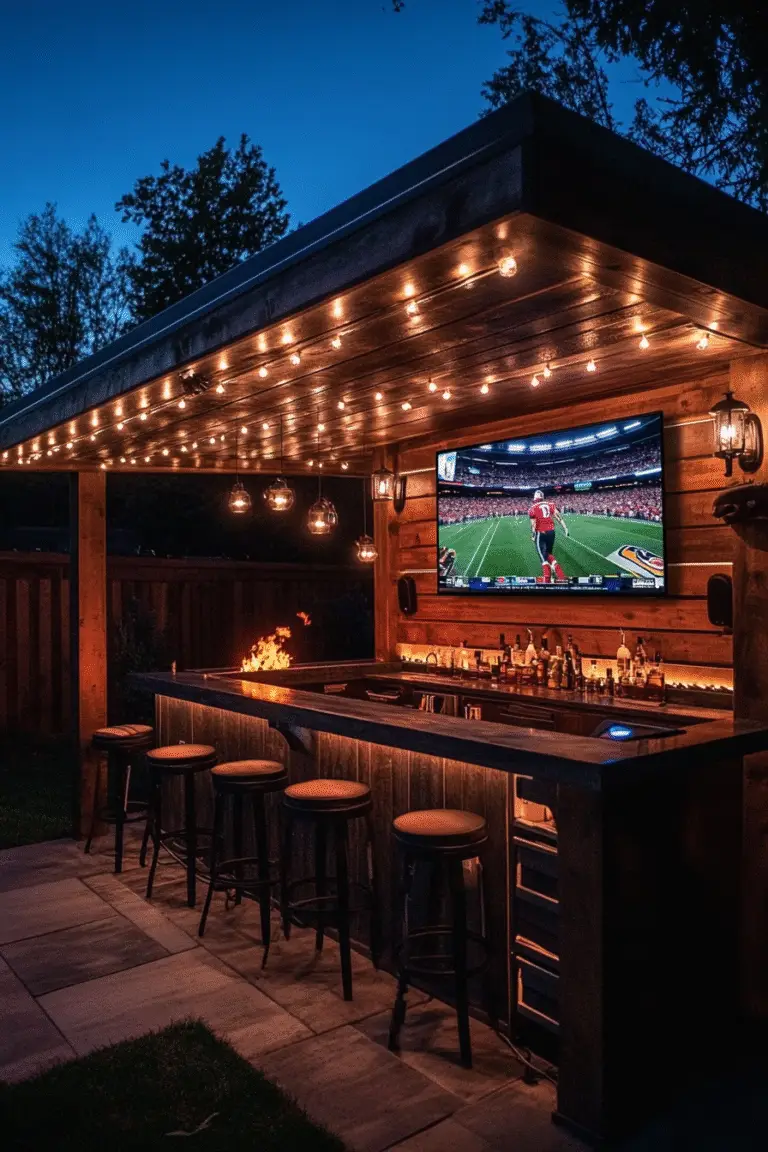
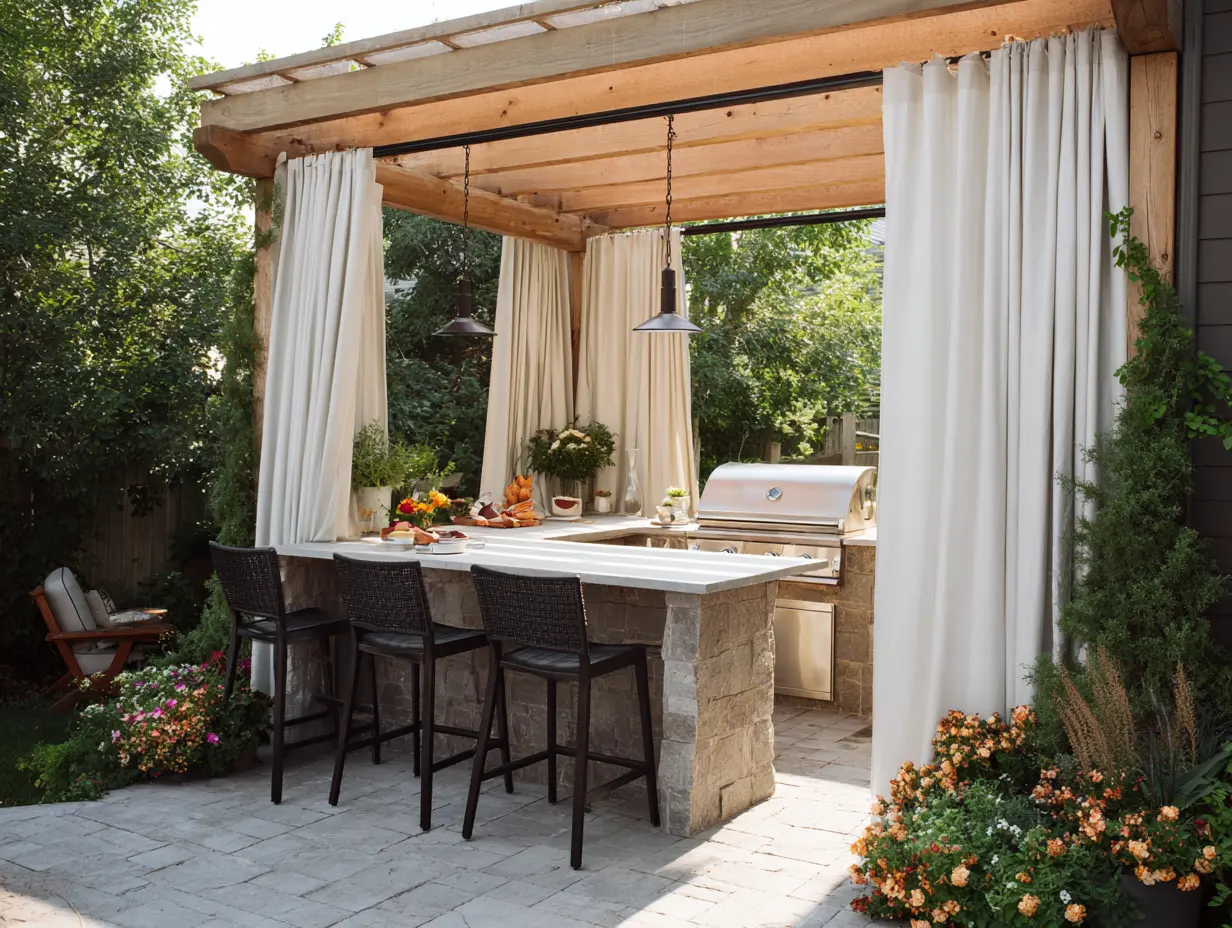
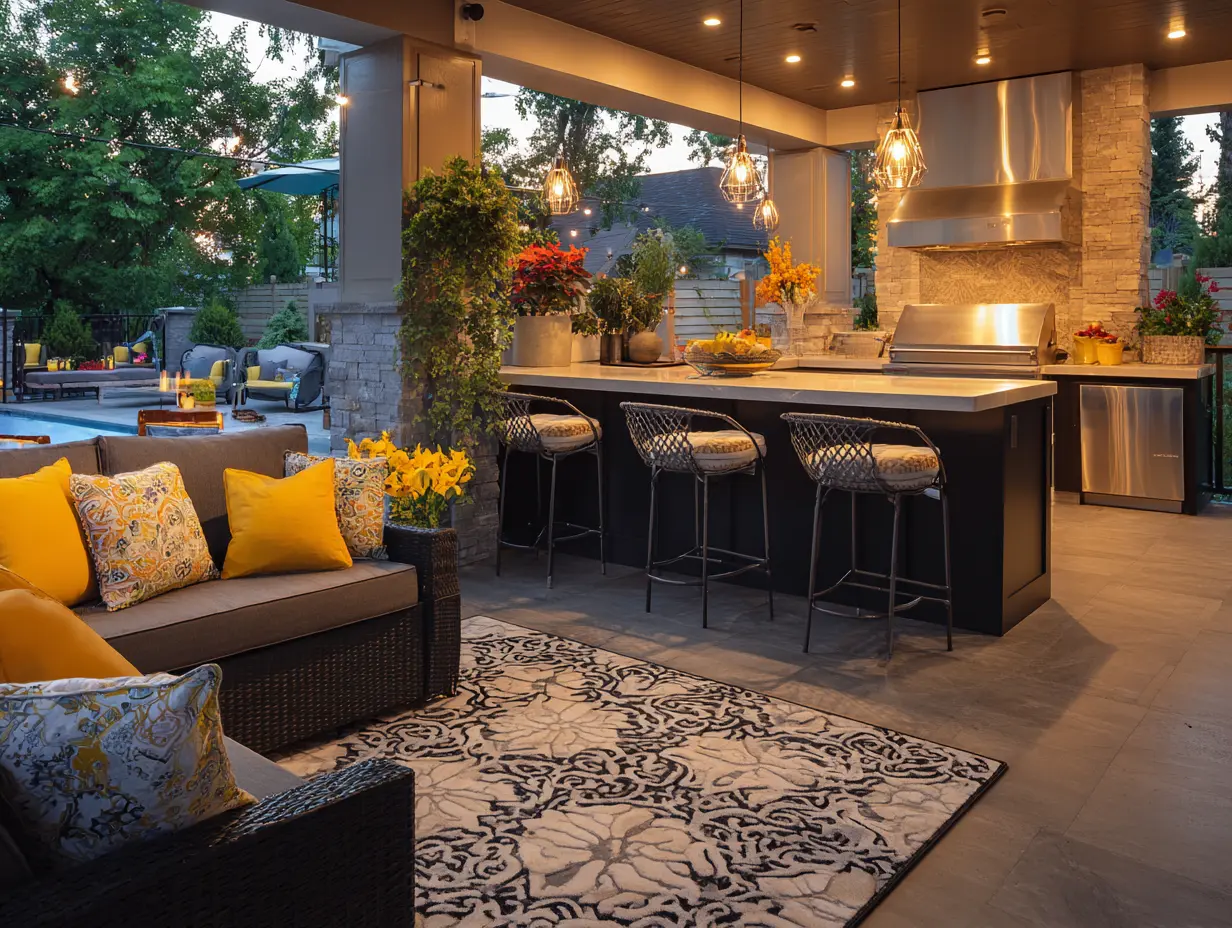
Good lighting is what keeps your backyard outdoor kitchen usable after sunset. You need two layers: functional lighting so you can actually see what you’re grilling, and ambient lighting that makes people want to stay. Skip the harsh spotlights. Go for string lights overhead, sconces on walls, and under-cabinet LEDs that light your prep zones without blinding anyone.
For more ideas on outdoor lighting that adds curb appeal and function, check out Outdoor Porch Lighting Ideas for Maximum Curb Appeal.
Lighting that works:
- String lights zigzagged overhead for ambiance
- Sconces or lanterns mounted on posts or walls
- Under-cabinet LED strips for prep zones
- Solar path lights to define the space
Lighting doesn’t just make your kitchen functional at night. It makes people stay longer.
The Bar Setup (Keeping Drinks Separate from Cooking)
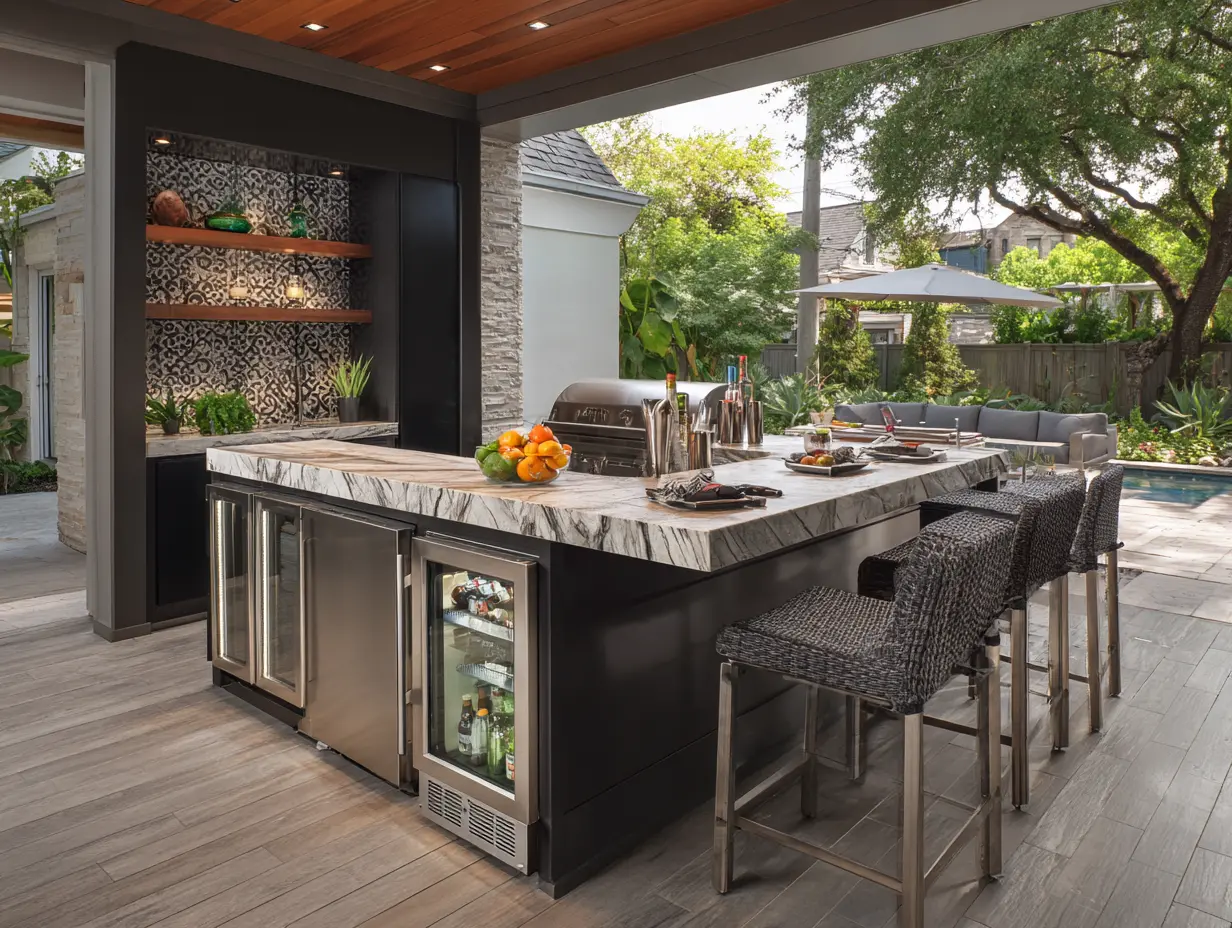
Drinks and food prep shouldn’t share the same zone. When your outdoor bar setup is crammed next to the grill, someone’s always in the way, reaching around hot surfaces or blocking access to utensils. Give beverages their own spot so guests can help themselves without wandering into your cooking area.
You don’t need a built-in wet bar. A beverage cooler, a small counter, and a few glasses can do the job. The less traffic around the grill, the smoother everything flows.
What your bar zone needs:
- A beverage cooler or mini fridge (keeps drinks cold without stealing grill space)
- A small counter or cart for glasses and mixers
- Easy access that doesn’t cross through the cooking zone
- Ice bucket or insulated storage
Common mistakes:
- Placing the bar right next to the hot grill (guests block the cook or risk burns)
- Using one cooler for drinks AND raw food (nobody wants beer next to raw chicken)
Keep drinks separate, and your outdoor kitchen instantly feels more organized and functional.
Outdoor Kitchen Materials – What Lasts vs. What Fails
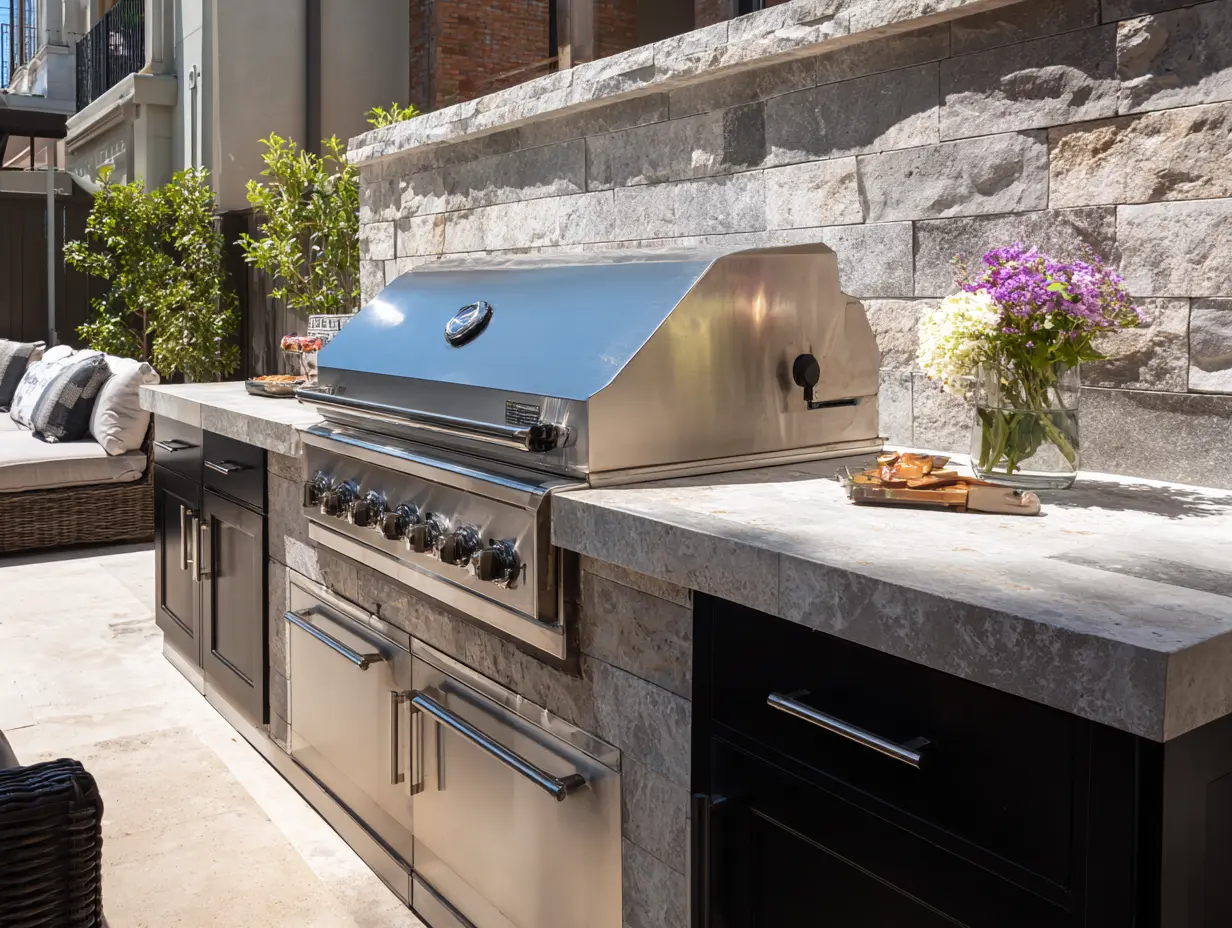
Choosing the right materials for your covered outdoor kitchen makes the difference between a space that lasts decades and one that falls apart in a few seasons. Here’s a quick breakdown of what works and what doesn’t when you’re building a luxury outdoor kitchen that can handle weather year-round.
| Material | Durability | Maintenance | Best For | Avoid If |
|---|---|---|---|---|
| Stainless Steel | Excellent | Low (wipe clean) | Grills, counters, cabinets | You want zero upkeep |
| Sealed Stone/Concrete | Excellent | Low (occasional reseal) | Countertops, surfaces | Unsealed or porous |
| Composite Decking | Excellent | Very low | Flooring, framing | You prefer natural wood |
| Powder-Coated Metal | Good | Low | Hardware, frames | Coastal/high-salt areas |
| Unsealed Wood | Poor | High (constant treatment) | Nothing outdoors | Anywhere with weather |
| Laminate/Particle Board | Poor | Impossible | Never use outdoors | Always |
Outdoor Kitchen FAQs: What You Need to Know
How much does a backyard outdoor kitchen add to home value?
It depends on the quality and condition. A well-maintained covered outdoor kitchen with durable materials can add appeal and perceived value, but it won’t automatically boost your appraisal. Buyers respond to outdoor kitchens that look like assets, not projects.
What’s the biggest mistake people make with outdoor kitchens?
Skipping coverage. Without protection from weather, even high-quality materials deteriorate fast. The second biggest mistake? Not planning an outdoor bar setup that’s separate from the cooking zone, which creates traffic jams and makes entertaining feel chaotic instead of smooth.
Do I need a contractor or can I DIY?
You can absolutely DIY if you’re starting with modular setups like grill carts, prefab counters, and freestanding storage. For built-in structures, gas lines, or electrical work, hire a licensed professional. Even a DIY backyard kitchen benefits from proper planning and code-compliant installations.
How do I protect my outdoor kitchen from weather?
Use covers on grills and appliances, choose weatherproof materials, and add overhead coverage like a pergola or awning. Regular maintenance, proper drainage, and sealed surfaces keep everything functional longer.
Your Outdoor Kitchen, Your Way
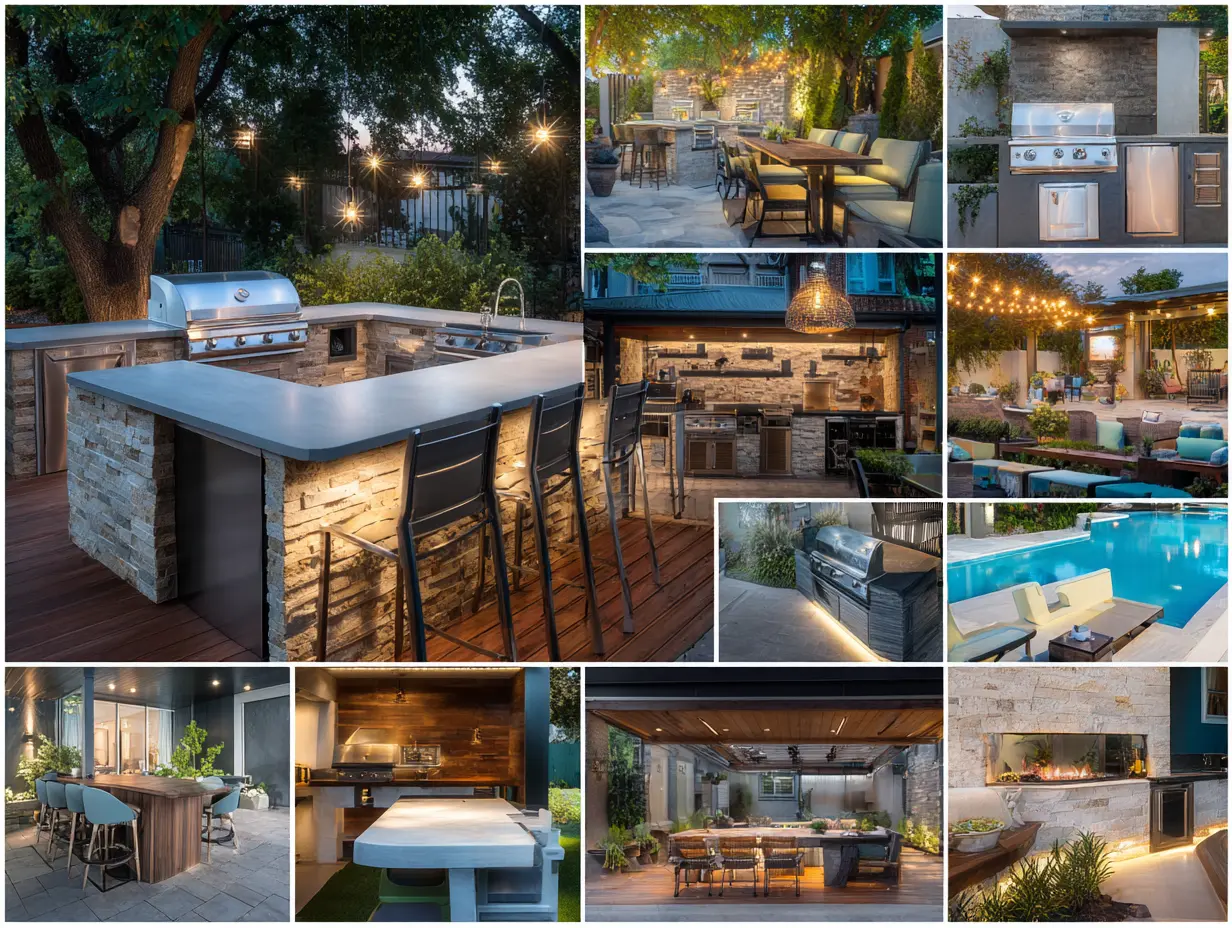
Planning a backyard outdoor kitchen can feel overwhelming when you’re staring at Pinterest boards and price tags. Here’s the Home Hero Jen Mindset Shift: you don’t need to build it all at once. Start with a grill, a prep surface, and a plan. Add coverage next. Layer in lighting and seating as you go. Small, intentional steps beat stalling because it feels too big.
The outdoor kitchens that work best aren’t the flashiest. They’re the ones that match how you actually live, protect your investment from weather, and don’t require constant upkeep just to stay functional. Start where your budget allows. Build smart, not fast. And remember: peace of mind beats granite every single time.
You’ve got this!
Psst: Heartbeet Kitchen nailed the art of building a backyard kitchen that feels like a true extension of the home. From a pergola-covered cooking space to lounge seating and custom cabinetry, Amanda and Brian’s year-long renovation turned their backyard into the ultimate entertaining zone. Their mix of natural materials, pops of color, and smart design choices proves you don’t need to follow a rigid plan to end up with something spectacular.