I’ll never forget walking a listing with a stager where the backyard was nothing but a lonely concrete slab and some weeds. She rolled in with two chairs, a small table, and a potted plant, and suddenly buyers stopped, sat, and smiled.
That moment taught me everything I needed to know about creating an outdoor man cave: it’s not about size or budget, it’s about showing how the space is meant to be used. After 20+ years in real estate, I’ve learned what separates a forgettable patio from a backyard retreat that feels like home.
Those lessons shape the outdoor man cave ideas I share here: spaces designed to be used, not just admired.
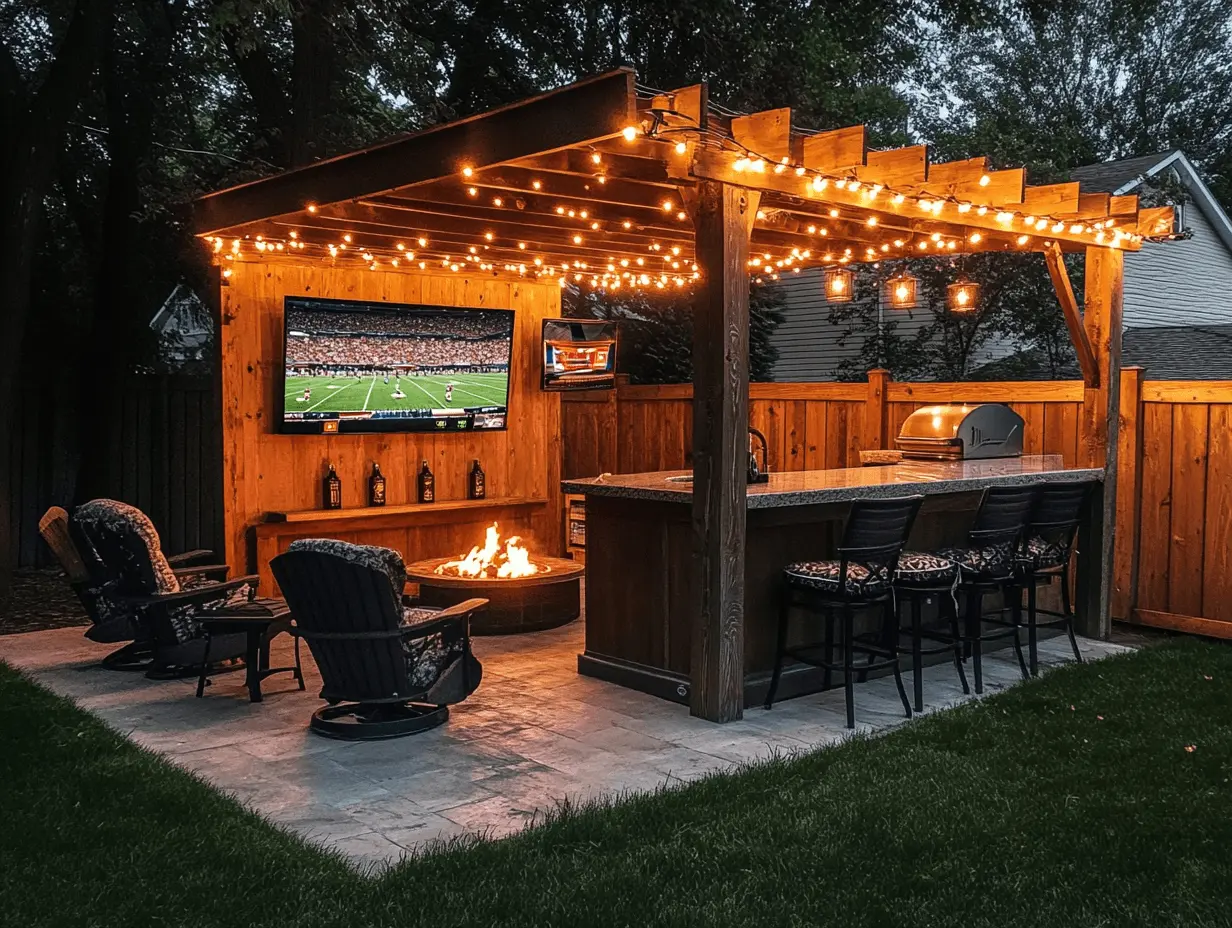
Table of Contents
Planning Your Outdoor Man Cave Layout
Define your seating area first (where people spend most time), then layer in an outdoor entertainment area or prep zones around it. The transition from your house to the outdoor space should feel natural, like an extension of your living area.
Space Planning Guide
| Space Size | Seating Capacity | What Fits | Best For |
|---|---|---|---|
| 10×10 (100 sq ft) | 2-4 people | Small seating area OR single entertainment feature (TV or fire pit) | Compact yards, townhouses, budget builds |
| 12×16 (192 sq ft) | 4-6 people | Defined seating + bar/prep counter OR seating + entertainment zone | Most suburban backyards, flexible layouts |
| 15×20+ (300+ sq ft) | 6-10 people | Full seating area + entertainment setup + bar/outdoor kitchen | Larger lots, multi-zone outdoor living |
Pro Tip: When you’re planning, sketch it out or use tape on the ground to visualize the zones before you commit to anything permanent. If you’re looking for more ideas on creating intentional outdoor zones, check out my post on backyard retreat ideas for layout inspiration.
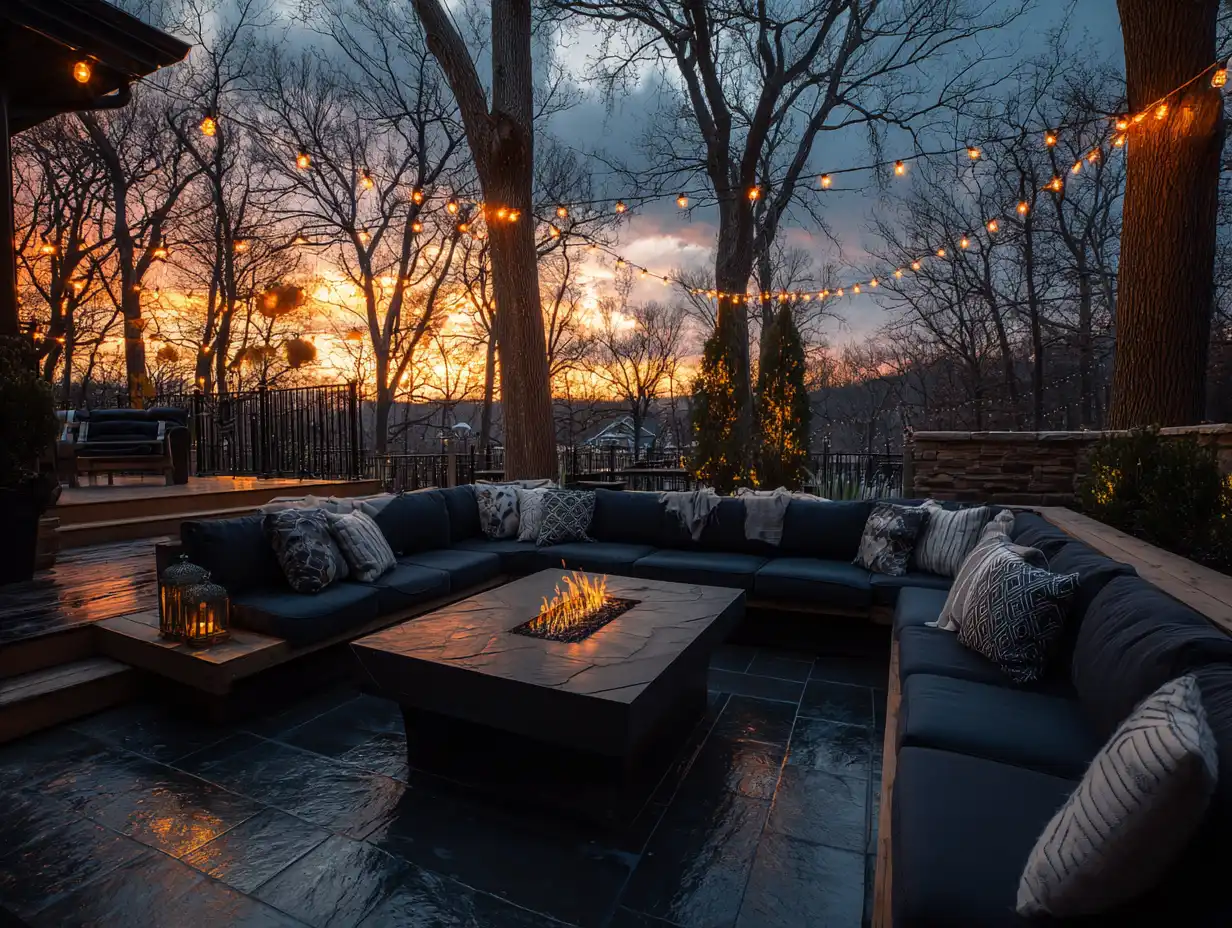
Where to Place Your Outdoor Man Cave for Comfort and Resale
Location and Site Considerations
Where you place your backyard man cave matters as much as what you put in it. Comfort and usability start with smart positioning.
I once listed a home with a gorgeous covered patio tucked in the back corner of the yard. Beautiful build, but it baked in full afternoon sun with zero privacy from the neighbors. Buyers loved the house, hated the patio. We ended up suggesting they add shade sails and privacy plantings before listing again. It sold in a week.
Sun exposure and shade:
- Full sun all day makes the space unusable during peak hours
- Morning sun with afternoon shade works best for most climates
- If you’re stuck with full sun, plan for a pergola, shade sail, or strategically placed trees
Privacy changes how the space feels. Natural screening options like hedges, fencing, or plantings create separation without feeling closed off.
Proximity to utilities saves money:
- Electrical access for lighting, TV, or a mini fridge
- Water access if you’re planning a bar or outdoor kitchen
- The farther from the house, the more expensive the build
Ground conditions matter. Check for low spots where water pools, ground that slopes toward the house, or unstable soil before building anything permanent.
Pick your location based on how the space will be used, not just where you have room.
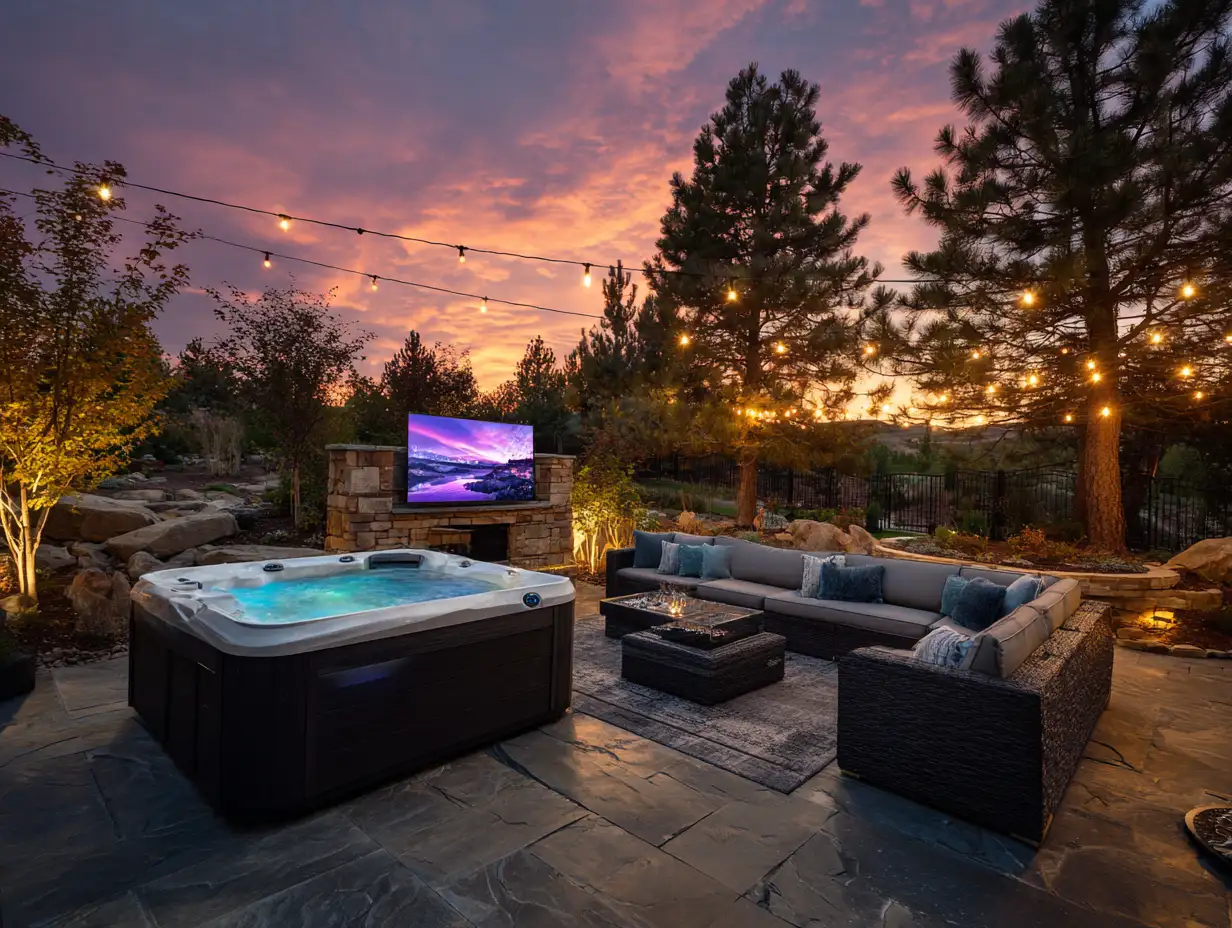
Outdoor Shade and Cover Options That Last
The biggest mistake homeowners make is either skipping weather protection entirely or overbuilding with permanent structures that require constant maintenance.
Covered vs. uncovered:
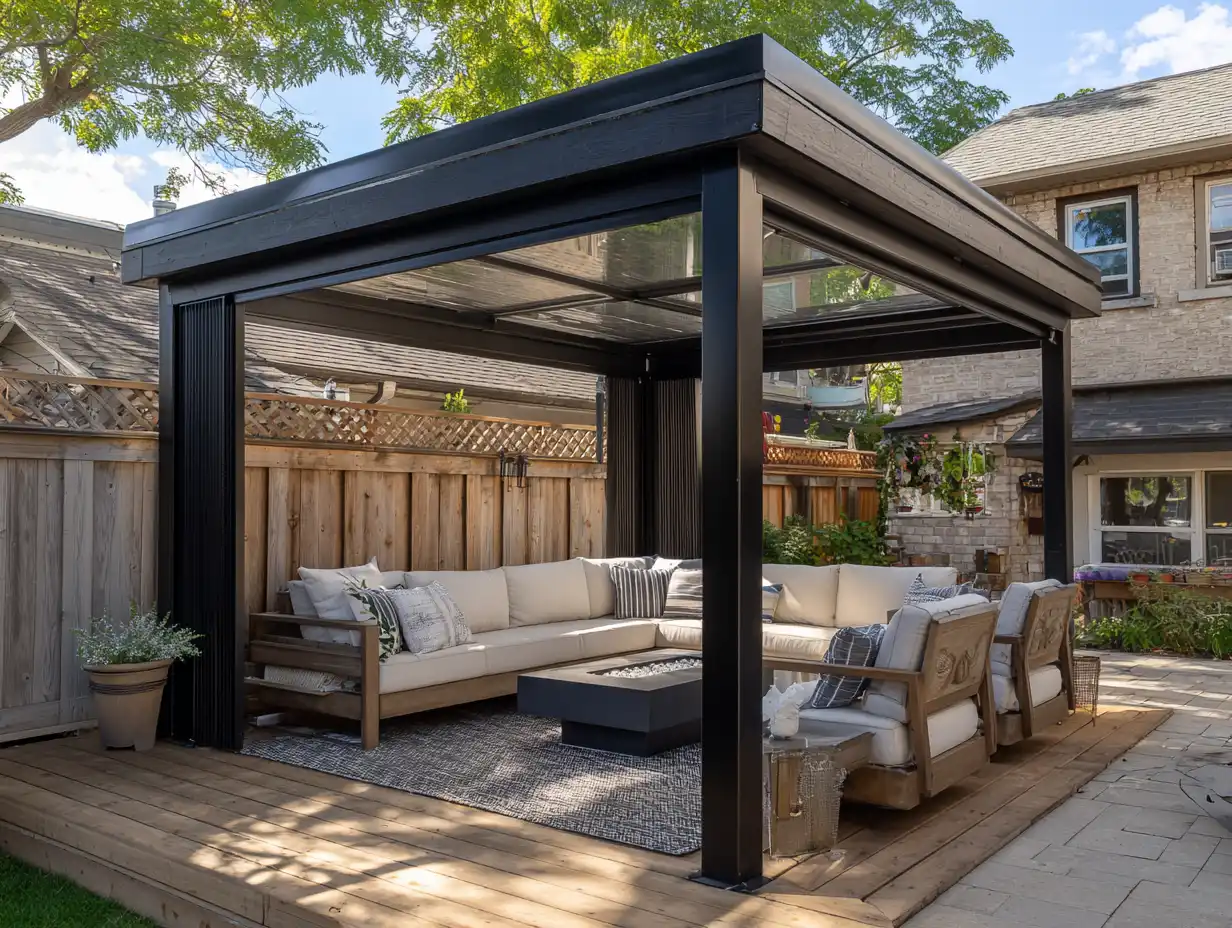
- Full coverage (pergola, roof extension, or gazebo) extends usability into shoulder seasons and protects furniture
- Partial coverage (shade sail or retractable awning) gives flexibility without the commitment
- Uncovered spaces work in mild climates or for occasional use
Permanent structures add value when done right. A well-built pergola or covered patio that feels proportional to your yard works. Overdone structures that block light or feel heavy don’t.
Flexible options work for renters or anyone testing the space first. Retractable awnings, shade sails, or large patio umbrellas give protection without permanence.
The sweet spot? Enough coverage to make the space usable on hot or drizzly days, but not so much that it feels dark or enclosed.
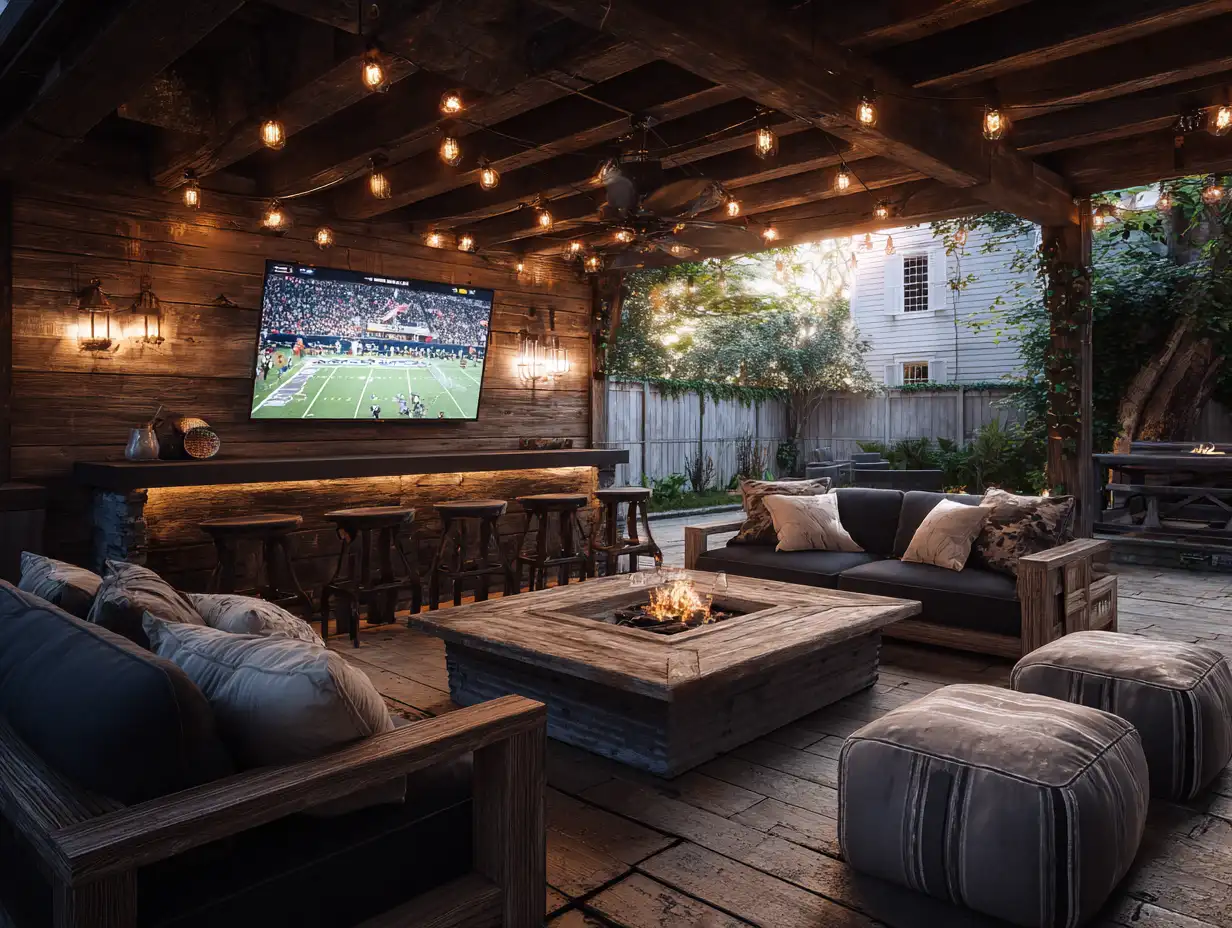
Outdoor Entertainment: TVs, Audio, and Fire Features
The entertainment features you choose can either make your outdoor entertainment area feel like a lifestyle upgrade or turn it into a maintenance project. Balance what you want now with what adds value later.
TV mounting and weatherproofing:
- Outdoor-rated TVs are expensive, but standard TVs in weatherproof enclosures work on a budget
- Avoid direct sunlight on the screen and position it where seating naturally faces
- Plan for cable management and electrical access before mounting
Audio setup:
- Bluetooth speakers work for most setups without running wires
- For permanent installs, outdoor-rated in-ceiling or landscape speakers blend in better
- Keep volume control accessible
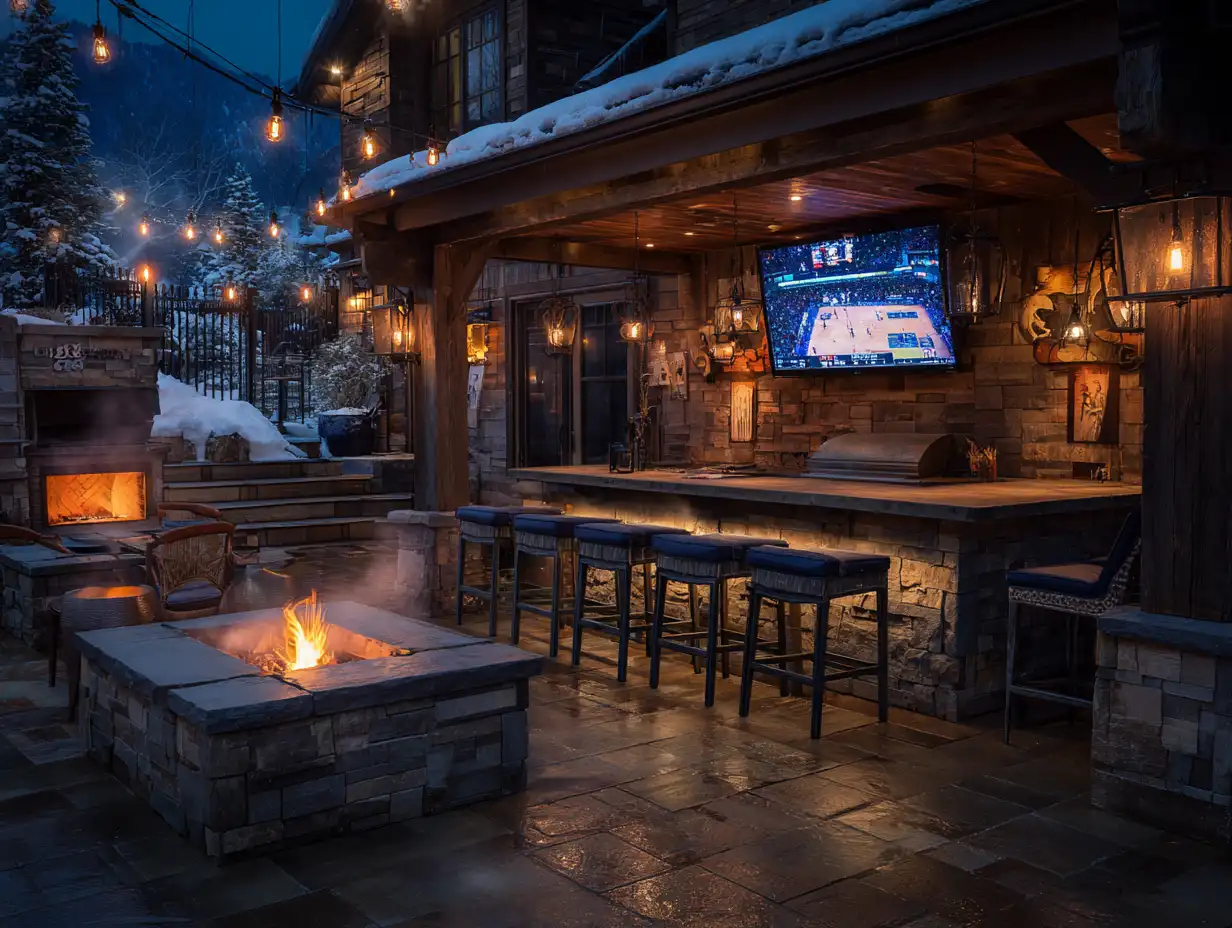
Fire features make people gather. Gas fire pits, built-in fire tables, or simple metal fire bowls feel intentional. Massive stone fireplaces that dominate the yard or DIY setups that look unsafe don’t.
If you’re adding a full outdoor kitchen or bar, my post on backyard outdoor kitchen ideas walks through the planning process.
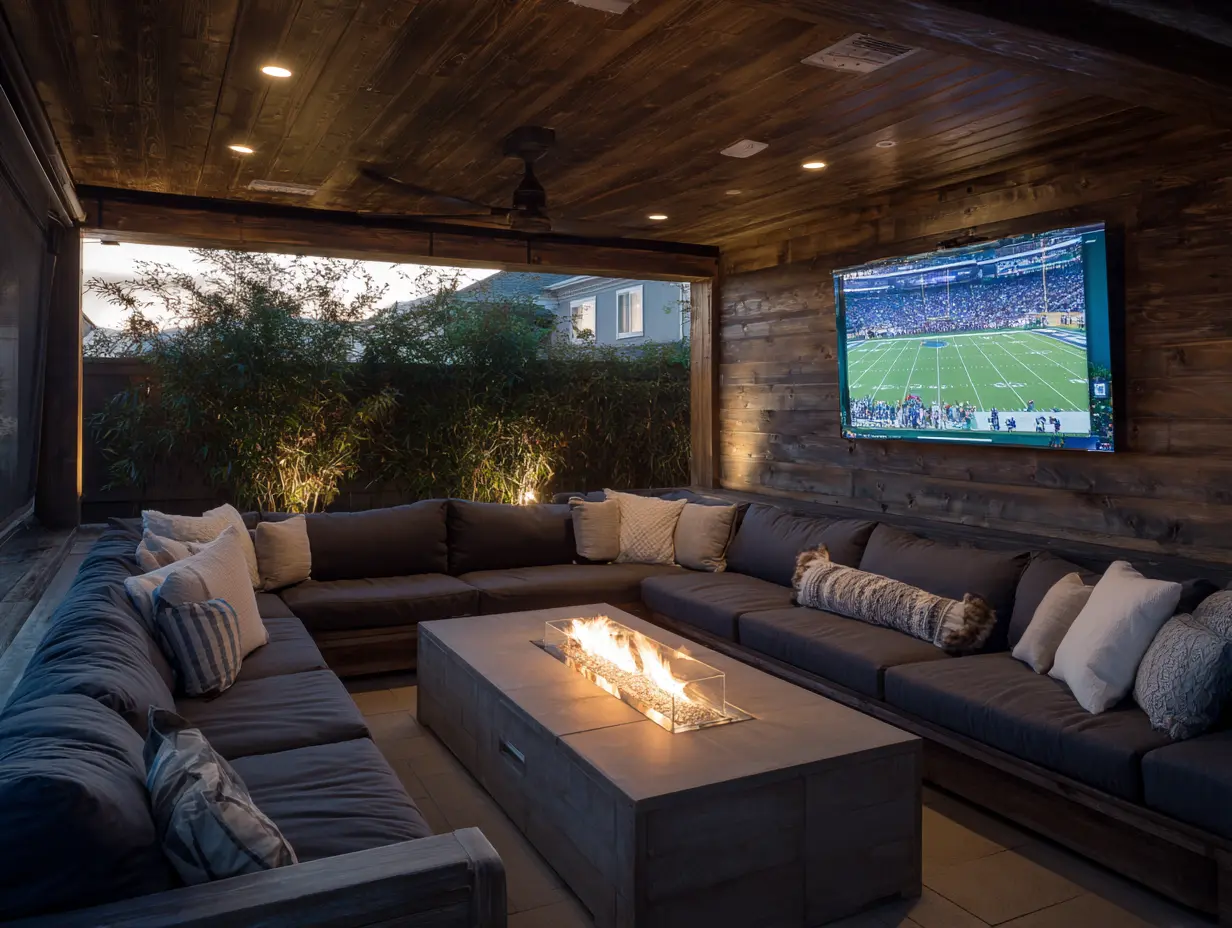
Man Cave Lighting Done Right
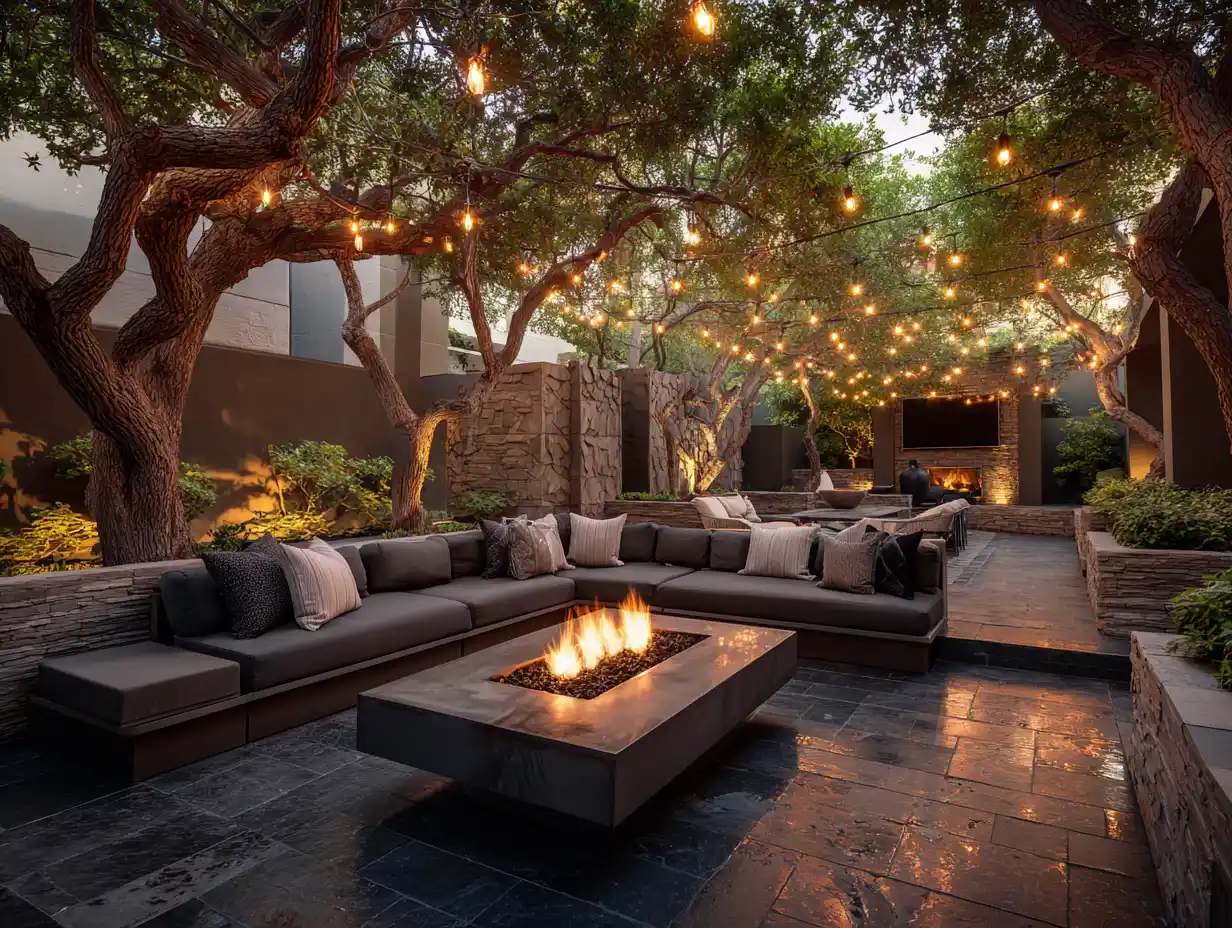
Man cave lighting creates atmosphere and functionality. Too many people default to a single overhead fixture and miss the opportunity entirely.
I walked a listing once where the sellers had installed a single bright floodlight over their patio. Buyers squinted, sat for 30 seconds, and left. The next week, the seller swapped it for string lights and low pathway lighting. Same space, completely different reaction.
Layer ambient and task lighting:
- Ambient lighting (string lights, lanterns) creates mood
- Task lighting (directional lights near seating or bar areas) makes the space usable after dark
- Use both
String lights work when placed right:
- Zigzag patterns overhead work well
- Edison bulbs or warm-toned LEDs create better ambiance than cool white
- Add a dimmer or timer for versatility
For permanent setups, consider low-voltage landscape lighting along pathways, recessed lighting under pergola beams, or wall-mounted sconces near seating. Security lighting near entryways adds value without being intrusive.
Check out my post on outdoor porch lighting ideas for more fixture placement ideas.
Styling Your Outdoor Space Without Hurting Resale
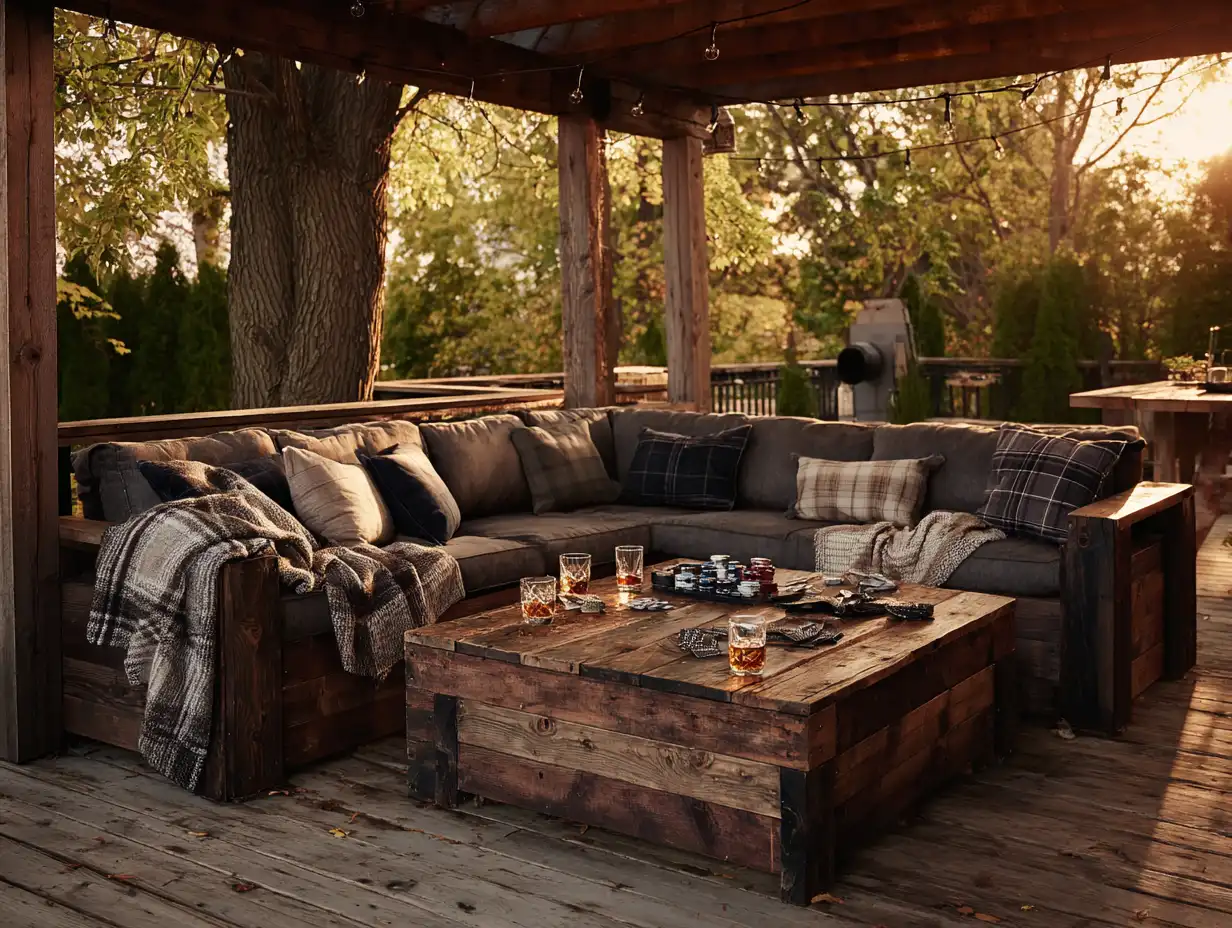
Make it yours, but keep future owners in mind. You want a space that feels personalized without screaming someone else’s project.
One seller had a full Seahawks-themed patio. Green and blue everything, team flags, custom-painted furniture. Die-hard fans loved it. Everyone else walked right past it. We staged it neutral for showings and it made all the difference.
Features that stay neutral:
- Classic seating (sectionals, Adirondack chairs, simple benches)
- Fire pits or tables that work for multiple uses
- Outdoor bars or prep counters that don’t lock into one specific style
- Lighting and greenery that create atmosphere without overwhelming
What turns people off when it’s time to sell:
- Heavy sports team themes (full wall murals, every surface covered in one team’s colors)
- Hobby setups so specific they can’t be repurposed (like a full cigar humidor room or custom workshop)
- Permanent features that scream “this was built for one exact use”
- So much stuff you can’t see the space itself
The real advice: Go ahead and make it yours NOW. Just know that when it’s time to sell, you might need to tone it down, (especially if you are a Cowboys fan! Wink, Wink) store some memorabilia, and let the space breathe so buyers can imagine their own version.
Outdoor Flooring Materials: What Works Best
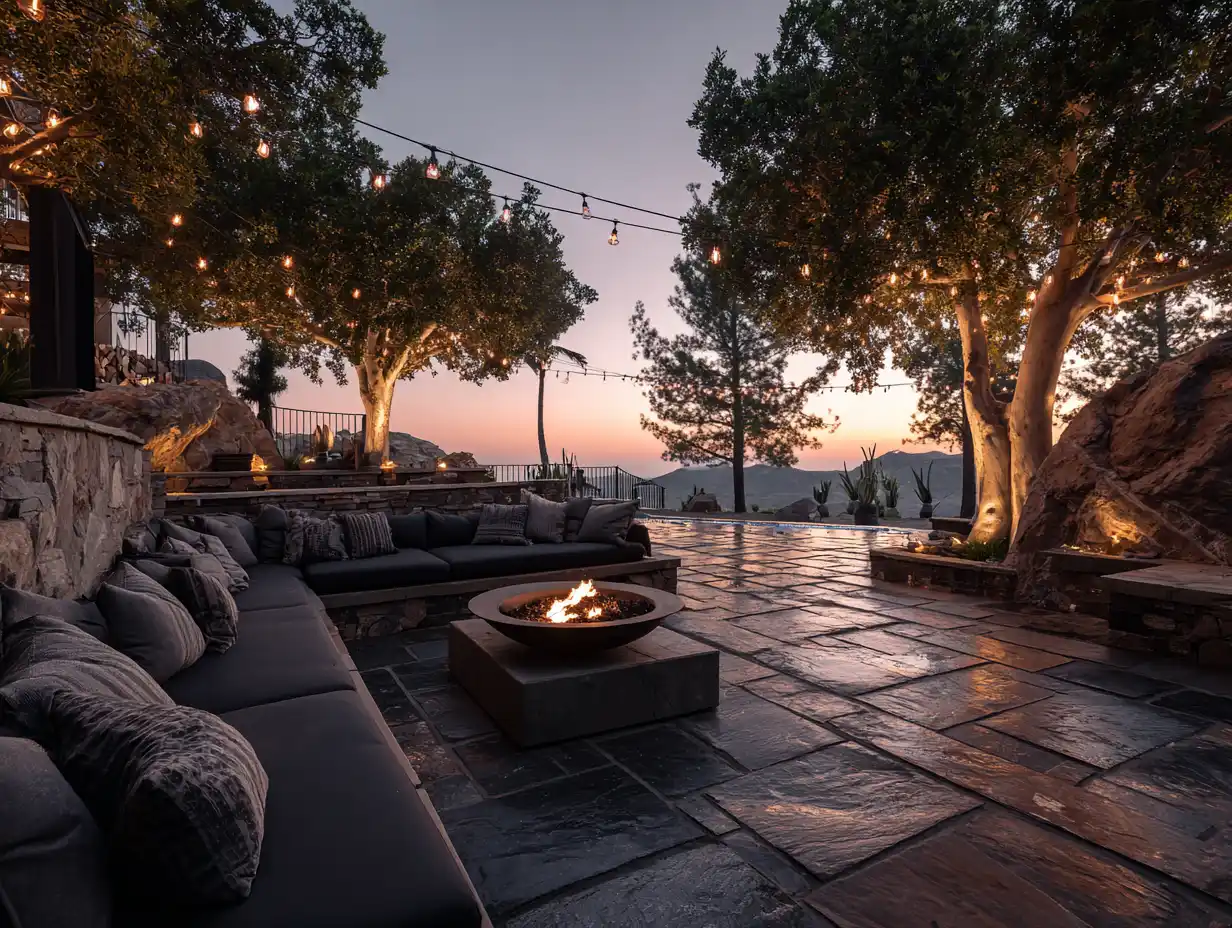
The flooring you choose affects comfort, durability, maintenance, and resale value. It needs to handle weather, foot traffic, and furniture weight without falling apart.
Material Comparison
| Material | Durability | Cost | Maintenance | Resale Appeal |
|---|---|---|---|---|
| Concrete (poured) | High | $$ | Low | High (neutral, clean) |
| Pavers (stone/brick) | High | $$$ | Medium | High (classic look) |
| Composite Decking | Medium-High | $$$ | Low | Medium-High (modern feel) |
| Gravel/Decomposed Granite | Medium | $ | Medium | Medium (casual vibe) |
| Wood Decking | Medium | $$ | High | Medium (requires upkeep) |
Avoid wood decking unless you’re committed to regular sealing and maintenance.
Outdoor Furniture That Handles Weather
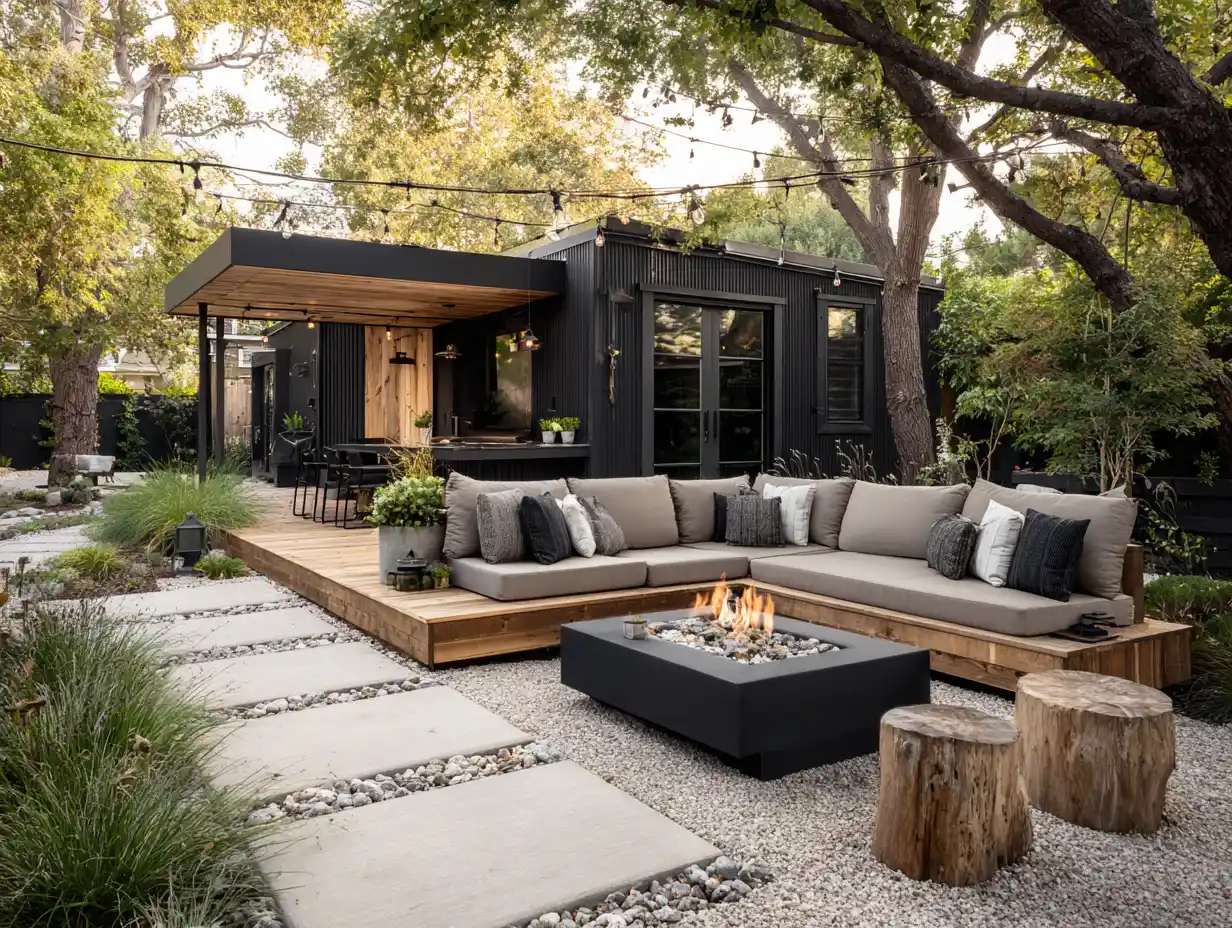
Furniture scale matters more than style.
Get the sizing right:
- Measure your zones before buying furniture (tape it out)
- Leave at least 3 feet of walkway space around seating areas
- Oversized furniture makes small spaces feel smaller, undersized furniture makes large spaces feel empty
Weather-resistant materials save money and frustration:
- All-weather wicker, powder-coated aluminum, and teak hold up without constant maintenance
- Cushions should have quick-dry foam and removable, washable covers
- Avoid anything you have to haul inside every time it rains
Storage for off-season matters in climates with real winters. Storage benches, weatherproof deck boxes, or built-in cabinets keep cushions and accessories organized instead of piled in the garage.
Comfortable seating is non-negotiable. Make it inviting.
Backyard Setup Mistakes to Avoid
Overbuilding for the lot size: Outdoor entertainment areas that dominate small yards leave no usable lawn. Leave room for flexibility.
Ignoring flow and access: Stairs, tight pathways, or muddy lawn between house and outdoor man cave kill the vibe. The transition needs to feel natural and easy.
Maintenance nightmares: Weathered wood, cracked grout, or broken water features signal “expensive project.” Keep it ready to enjoy, not ready to fix.
Features that feel too niche: Elaborate home brewing setups, cigar lounges, or sports-themed spaces so specific people can’t imagine using them differently. Personal touches are fine, but when the whole space revolves around one interest, it limits appeal.
Frequently Asked Questions
How much value does an updated backyard add to my home?
It depends on execution and your market. A well-done outdoor entertainment area can add 5-10% to your home’s appeal in climates where outdoor living is valued, but that doesn’t always translate to dollar-for-dollar ROI.
Do I need permits for structures?
Usually, yes, if you’re adding permanent structures like covered patios, electrical work, or plumbing. Check with your local building department before you start.
What’s the minimum space I need for a functional backyard man cave?
10×10 feet is the bare minimum for a small seating area or single entertainment feature. 12×16 feet gives you room to create zones. Anything smaller than 10×10 works better as a cozy nook.
How do I winterize my outdoor man cave?
Store cushions and fabric items indoors, cover or protect electronics and furniture, and shut off water lines if you have plumbing. Clean and cover fire features.
Should I make my outdoor setup permanent or keep it flexible?
Permanent structures add more value but require more investment. Flexible setups let you test the layout and adjust as needed. If you’re staying long-term, go permanent. If you’re selling soon or renting, keep it flexible.
Ready to Build Your Backyard Retreat?
Creating a special outdoor space isn’t just about adding furniture or stringing up lights. It’s about a mindset shift from, “I have a backyard” to “I have a place to recharge.”
Start with layout, choose materials that hold up, balance personal style with broad appeal, and don’t overthink it. Your setup should feel like an extension of how you want to live, not a project that never gets finished. Start with layout before décor, choose materials that age well, and build for how you live, not how a photo looks.
You got this!
Psst… want a man cave that pulls double duty as a wellness zone? Check out Master Spas’ take on the ultimate outdoor man cave for serious hot tub inspo that’s equal parts relaxation and bragging rights.